Tree care guide from Little Rock, phones answered 24/7
Ice storm tree damage in central Arkansas: what can be saved
Ice storms are the slow kind of tree disaster. Nothing blows over; limbs just get heavier until they break. The day after looks terrible, but many of those trees will be fine in two years if they are handled right.
By Merle Shackelford, Tree Care Guides Editor · Updated October 2026
Short answer
After an ice storm in central Arkansas, most mature hardwoods that lose between 25 and 75 percent of their crown survive with good pruning, going by University of Arkansas extension guidance, while trees that lose more than 75 percent usually do not. Remove hangers and broken limbs first, make clean cuts, and wait before removing trees that are only thinned.
What ice does to trees
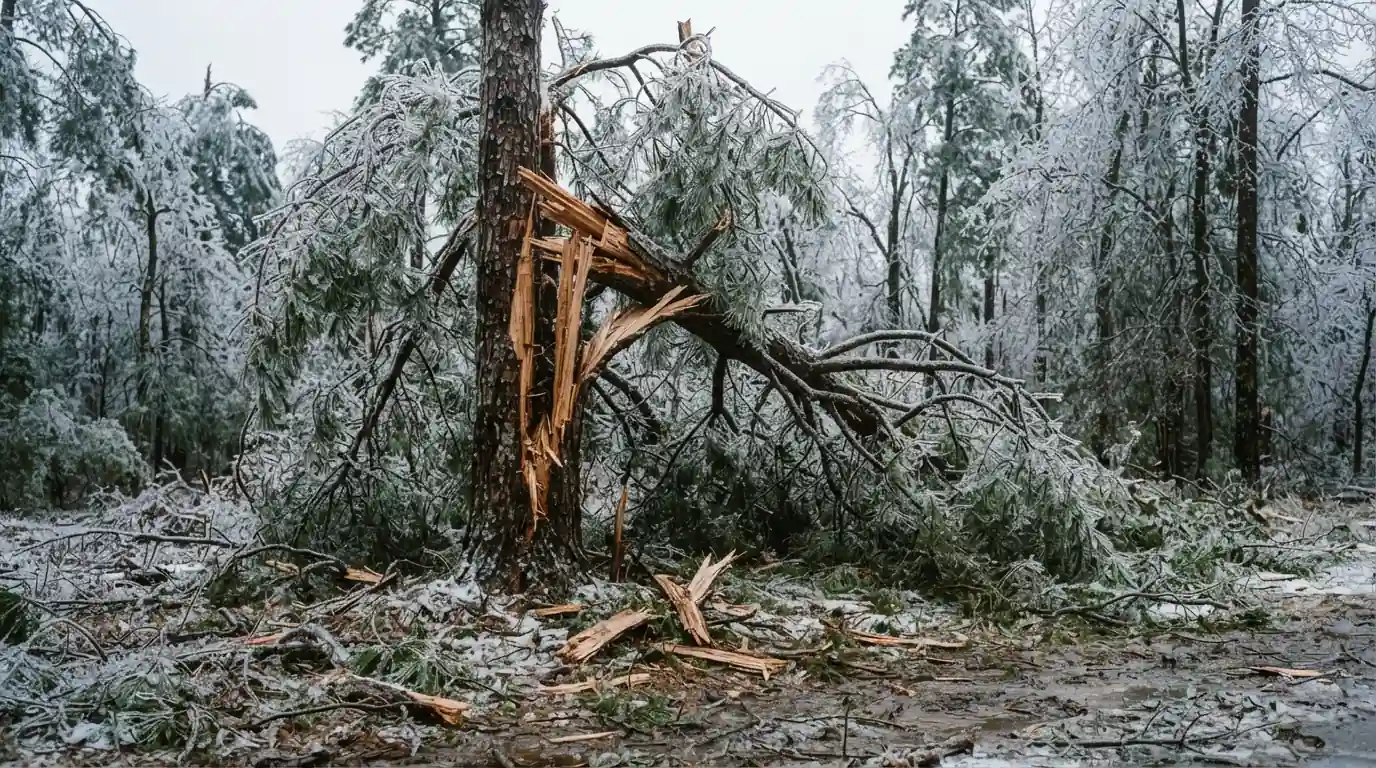
Ice coats every twig and needle, and the weight adds up fast. The December 2000 ice storms put more than an inch of ice across central and south Arkansas, pulled down trees and lines, and left about 300,000 homes and businesses without power, many in the Little Rock metro and Pine Bluff for more than a week.
Long horizontal limbs, weak V-shaped forks and dense evergreen crowns fail first. Trees that were already thinned and well structured hold up best.
First days: safety before saving
Stay out from under trees until the ice melts. Limbs keep breaking after the storm ends, and broken limbs caught in the canopy, called hangers, can fall at any time. Report anything on a line to Entergy and stay away.
Once the ice is gone, the first job is removing hangers and anything over the house, drive or walkways. Leave the save-or-remove decisions for later.
The crown rule
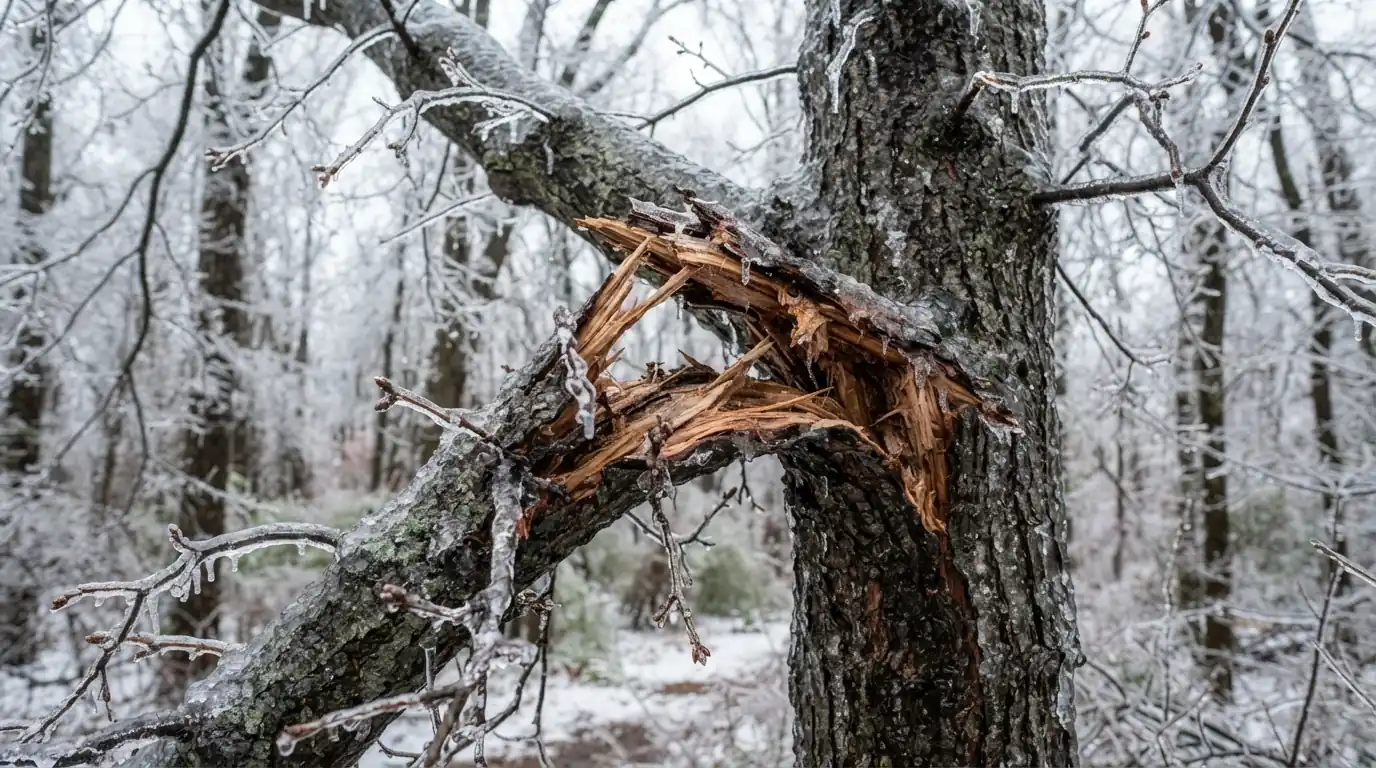
University of Arkansas extension guidance gives a useful rule: most mature hardwoods that lose 25 to 75 percent of the crown survive with slower growth, while trees with more than 75 percent crown loss generally do not. It also warns that severely damaged trees can take several years to decline.
So look at what is left, not what fell. A tree with half its crown and a sound trunk is usually worth keeping; a tree stripped to the trunk usually is not.
Questions about a tree in Little Rock? The crew line is answered around the clock.
Call (501) 439-8373Pines take ice differently
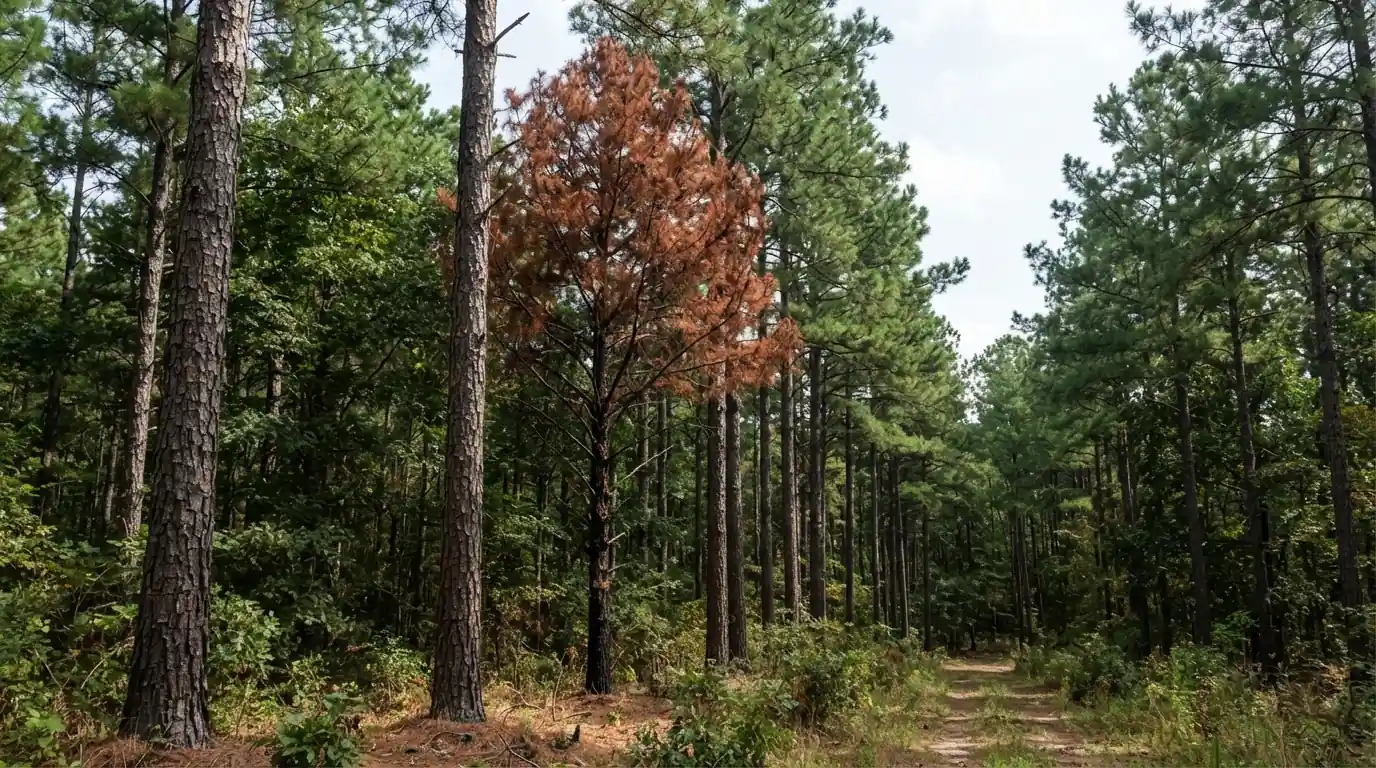
Pines hold ice on every needle and tend to snap at the top or bend over. After the 2000 storms, a Forest Service assessment found young, unthinned loblolly stands took the most damage, while older thinned stands had the most undamaged survivors.
A pine that lost its top will often live but grow a crooked new leader; a pine bent over to the ground rarely straightens. Broken pines near houses are usually better removed than nursed.
Pruning cuts that help
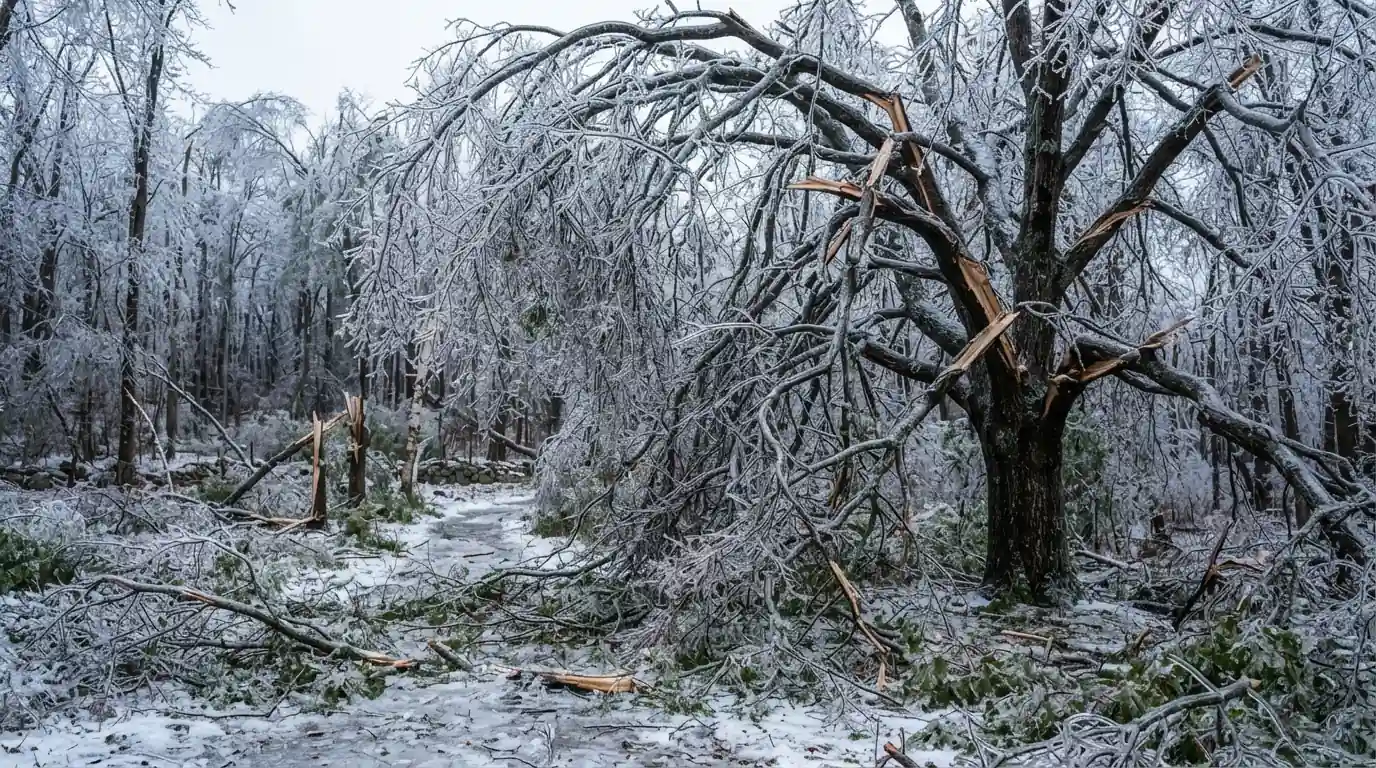
Cut broken limbs back to the nearest healthy side branch or to the branch collar at the trunk. Do not leave jagged stubs, and do not top the tree to make it look even; stubs and topping cuts invite decay and a mess of weak sprouts.
Split forks can sometimes be cabled and braced if the wood is sound. Long cracks with decay behind them usually mean removal.
When to wait
If a tree is not dangerous, give it a growing season. Trees that look ruined in February often surprise people by June. Watch for leaf-out, then decide.
Before the next winter, thinning dense crowns and shortening long heavy limbs is the cheapest way to reduce ice damage.
Related services
Services this guide touches on
Storm Damage Cleanup
Hanging Broken Limbs and more.
Need storm damage cleanup?Cabling & Bracing
Codominant Trunk Cabling and more.
Need cabling & bracing?Crown Reduction
Reducing a Tree That Outgrew Its Spot and more.
Crown Reduction in Little Rock
Straight answers
Questions readers ask
Most mature hardwoods that keep at least a quarter of the crown survive, per UAEX guidance.
Remove hangers and anything over structures first. Other pruning can wait until the ice is gone.
Sometimes with cabling and bracing, if the wood is sound and the crack is short.
No. Topping leaves stubs that rot and sprout weak regrowth.
Pines that lost a top often live; pines bent to the ground rarely straighten.
If it is not dangerous, a growing season is a good test.
Thin dense crowns and shorten long, heavy limbs before winter.
Ice damage in the trees?
Call any hour. Hangers and anything over the house come down first; then we help you sort out what can be saved.