Answered 24/7 across Little Rock and the Texarkana area
Hedge and shrub trimming for Little Rock yards
Hedges get away from people one summer at a time. By the time a ligustrum or holly screen is pushing into the gutters, a quick shear no longer fixes it; it needs cutting back to a size you can keep up with.
- Privacy hedge reduction
- Foundation shrub clearance
- Answered 24/7
Short answer
Hedge and shrub trimming in Little Rock is best done in late winter for hard reductions and after the spring flush for routine shaping. Cutting an overgrown evergreen hedge back by more than about a third at once can leave it bare, so large reductions are often spread over two seasons. Clippings are hauled or chipped the same visit.
Updated October 2026
Scope
What a hedge visit includes
- Target height and width agreed first
- Tops cut narrower than the base
- Dead inside wood removed
- Shrubs cut back from siding and windows
- Seedlings and suckers pulled at the base
- Clippings chipped or hauled
- Beds, walks and drive raked and blown
Shaping versus reducing
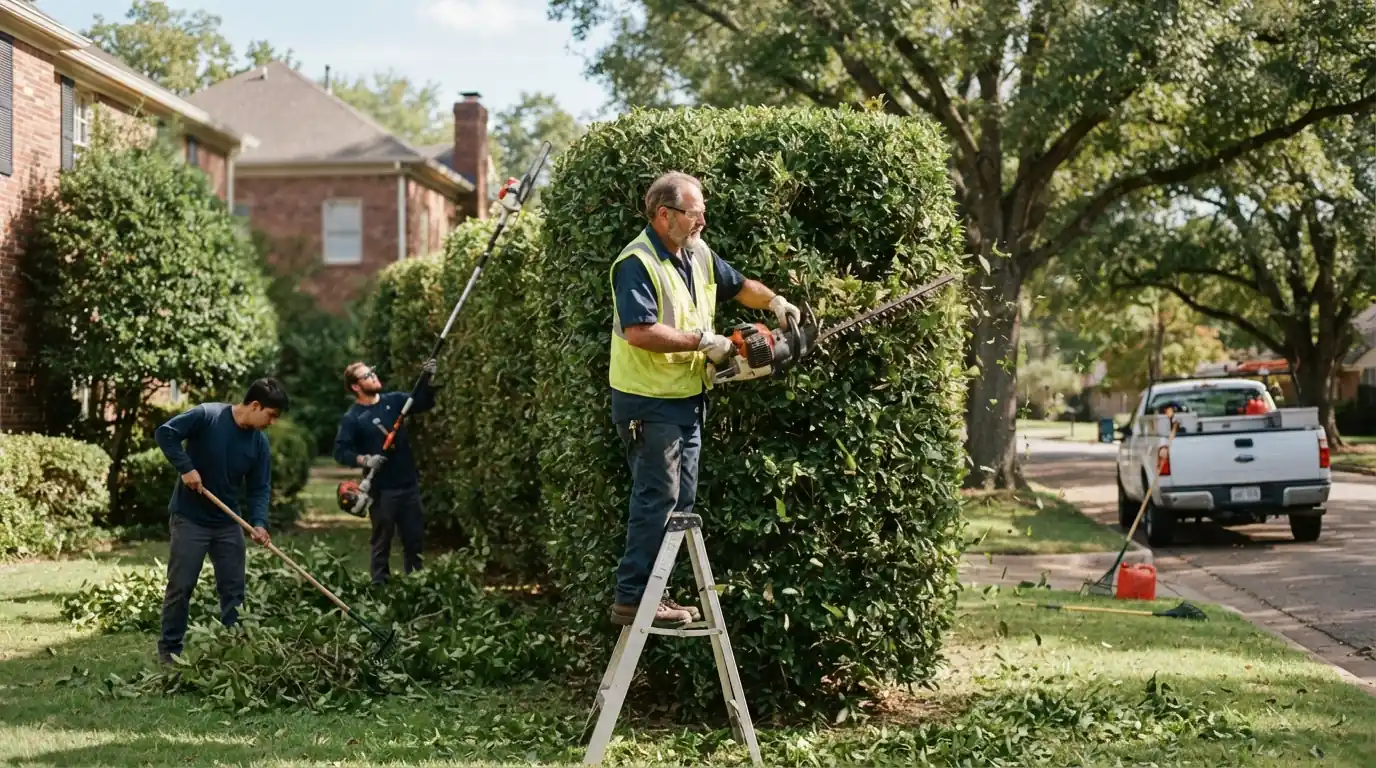
Routine shaping trims the new growth to keep a hedge's line. Reduction cuts into older wood to bring a hedge down in height or width. The first is quick; the second takes judgment about how far each species will come back from.
We trim hedges slightly narrower at the top than the base so light reaches the lower branches. That keeps a screen full to the ground instead of bare at the bottom.
Overgrown privacy hedges
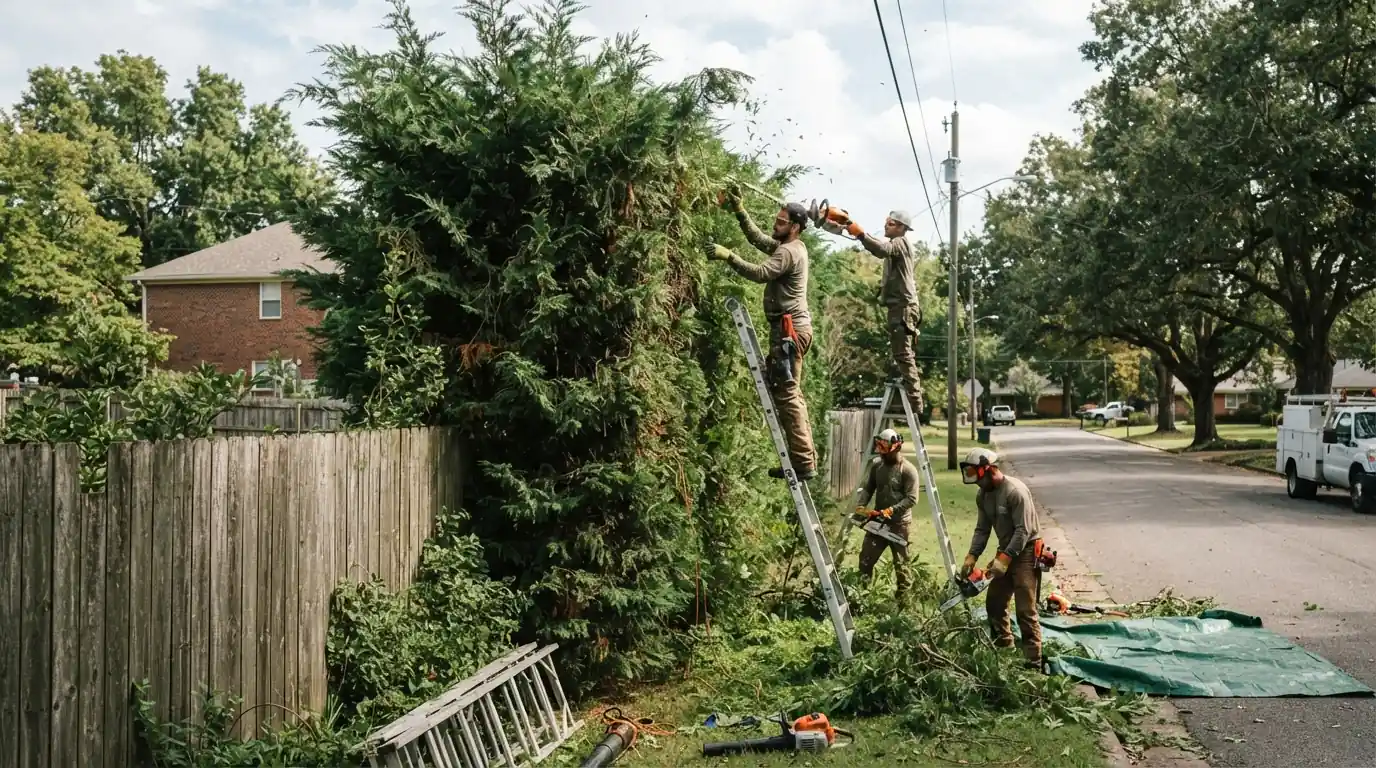
Ligustrum, holly, wax myrtle and cherry laurel screens are the most common hedges we cut back. When one has doubled in size, we bring the top down to a height you can reach with a hedge trimmer and cut the sides back to the fence line or the walk. Most recover with dense new growth by midsummer. A few species sulk after a hard cut, and those we reduce in two stages, taking the height one year and the width the next.
Foundation shrubs against the house
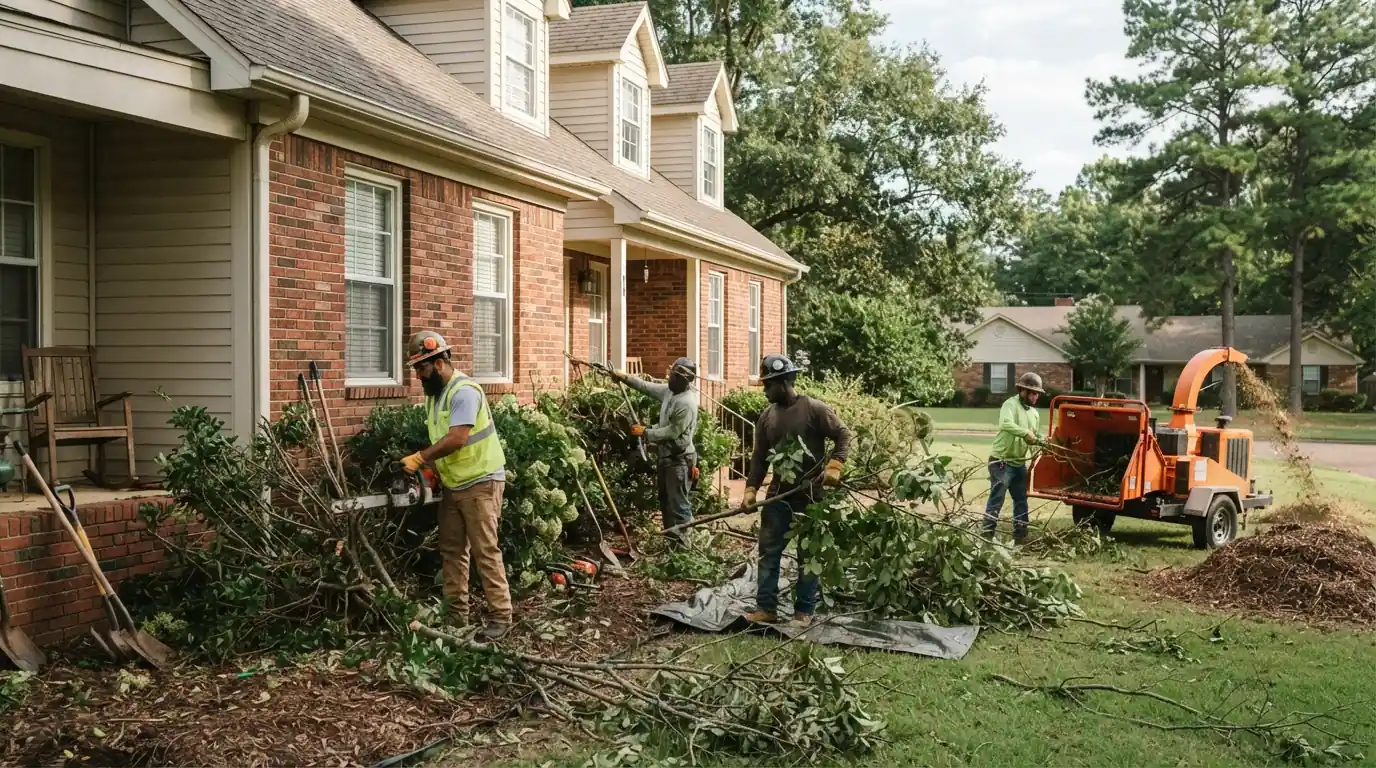
Shrubs pressed against siding hold moisture, hide pests, and scrape paint in the wind. We cut them back to leave air space between the plant and the wall, lift them off windows and vents, and take out dead wood inside. If a shrub has outgrown the spot completely, we will tell you whether a hard cut will work or whether it is better replaced with something smaller. Shrubs over the air conditioner or blocking dryer vents get cut back first.
Holly and ligustrum reduction
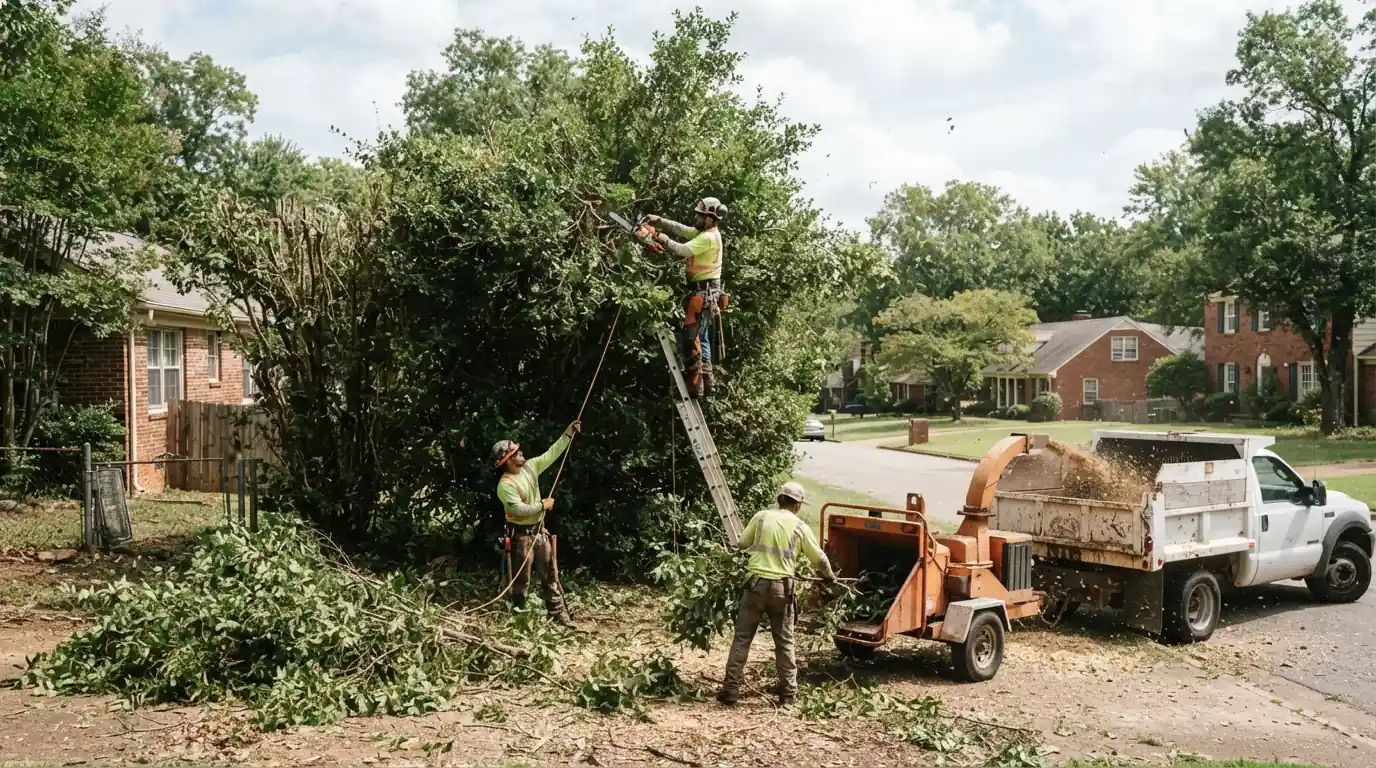
Both take hard pruning well, which makes them good candidates for a real reset rather than yearly shearing. A hard late-winter cut down to a framework of main stems gives a flush of new growth to shape through the season. Ligustrum spreads by seed into nearby woods and fence lines, so we cut it before it fruits where possible and pull seedlings along the base. Holly berries are messier to clean up but do not spread the same way, so the timing matters less there.
How this job runs around Little Rock
Evergreen hedges take ice badly because every leaf holds weight. In the December 2000 ice storms, more than an inch of ice across central Arkansas split trees and shrubs all over Little Rock and North Little Rock, and dense, top-heavy hedges were among the plants that splayed open under the load. A hedge kept narrower at the top sheds ice better and springs back when it melts, which is one more reason we shape them that way.
Honest comparison
Trimming it yourself vs calling a crew
| Part of the job | On your own | With our crew |
|---|---|---|
| Routine shaping | Fine with a hedge trimmer | Faster, with cleanup |
| Hard reduction | Hard to know how far to cut | Cut to what the species handles |
| Tall hedges | Ladder work with a power tool | Pole trimmers and stable footing |
| Thorny holly | Slow and painful | Proper gear and tools |
| Brush disposal | Bags and dump runs | Chipped or hauled |
| Shrubs against the house | Easy to scrape siding | Hand cuts near the wall |
Step by step
How a hedge visit goes
- 1
Call with the hedge
Species if known, length, and how far it has grown.
- 2
Agree the target size
Height and width marked before cutting.
- 3
Cut back and shape
Tops narrower than the base.
- 4
Clean out dead wood
Inside growth thinned for air and light.
- 5
Haul the clippings
Chipped or hauled, beds raked clean.
What moves the price
What decides the price of hedge work
Length and height
Linear feet of hedge and how tall it stands.
Shaping or reduction
Cutting into old wood takes much longer.
Access
Hedges along fences need both sides reached.
Species
Thorny holly and dense ligustrum are slower.
Debris volume
A hard reduction makes a lot of brush.
Beds underneath
Working around plantings and irrigation.
Straight answers
Questions we get about this
Late winter for hard reductions; after the spring flush for routine shaping.
Most evergreen hedges here recover. Some species do better reduced over two seasons.
It was trimmed wider at the top, shading the base. Tapering it fixes that over time.
Yes, with stump grinding if you want the roots out.
Yes, chipped on site or hauled, and beds are raked.
Once or twice a year for most, more for fast growers like ligustrum.
Yes. We cut back from the wall by hand where power trimmers would scrape.
Related work
Other jobs we handle near this one
Maple Tree Trimming
Red and Silver Maple Limbs and more.
Need maple tree trimming?Crape Myrtle Pruning
Removing Old Seed Heads and Suckers and more.
See how crape myrtle pruning worksYoung Tree Structural Pruning
Choosing a Central Leader and more.
See how young tree structural pruning works
Get the hedge back to a size you can keep
Call any hour with the hedge and how far it has grown. We will set the target size with you and cut it back.