Answered 24/7 across Little Rock and the Texarkana area
Crown reduction for Little Rock trees that outgrew their space
When a tree has grown taller or wider than its spot allows, the answer is not topping. Crown reduction shortens the longest limbs back to healthy side branches, so the tree ends up smaller and lighter while keeping its natural shape.
- Reduction cuts to side branches
- Weight off long limbs
- Answered 24/7
Short answer
Crown reduction in Little Rock shortens a tree's height or spread by cutting branch ends back to side branches at least a third their size, never to stubs. It is the right call when a sound tree has outgrown its space or carries long, heavy limbs over a roof. Most trees tolerate taking about a quarter of the canopy in one season.
Updated October 2026
Reduction is not topping
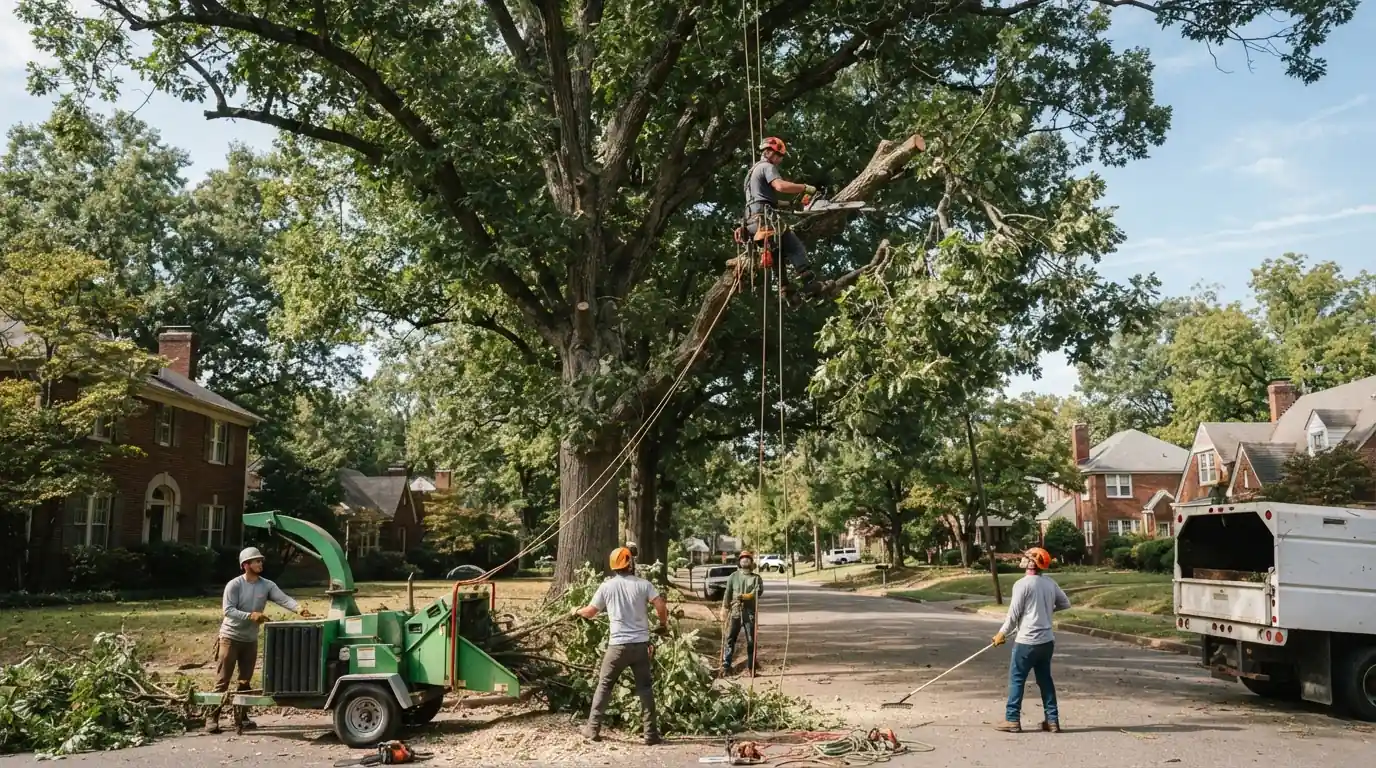
Topping cuts through branches at an arbitrary height and leaves stubs. The tree answers with dense, weakly attached sprouts and decay at every cut.
Reduction chooses each cut: a branch end is removed back to a lateral that can take over as the new tip. The tree stays smaller and holds its shape, and the cuts close properly.
Compare
Reduction, thinning or topping
| Factor | Crown reduction | Thinning | Topping |
|---|---|---|---|
| What changes | Height or spread | Density | Height, badly |
| Cut type | Back to side branches | Whole branches removed | Stubs |
| Regrowth | Moderate, in shape | Normal | Dense weak sprouts |
| Decay risk | Low | Low | High |
| Best for | Trees too big for the space | Dense crowns, storm prep | Never recommended |
What moves the price
What decides the price of crown reduction
Local market guidance: $174 to $232 per hour for a three-person crew (planning range from published 2026 figures, not our quote; every job is priced on site).
Tree size
Bigger crowns mean more cuts and climbing.
Amount of reduction
Light shaping versus a real size change.
Limbs over structures
Roped down rather than dropped.
Species
Some woods cut and rig slower than others.
Previous topping
Correcting old stubs takes more cuts.
Cleanup
Brush chipped and hauled.
Reducing a tree that outgrew its spot
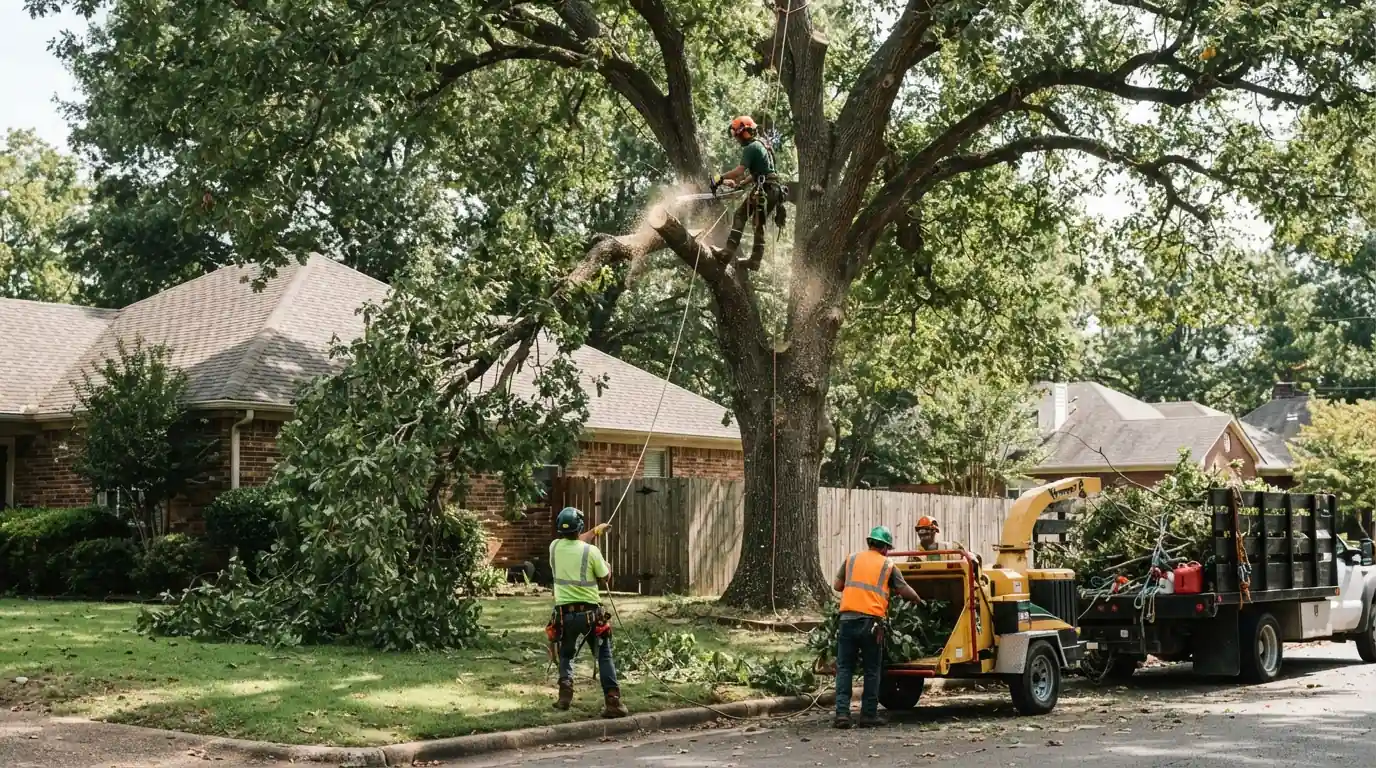
A tree planted too close to the house often ends up brushing the roof and reaching over the neighbor's yard. Reduction pulls the crown back from both. We work around the canopy shortening the longest limbs to side branches, taking a consistent amount so the tree stays balanced. Some trees need reducing again every few years; it is a management plan, not a one-time fix, and we note the cut points so the next round is quicker and lighter on the tree.
Local market guidance: $174 to $232 per hour for a three-person crew (planning range from published 2026 figures, not our quote; every job is priced on site).
Weight reduction on long limbs
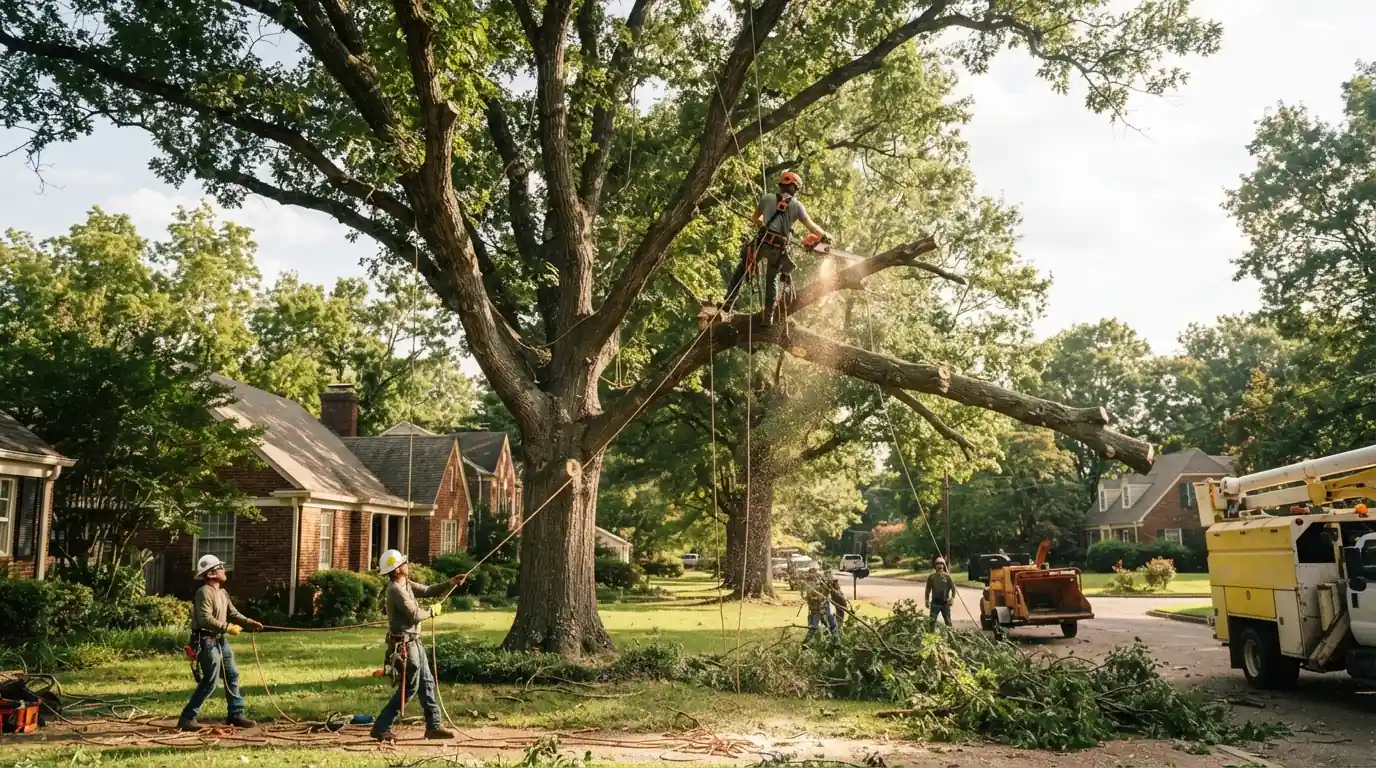
Long horizontal limbs over a roof or driveway carry a lot of weight at the tip. We shorten them back to side branches, cutting leverage at the union. This is some of the most useful pre-storm work you can do on a big oak, because the limbs that fail in wind and ice are usually the long, heavy ones. The tree keeps its shade; the limbs just stop reaching as far, and there is less weight hanging over the house when the next ice storm arrives.
Corrective pruning after topping
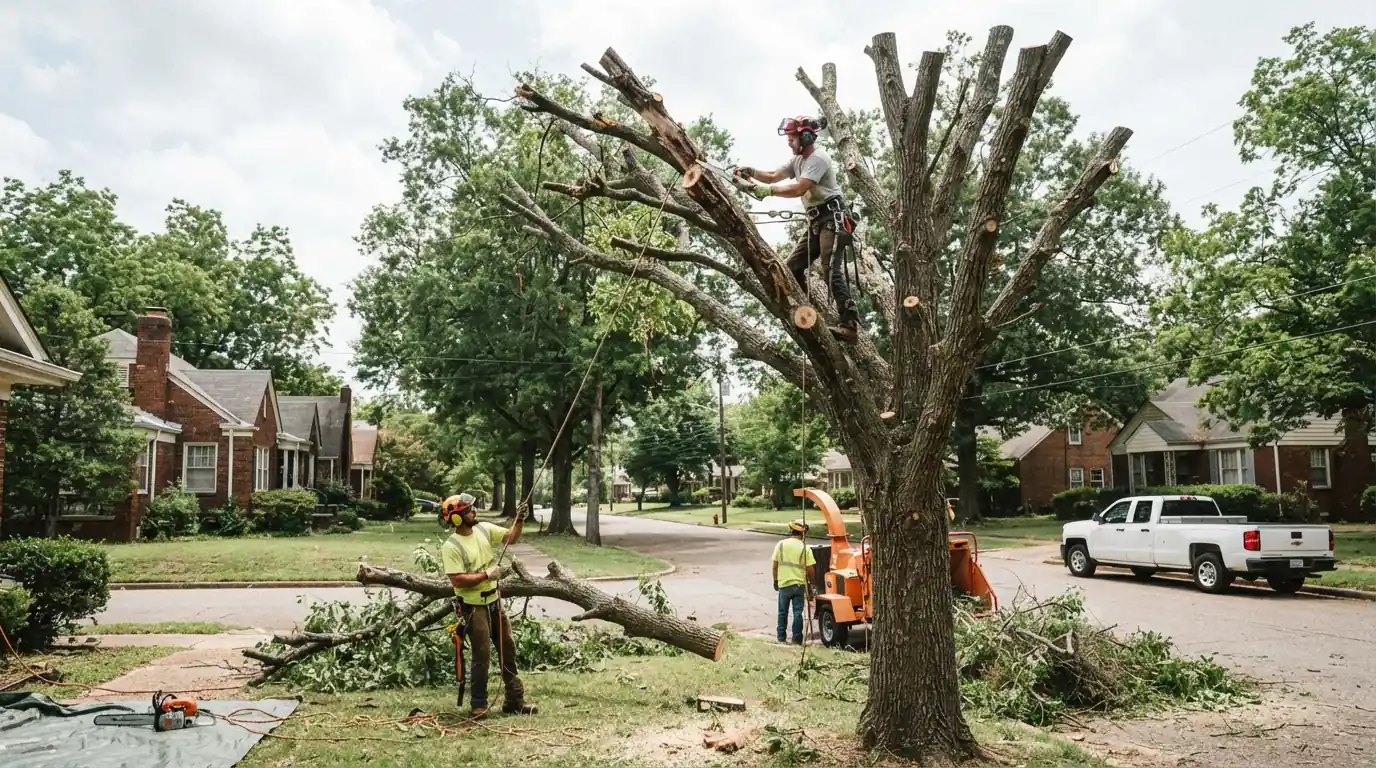
A tree topped years ago is covered in clusters of fast sprouts growing from old stubs. We choose the strongest, best-placed sprout at each stub and remove the rest, and repeat over a few seasons until those sprouts become proper branches. It takes patience, but it rebuilds a safer structure than topping again. The alternative, topping on the same schedule forever, keeps producing weak sprouts that break in the first strong wind and keeps the old stubs rotting, so each round makes the tree a little more dangerous than the last.
How this job runs around Little Rock
Every cut costs a tree leaf area, and University of Arkansas extension guidance on storm damage shows how much margin there is: most mature hardwoods that lose 25 to 75 percent of the crown survive with slower growth, while those past 75 percent generally do not. Planned reduction works far inside that range, usually a quarter of the canopy or less in one season, which is why we spread big reductions on Little Rock oaks over two or three visits rather than one hard cut.
Warning signs
Signs a crown needs reducing
Limbs on the roof
Branch ends resting on or rubbing shingles.
Long, heavy horizontal limbs
Weight far from the trunk over a roof or drive.
Tree leaning into another tree
Canopies crowding and rubbing.
Limbs over the neighbor's house
Branches reaching well past the property line.
Sprout clusters from old cuts
Signs of past topping that need correcting.
Canopy taller than you can maintain
Growth outpacing routine trimming.
Step by step
How a crown reduction goes
- 1
Call and describe the problem
Too tall, too wide, or too heavy over something.
- 2
Agree the target
How much comes off and where, marked with you.
- 3
Climb and reduce
Branch ends cut back to side branches.
- 4
Balance the crown
Consistent cuts so the tree stays even.
- 5
Chip and clean up
Brush chipped and the yard raked.
Straight answers
Questions we get about this
Reduction cuts back to side branches that take over. Topping cuts to stubs that sprout and rot.
About a quarter of the canopy in one season for most trees.
Yes, slowly and in shape. Reduction usually needs repeating every few years.
Yes. Shortening long, heavy limbs cuts the load that fails in wind and ice.
Often, over several seasons of selecting and thinning the sprouts.
For a sound tree that is simply too big, usually yes. Decayed trees are a different matter.
Most hardwoods. Pines do not reduce well and are usually thinned or removed.
Related work
Other jobs we handle near this one
Young Tree Structural Pruning
Choosing a Central Leader and more.
Young Tree Structural Pruning in Little RockHedge & Shrub Trimming
Overgrown Privacy Hedges and more.
Hedge & Shrub TrimmingMaple Tree Trimming
Red and Silver Maple Limbs and more.
See how maple tree trimming works
Bring the tree back to size
Call any hour and tell us what the tree is growing into. We will agree the target with you and reduce it properly.