Answered 24/7 across Little Rock and the Texarkana area
Crape myrtle pruning in Little Rock without the knuckles
Most crape myrtles in town get cut back to the same stubs every February, and the knobs that grow there get bigger every year. There is a better way to keep them tidy, and it is not more work.
- Late-winter pruning
- Multi-trunk shaping
- Answered 24/7
Short answer
Crape myrtle pruning in Little Rock is best done in late winter, before new growth, by removing crossing stems, suckers and old seed heads rather than cutting every branch back to the same height. Topping produces the swollen knuckles and whippy shoots that flop under summer blooms. A well-shaped crape needs only light work each year.
Updated October 2026
What good crape myrtle pruning actually removes
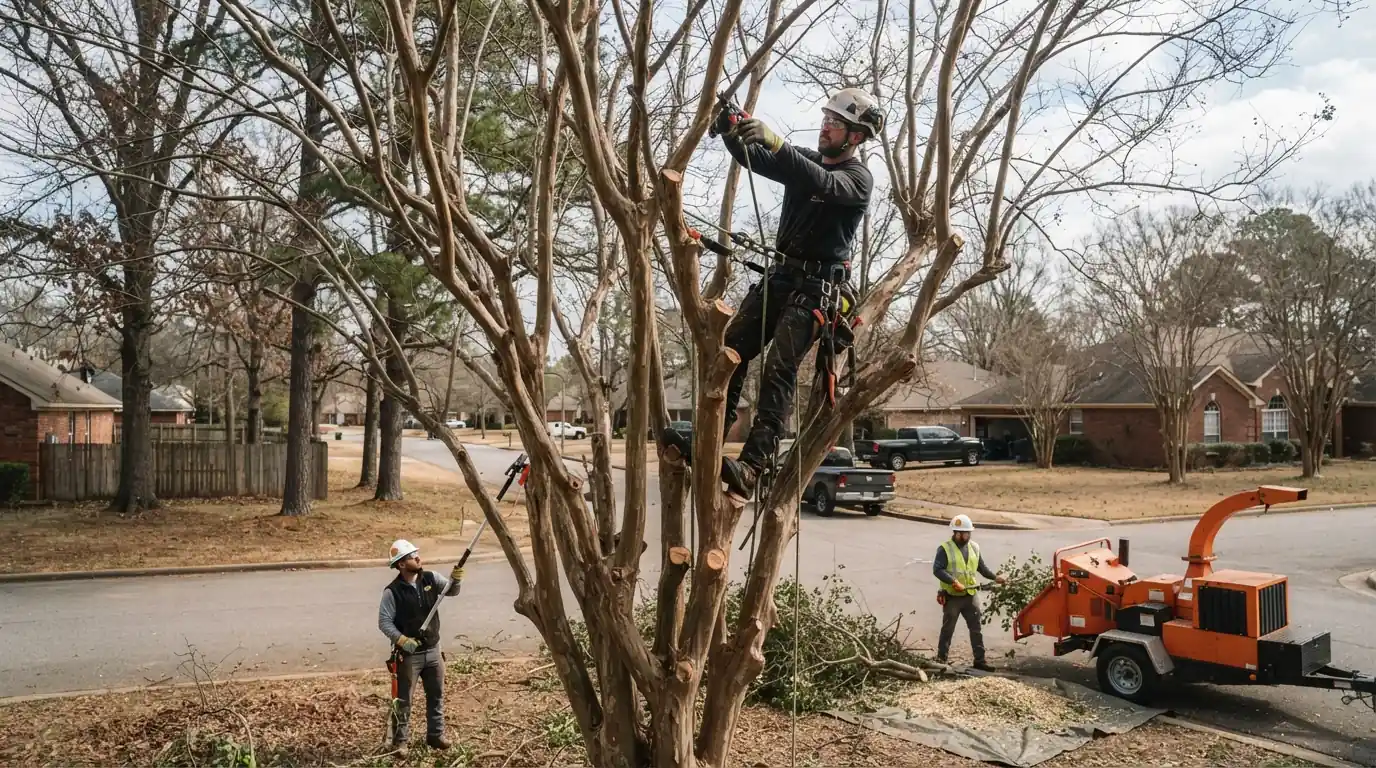
A crape myrtle flowers on new growth, so it does not need cutting back hard to bloom. It needs fewer, better-spaced trunks, no rubbing branches, and the twiggy inside growth thinned so air moves through.
We cut to a branch collar or a side branch, never to a random height. The tree keeps its shape, the smooth mottled bark on the trunks stays on show, and next summer's flowers sit on stems strong enough to hold them.
Removing old seed heads and suckers
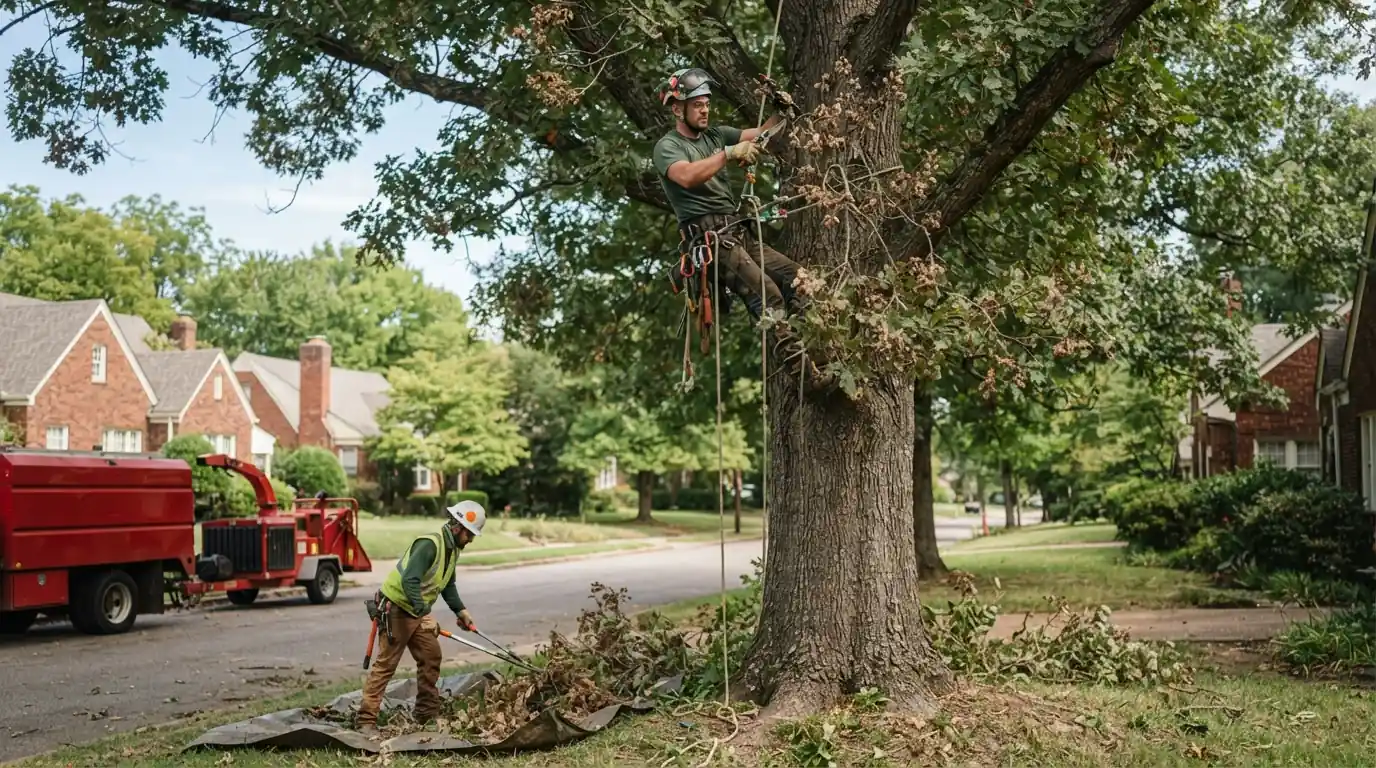
Last year's seed clusters hang on through winter and the base throws up suckers every spring. Both come off: seed heads are snipped at the first strong bud below them, suckers are cut flush at the root flare. It is the lightest version of the job and on a young, well-shaped tree it is often all the tree needs for the year. Left alone, the suckers steal vigor from the main trunks and turn a clean clump into a thicket within a couple of seasons.
Restoring a crape myrtle that was cut back hard
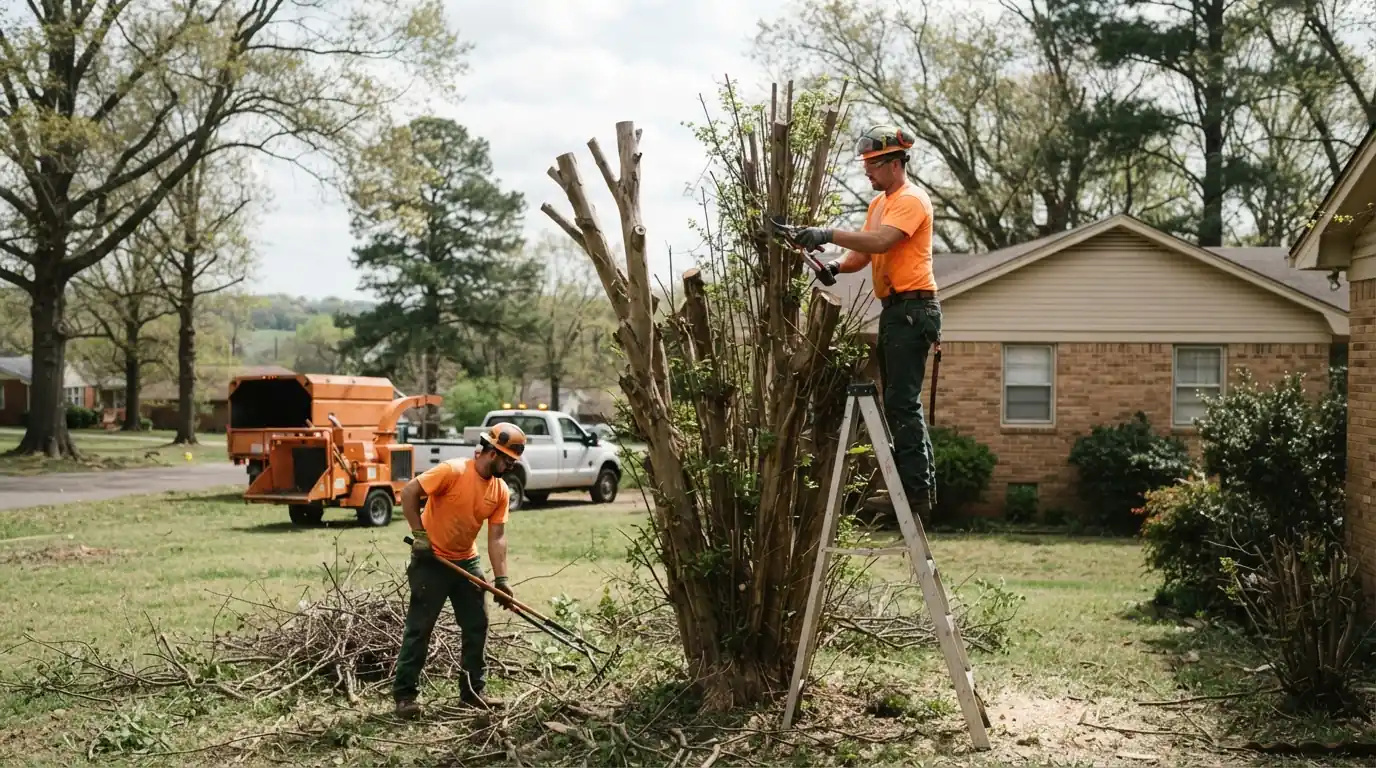
A tree topped for years has fist-sized knobs at every cut with a broom of thin shoots growing out of each one. We do not fix it in one visit. Year one we pick three to five of the best shoots on each knob and remove the rest; over two or three seasons those become real branches and the knobs stop growing. Cutting below the knobs is the faster reset if you can wait a summer for blooms, and we will tell you which route suits your tree.
Multi-trunk shaping
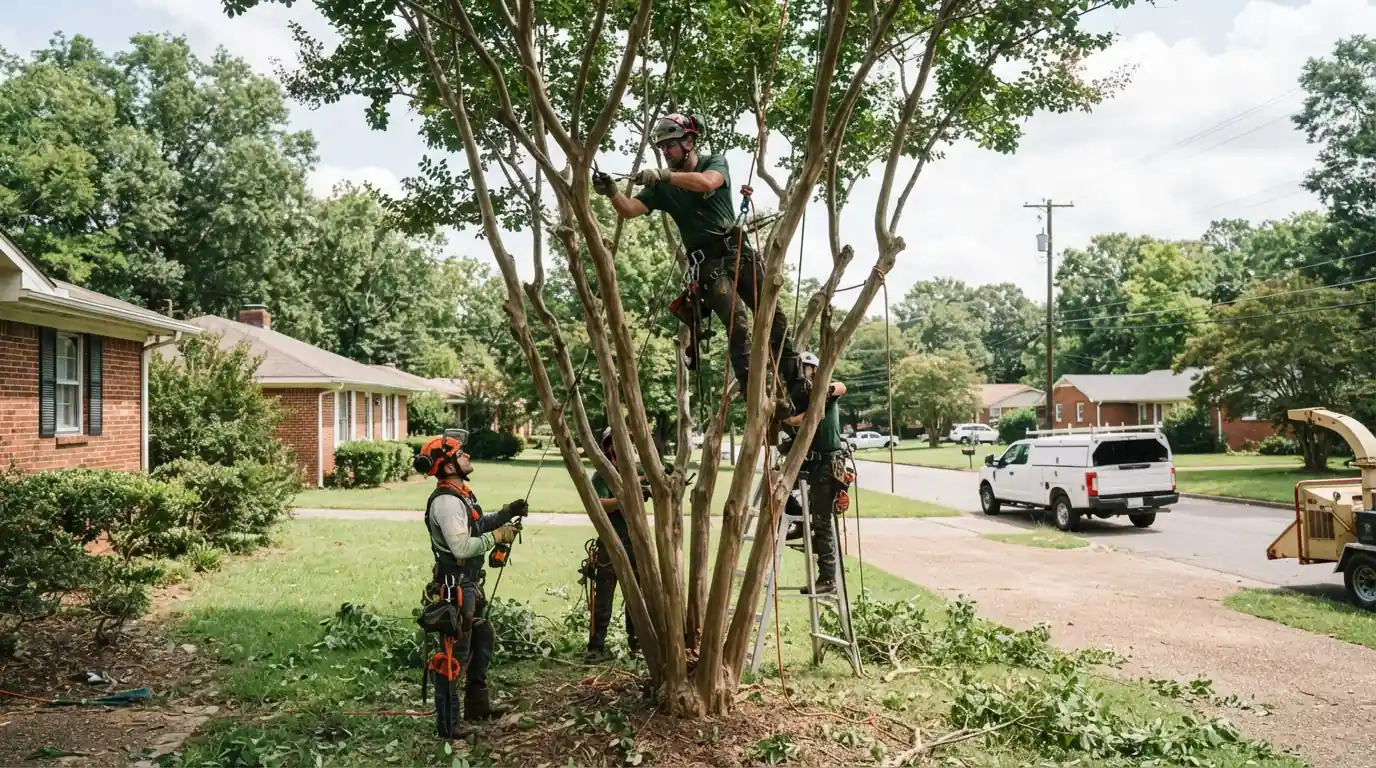
Most crapes grow as clumps. We pick the three, five or seven strongest trunks that lean outward in different directions, remove the rest at the ground, then lift the canopy by taking off side branches along the lower trunks. That opens the bark to view and keeps limbs off the sidewalk, the roof edge and the car parked beside them. On a clump that has been neglected, removing the extra trunks is the single change that makes the biggest difference, and it only has to be done once.
How this job runs around Little Rock
Crape myrtles line a lot of Little Rock parking lots and commercial frontages, and the city code has a specific line about them: under Chapter 15, a crape myrtle trimmed lower than six feet above grade stops counting toward the landscaping a property is required to keep. On a commercial lot that is more than a looks problem. We keep required crapes above that line and prune them by thinning, which is the healthier cut anyway.
Warning signs
Signs your crape myrtle needs a better cut
Knuckles at every cut
Swollen knobs where branches have been cut back to the same spot year after year.
Whippy shoots that flop
Thin summer growth bending to the ground under the weight of the flowers.
Suckers at the base
A thicket of shoots coming up around the trunks every spring.
Crossing and rubbing branches
Stems grinding on each other and wearing through the bark.
Black film on the bark
Sooty mold on honeydew, usually a sign of sap-feeding insects.
Limbs over the walk or roof
Low side branches brushing people, cars or shingles.
Honest comparison
Pruning crapes yourself vs calling a crew
| Part of the job | On your own | With our crew |
|---|---|---|
| Seed heads and suckers | Easy with hand pruners and loppers | Done in the same visit as the shaping |
| Choosing which trunks stay | Hard to judge from the ground up close | Crew lead picks and marks them first |
| Cuts above head height | Ladder work with a saw overhead | Pole saws or a lift, from stable footing |
| Restoring knuckled trees | Easy to repeat the same stub cuts | A two to three season plan per tree |
| Rows along a drive | A full weekend of cutting and hauling | One crew visit, brush chipped |
| Commercial lots | Code height rule is easy to miss | Kept above the six foot line |
Step by step
How a crape myrtle visit goes
- 1
Call and tell us how many
Number of trees, rough height, and whether they have been topped before.
- 2
Late-winter scheduling
We book routine pruning for the dormant season before new growth starts.
- 3
Select the trunks and cuts
The crew lead marks what stays before anything is cut.
- 4
Thin, lift and clean
Crossing stems, suckers, seed heads and low side branches come off.
- 5
Rake and haul
Brush is chipped or hauled and the beds are left clean.
What moves the price
What decides the price of crape myrtle work
How many trees
A row along a drive prices differently than one tree by the porch.
Size and trunk count
A twenty foot clump with nine trunks takes longer than a young tree.
Years of topping
Restoring knuckled trees takes more cuts than routine shaping.
Suckers and seed heads
Heavy sucker growth at the base adds ground-level work.
Reach
Taller crapes need a ladder or lift rather than pole saws from the ground.
Cleanup and haul-off
Crape brush is light but bulky; hauling it or chipping it on site.
Straight answers
Questions we get about this
Late winter, before new growth starts. Light cleanup of seed heads and suckers can happen any time.
No. They flower on new growth whether or not they are topped. Thinning gives stronger stems that hold the blooms up.
The common name for topping every branch back to the same stubs each year. It causes the knobby knuckles and weak, floppy shoots.
Yes, over two or three seasons by keeping a few shoots per knob, or faster by cutting below the knobs and giving up one summer of flowers.
The city landscaping code says a crape trimmed below six feet above grade does not count toward required landscaping, which matters on commercial lots.
Usually sooty mold from bark scale insects, which are what need treating.
Yes, chipped on site or hauled, unless you want the chips left for mulch.
Related work
Other jobs we handle near this one
Magnolia Tree Trimming
Raising Low Magnolia Limbs and more.
Need magnolia tree trimming?Crown Reduction
Reducing a Tree That Outgrew Its Spot and more.
See how crown reduction worksPine Tree Trimming
Raising Pine Limbs and more.
Need pine tree trimming?
Get your crape myrtles shaped this winter
Call any hour and tell us how many trees and how tall. We will put you on the late-winter schedule.