Answered 24/7 across Little Rock and the Texarkana area
Firewood cutting and splitting from your own trees in Little Rock
A big hardwood that comes down in a storm or a removal is a winter's worth of heat if it is cut and stacked right. Most people just need it turned into rounds, split and stacked off the ground in a spot where it will dry.
- Cut to stove length
- Split and stacked
- Answered 24/7
Short answer
Firewood cutting and splitting in Little Rock turns trees from your own property into stove-length pieces, split and stacked off the ground to season. Oak and hickory make the best firewood; pine and sweetgum burn poorly. Under Arkansas's emerald ash borer quarantine, hardwood firewood can be used in-state but cannot leave Arkansas without meeting federal rules.
Updated October 2026
What makes good firewood
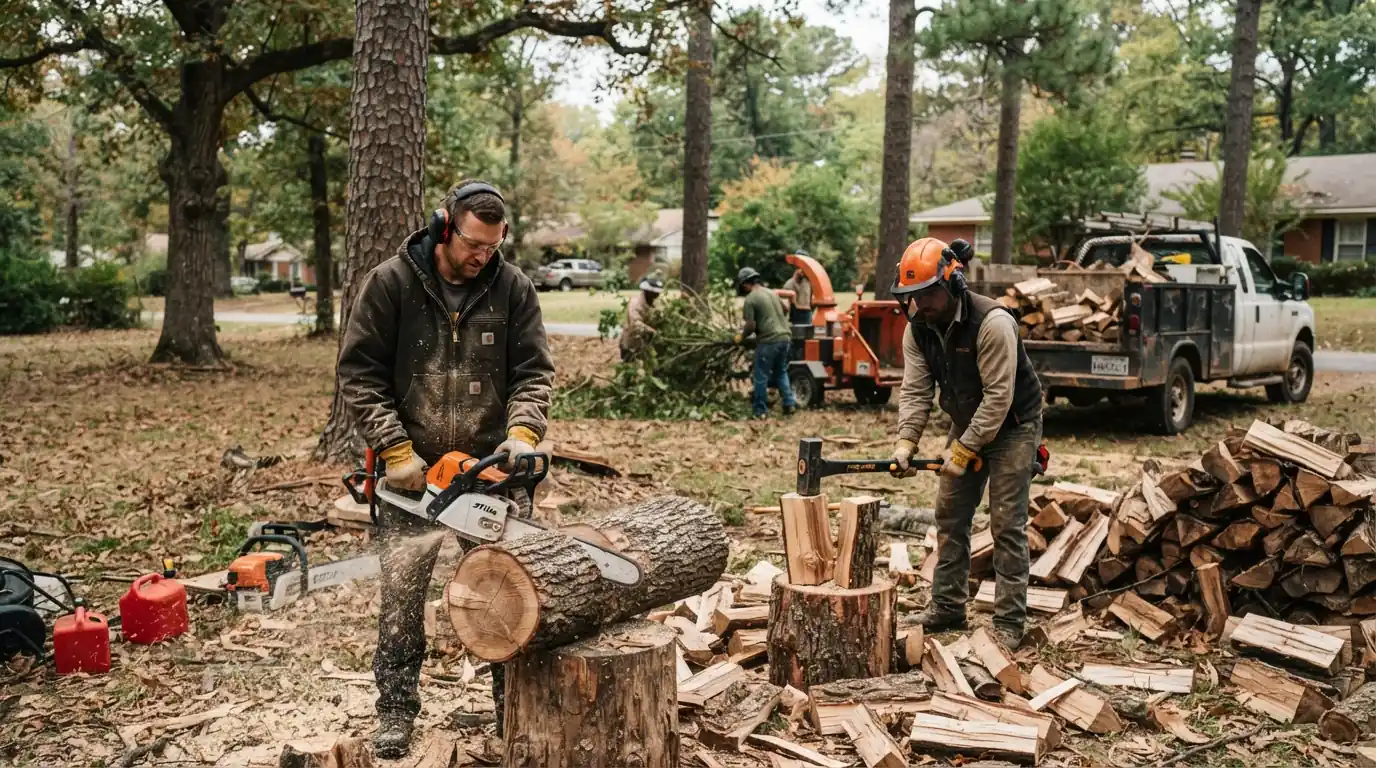
Dense hardwoods like oak, hickory and ash burn longest and hottest. Softwoods like pine light easily but burn fast and leave more creosote. Wood needs to dry, usually six months to a year, before it burns well.
We cut rounds to the length your stove or fireplace takes, split them so they dry faster, and stack them off the ground with air around them.
Compare
What to do with the wood
| Factor | Leave as rounds | Cut and split | Haul it all away |
|---|---|---|---|
| Drying time | Slowest | Fastest | Not your concern |
| Cost | Lowest | Moderate | Varies with volume |
| Ready to burn | After splitting later | After seasoning | No firewood |
| Yard space | Rounds stacked or piled | Neat stacks | Clear yard |
| Best for | Owners who split their own | Anyone who burns wood | No wood-burning |
Honest comparison
Cutting firewood yourself vs calling a crew
| Part of the job | On your own | With our crew |
|---|---|---|
| Small limbs | Fine with a small saw | Chipped or cut in the same visit |
| Big trunk rounds | Heavy, awkward and dangerous to buck | Cut with the right saws |
| Splitting | Hours with a maul or a rented splitter | Split on site |
| Wood under tension | Storm wood can spring when cut | Relieved safely first |
| Sorting species | Easy to keep wood that burns poorly | Good hardwood kept, the rest hauled |
| Stacking | Stacked wrong, it will not dry | Stacked off the ground for airflow |
What moves the price
What decides the price of firewood cutting
Volume of wood
One trunk versus a whole storm's worth.
Round size
Big trunk sections take more cutting.
Splitting
Split wood takes longer than rounds.
Stacking location
Distance from the wood to the stack.
Wood sorting
Separating good hardwood from pine and rot.
Brush handling
Small limbs chipped or hauled.
Cutting rounds to stove length
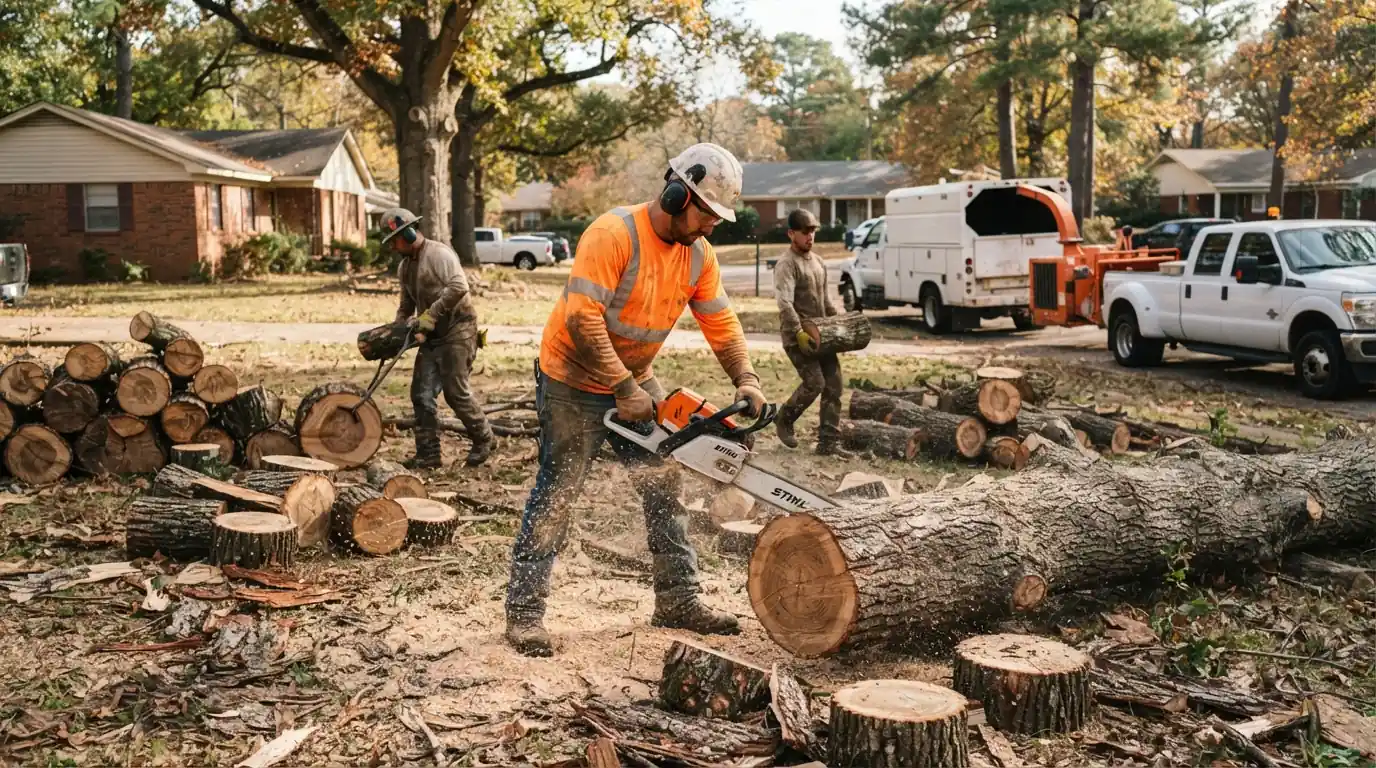
Tell us the firebox length and we cut every round to fit, usually a couple of inches shorter than the box. Trunk sections too big to handle are cut into manageable rounds first, and limbs thick enough to burn are cut too, while smaller brush is chipped. Uniform lengths stack better and dry more evenly, which makes the difference between wood that burns well next winter and wood that smolders. Rounds too knotty or too big to split by hand are split on site so you are not left with pieces you cannot move.
Splitting and stacking
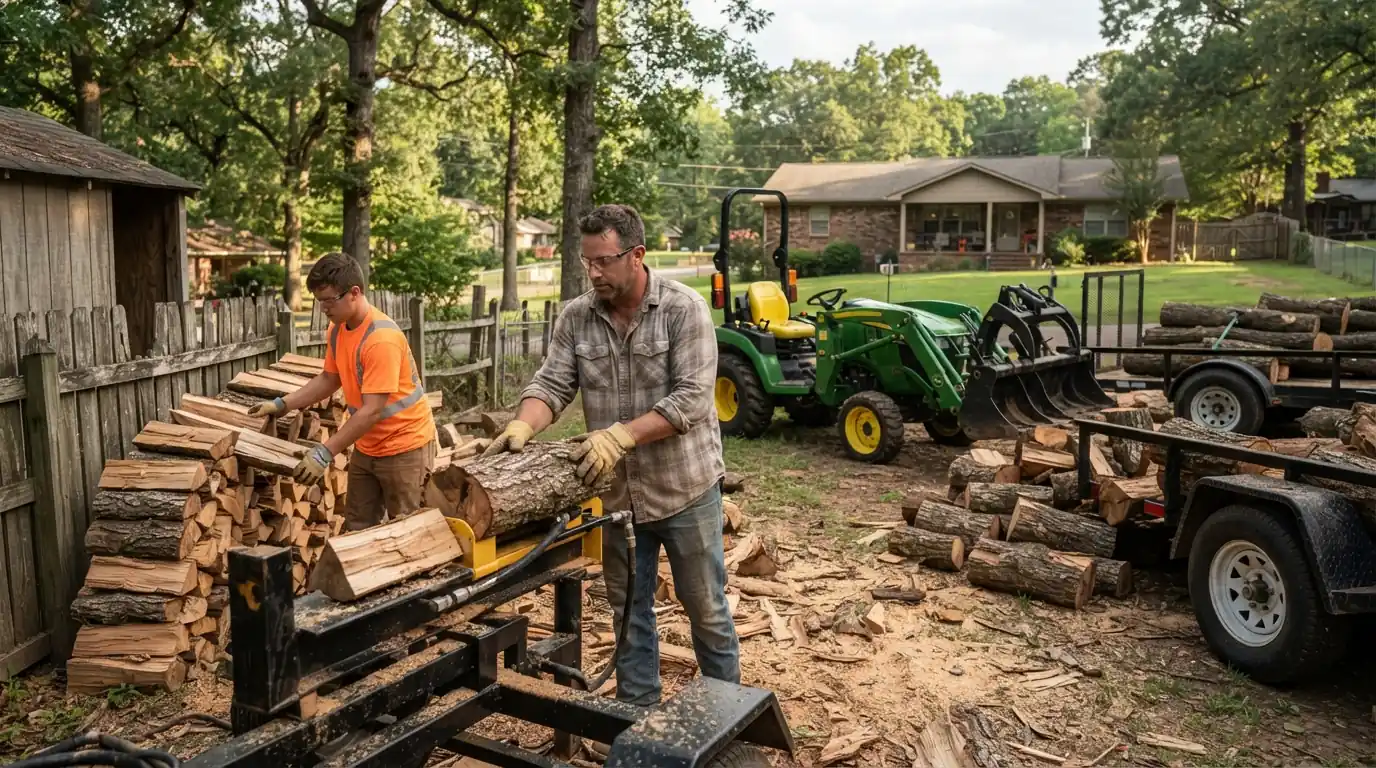
Split wood dries far faster than round wood, because the bark holds moisture in. We split rounds to a size that fits your stove and stack them on pallets or rails off the ground, bark side up on top, in a sunny, breezy spot away from the house walls. Stacks against a house invite termites and hold moisture against the siding, so we keep them a few feet out. A simple cover over the top of the stack keeps rain off while leaving the sides open for air.
Storm wood turned into firewood
After a storm or a removal, a lot of good hardwood usually gets hauled off that could have been firewood. If you want to keep it, say so before cutting starts, so the trunk comes down in usable lengths. Pine, sweetgum and badly rotted wood are better chipped or hauled, and we sort them out as we go. Wood that has been lying on wet ground for months may already be punky, and we tell you honestly whether it is worth splitting.
How this job runs around Little Rock
Firewood carries rules in Arkansas that most people never hear about. Emerald ash borer was first found in the state in 2014, and since March 2018 a statewide quarantine has barred firewood of all hardwood species from leaving Arkansas without meeting federal requirements. Wood cut from your own trees in Little Rock and burned at home is fine; hauling a load of it to a cabin across the state line is not.
Step by step
How a firewood job goes
- 1
Call about the wood
What fell or is coming down, and what species.
- 2
Agree length and stack spot
Firebox size and where to stack.
- 3
Cut to length
Rounds cut evenly to fit.
- 4
Split and stack
Split for drying, stacked off the ground.
- 5
Clean up the rest
Brush chipped, poor wood hauled.
Straight answers
Questions we get about this
Usually six months to a year, split and stacked with airflow.
Dense hardwoods like oak and hickory.
It burns fast and leaves more creosote; hardwood is better.
Hardwood firewood cannot leave the state without meeting federal rules under the quarantine.
No. Keep it a few feet away to avoid moisture and termites.
Yes, if you want it split rather than left in rounds.
Yes. Tell us before cutting starts so it comes down in usable lengths.
Related work
Other jobs we handle near this one
Commercial Tree Service
HOA and Community Contracts and more.
See how commercial tree service worksDriveway & Access Road Clearing
Overgrown Rural Driveways and more.
Driveway & Access Road Clearing in Little RockBrush & Debris Hauling
Brush Pile Removal and more.
See how brush & debris hauling works
Turn the fallen tree into firewood
Call any hour. We will cut, split and stack it where you want it.