Answered 24/7 across Little Rock and the Texarkana area
Forestry mulching for overgrown land around Little Rock and Texarkana
A forestry mulcher chews brush and small trees down to the ground and spreads the chips where they fall. No burn piles, no hauling, and far less soil disturbance than pushing it all up with a dozer.
- Underbrush and privet mulching
- Pine stand thinning
- Answered 24/7
Short answer
Forestry mulching around Little Rock and Texarkana grinds brush and small trees in place with a mulching head on a tracked machine, leaving a layer of chips on the ground instead of piles to burn or haul. It suits overgrown acreage, fence lines, trails and thinning crowded pine stands. Larger trees are cut first and handled separately.
Updated October 2026
What mulching does and does not do
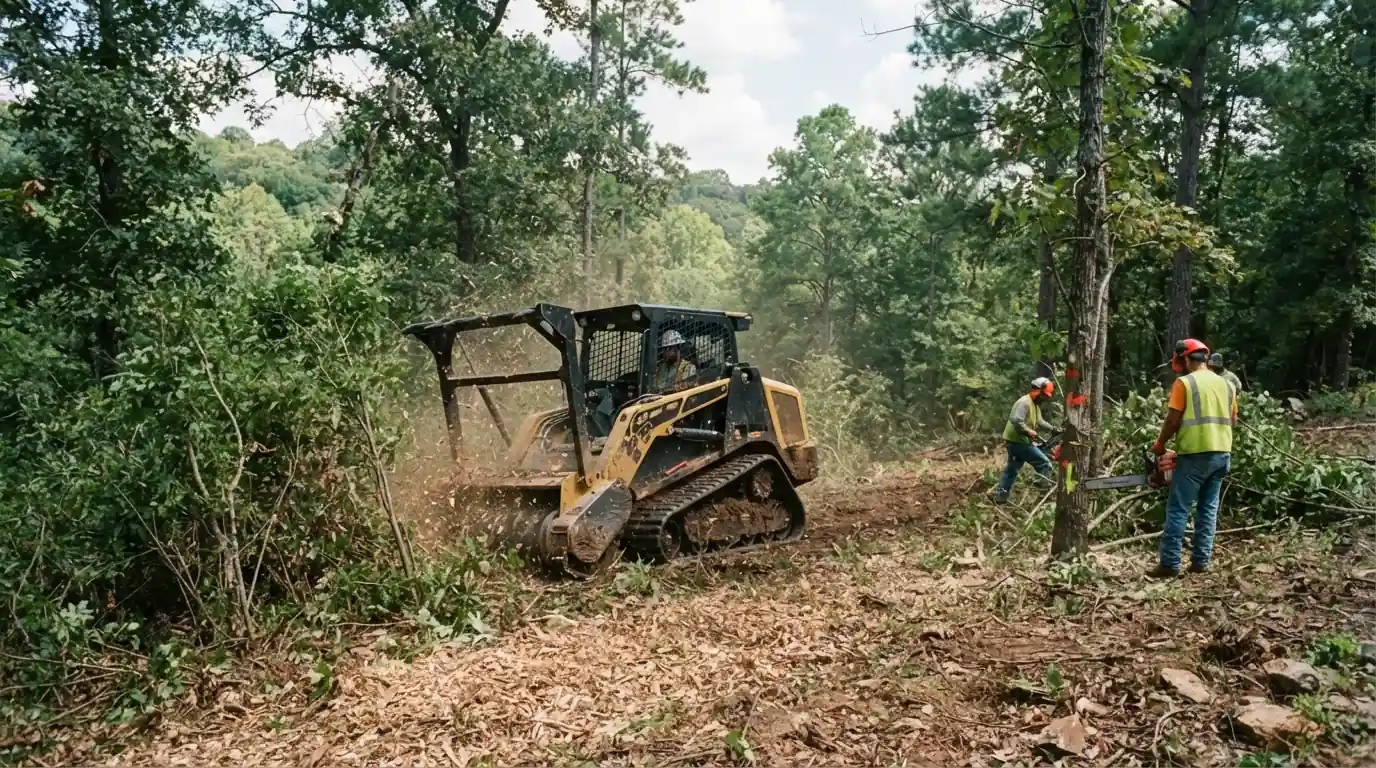
The mulching head handles brush, vines, privet thickets and small trees. It leaves stumps at or near ground level and the chips protect the soil from washing. The land can be walked, mowed or grazed afterward.
It does not replace full clearing for a building pad. Stumps and roots stay, so foundation and driveway areas still need stump removal.
Compare
Mulching, dozing or hand clearing
| Factor | Forestry mulching | Dozer clearing | Hand clearing |
|---|---|---|---|
| Soil disturbance | Low | High | Low |
| Debris left | Mulch spread on site | Piles to burn or haul | Brush to chip or haul |
| Stumps | Small ones ground flush | Pushed out | Cut flush |
| Best for | Brush, trails, thinning | Building pads | Small areas near structures |
| Speed | Fast on acreage | Fast | Slow |
What moves the price
What decides the price of forestry mulching
Acreage
Priced by the area and how long the machine runs.
Density
Light underbrush versus a solid privet thicket.
Stem size
Larger saplings take more passes.
Terrain
Slopes, creeks and wet ground slow the machine.
Trees kept
Working around trees you want saved.
Larger trees
Trees too big to mulch are felled and handled separately.
Scope
What a mulching job includes
- Walk-through and flagging of keep trees
- Boundaries and buried hazards marked
- Larger trees felled before mulching
- Brush and saplings ground in place
- Small stumps ground near ground level
- Trails and access lanes cut to width
- Final walk to check coverage
Underbrush and privet mulching
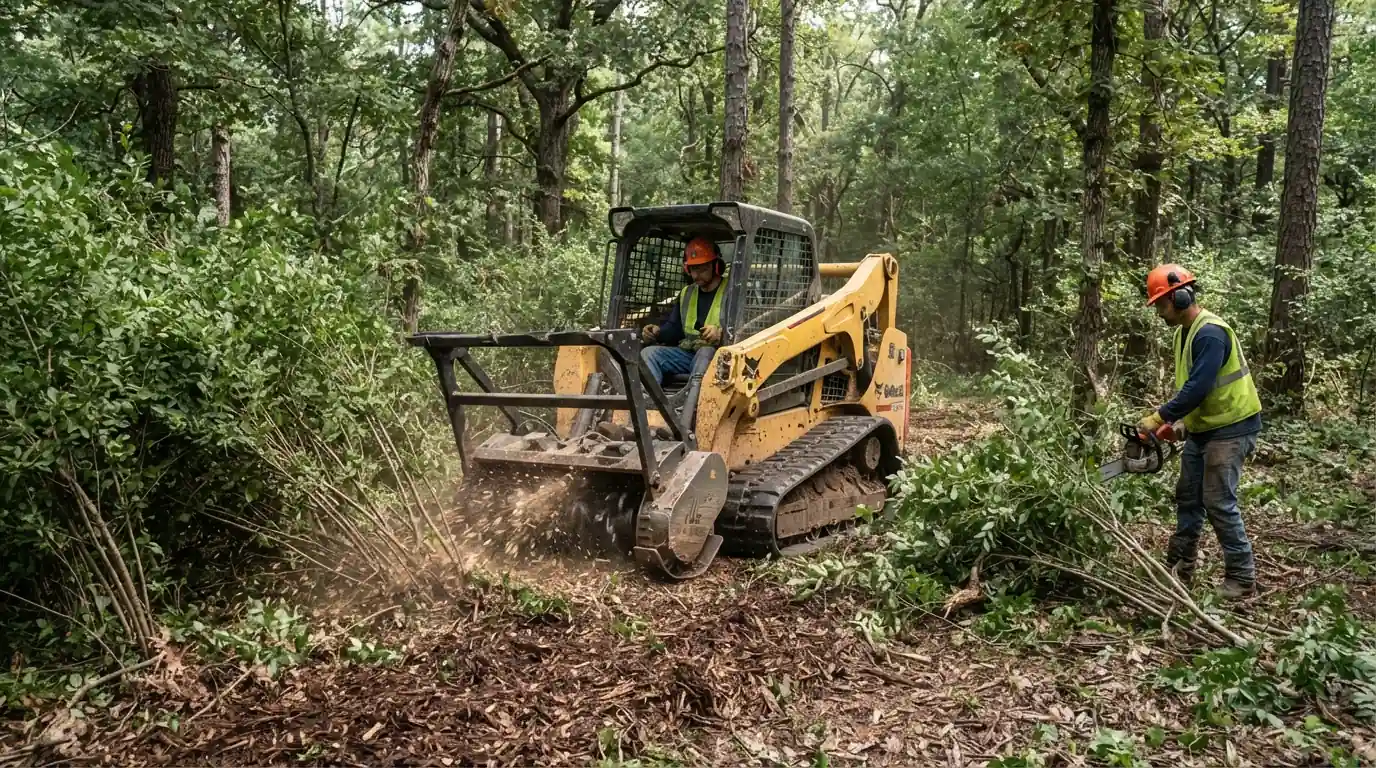
Chinese privet, vines and saplings fill in under trees and along fence lines until nothing can get through. The mulcher opens it up in a single pass, leaving the bigger trees you want to keep standing. Privet resprouts from roots, so a follow-up mow or treatment keeps it from coming back. Mulching is the fastest way to turn a wall of green back into usable woods, and the chips it leaves slow the next flush of seedlings by shading the soil.
Thinning an overgrown pine stand
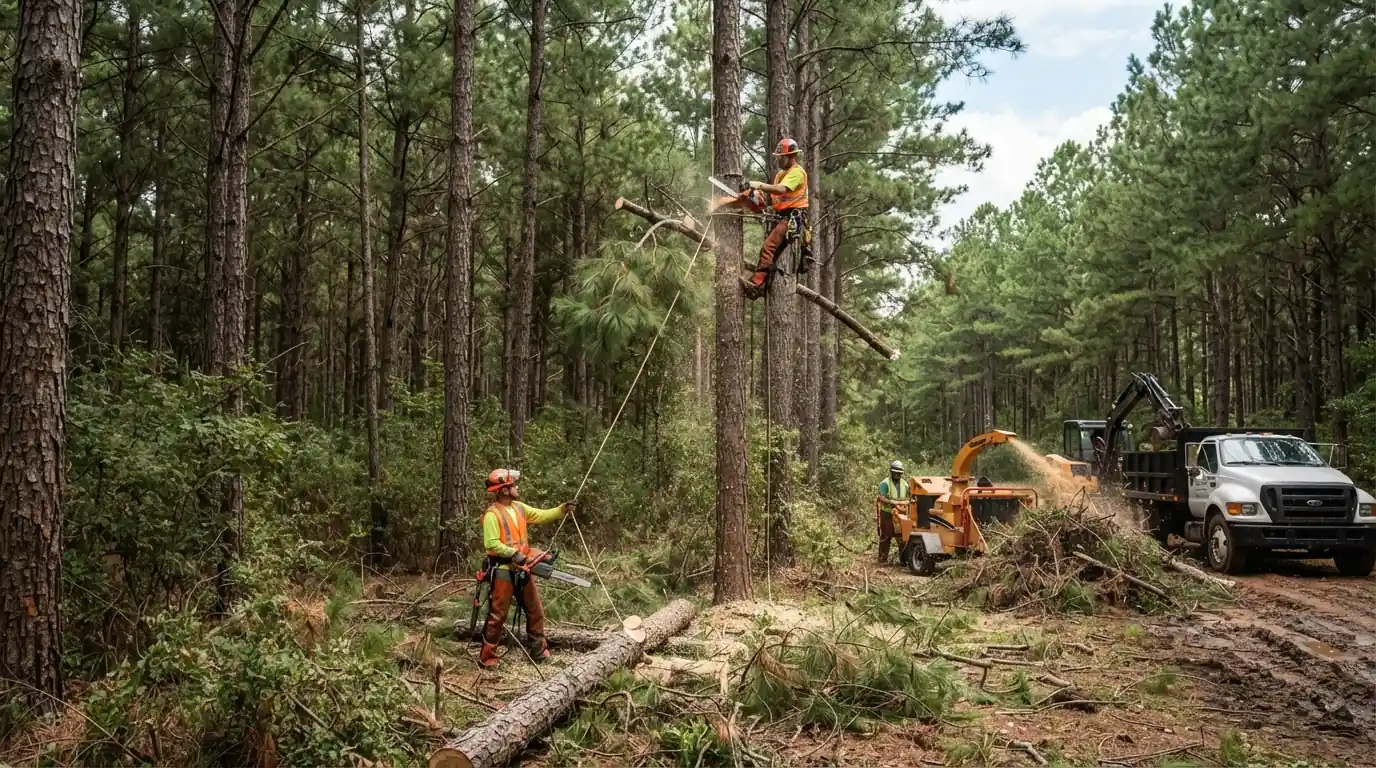
A pine stand planted or seeded too thick grows tall, thin trees that crowd each other. Thinning removes the weaker stems so the rest put on girth. We mulch small and suppressed pines and brush between the rows and can fell larger ones for haul-off. A thinned stand is healthier, easier to walk, and far more resistant to ice damage. We agree the spacing with you before the machine starts, flagging the trees that stay, so the stand you end up with is the one you pictured.
Trail and access cutting
Hunting land, back acreage and pasture edges often need a way in. We cut a trail or access lane wide enough for a truck or a side-by-side, mulching the brush in place and grinding small stumps flush. The chips form a soft, stable path surface that keeps mud down through the wet months. Creek crossings and steep banks are marked and left alone, since the machine should not be run through water or on slopes that could slide, and those spots are handled by hand if they need clearing.
How this job runs around Little Rock
Thinning matters here for a reason Arkansas learned the hard way. After the December 2000 ice storms, a Forest Service assessment found young, unthinned loblolly pine stands took the most damage, while older thinned stands had the most undamaged survivors. With loblolly dominating the pine belt across southwest Arkansas to the Texarkana side of the state line, a crowded stand on your land is also a storm risk, and mulching out the suppressed stems is the cheapest way to fix it.
Equipment on tree jobs
The saw, chipper, grinder and rigging brands common across tree work
Step by step
How a mulching job runs
- 1
Call about the land
Acreage, what is growing, and what you want to use it for.
- 2
Walk and flag keep trees
Mark trees, boundaries and anything buried.
- 3
Fell larger trees
Anything too big for the mulcher is cut first.
- 4
Mulch the brush
Brush and small trees ground in place.
- 5
Final walk
Check coverage and any spots for follow-up.
Straight answers
Questions we get about this
A tracked machine with a rotating mulching head that grinds brush and small trees in place.
It grinds small stumps near ground level. Larger stumps stay unless removed separately.
Some species resprout, especially privet. A follow-up mow or treatment keeps it down.
It leaves topsoil in place and needs no burn piles, but it will not prepare a building pad.
Yes. Keep trees are flagged first and the operator works around them.
Yes, from our De Kalb, TX office.
It stays on the ground, protecting soil and breaking down over time.
Related work
Other jobs we handle near this one
Firewood Cutting & Splitting
Cutting Rounds to Stove Length and more.
More on firewood cutting & splittingEastern Red Cedar Clearing
Cedars in Pastures and more.
Eastern Red Cedar ClearingCommercial Tree Service
HOA and Community Contracts and more.
Commercial Tree Service
Open up the overgrown ground
Call any hour with the acreage and what is growing on it. We will walk it and price the mulching.