Answered 24/7 across Little Rock and the Texarkana area
Tree planting around Little Rock, right tree in the right spot
Most of the trees we remove were planted in the wrong spot: too close to the house, under a line, or a species that outgrows the yard. Planting is the chance to get that right for the next fifty years.
- Shade and replacement trees
- Staking and first-year care
- Answered 24/7
Short answer
Tree planting in Little Rock is best done from late fall through early spring, when roots can settle before summer heat. The biggest decisions are the spot and the species: far enough from the house, driveway and lines for the tree's mature size. A new tree needs deep watering through its first two summers.
Updated October 2026
Where it goes matters more than how
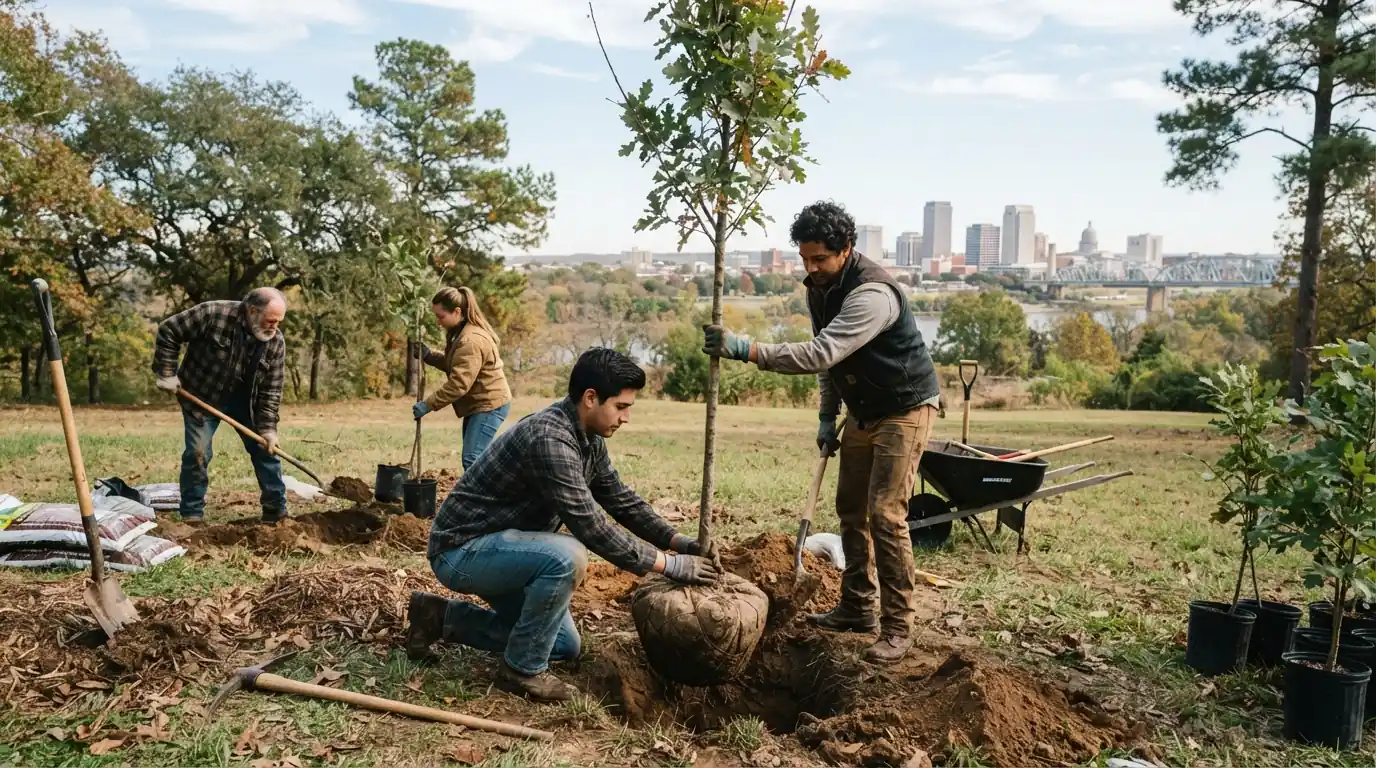
We start with the tree's mature height and spread, then work back to a spot where it will not hit the roof, foundation or wires in twenty years. Big shade trees need real room; small flowering trees fit near the house.
Planting itself is simple done right: a wide, shallow hole, the root flare at grade, loose native backfill, mulch kept off the trunk, and watering you can keep up.
Compare
Shade tree or small tree
| Factor | Large shade tree | Small ornamental tree |
|---|---|---|
| Mature size | Tall and wide | Stays small |
| Distance from house | Well away | Can sit closer |
| Under power lines | Never | Fine |
| Shade | Heavy, long-term | Light |
| Time to maturity | Decades | Several years |
What moves the price
What decides the price of planting
Tree size
A small container tree versus a large balled tree.
Number of trees
Several trees planted in one visit.
Site prep
Old stump grinding or soil brought in.
Access
Carrying heavy root balls to the back yard.
Staking and mulch
Materials and setup.
Tree supply
Whether you buy the tree or we source it.
Scope
What a planting visit includes
- Site chosen for mature height and spread
- Buried lines located before digging
- Wide, shallow hole with the flare at grade
- Burlap and wire pulled back from the root ball
- Native backfill without heavy amendment
- Mulch ring kept off the trunk
- First-two-summers watering plan
Shade tree planting
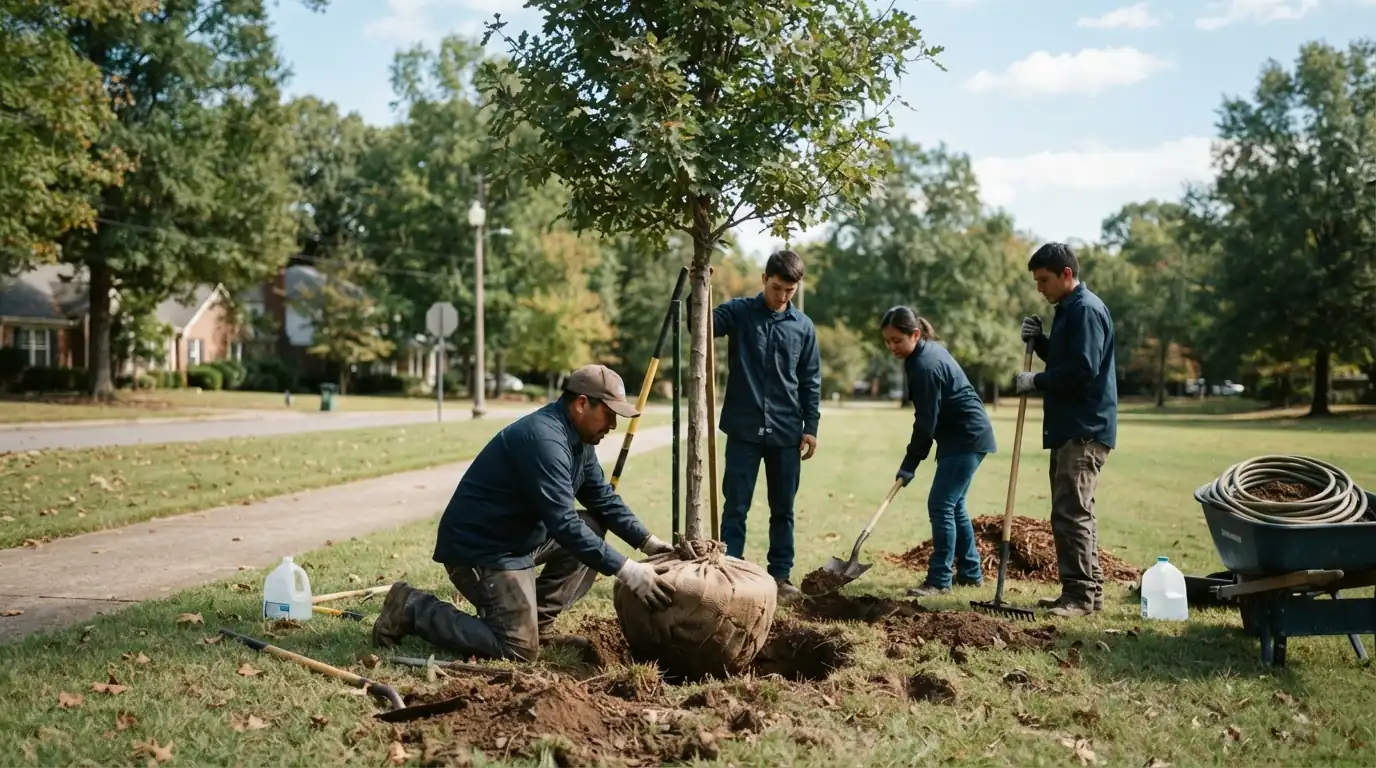
Oaks, maples and other large shade trees give the most back but need the most space. We site them well away from the house and lines, on the side where summer shade matters most. Container or balled trees are set at the right depth, the burlap and wire pulled back, and the hole backfilled with the soil that came out. Big trees planted small often catch up to larger nursery stock within a few years, and they establish more easily.
Replacement after a removal
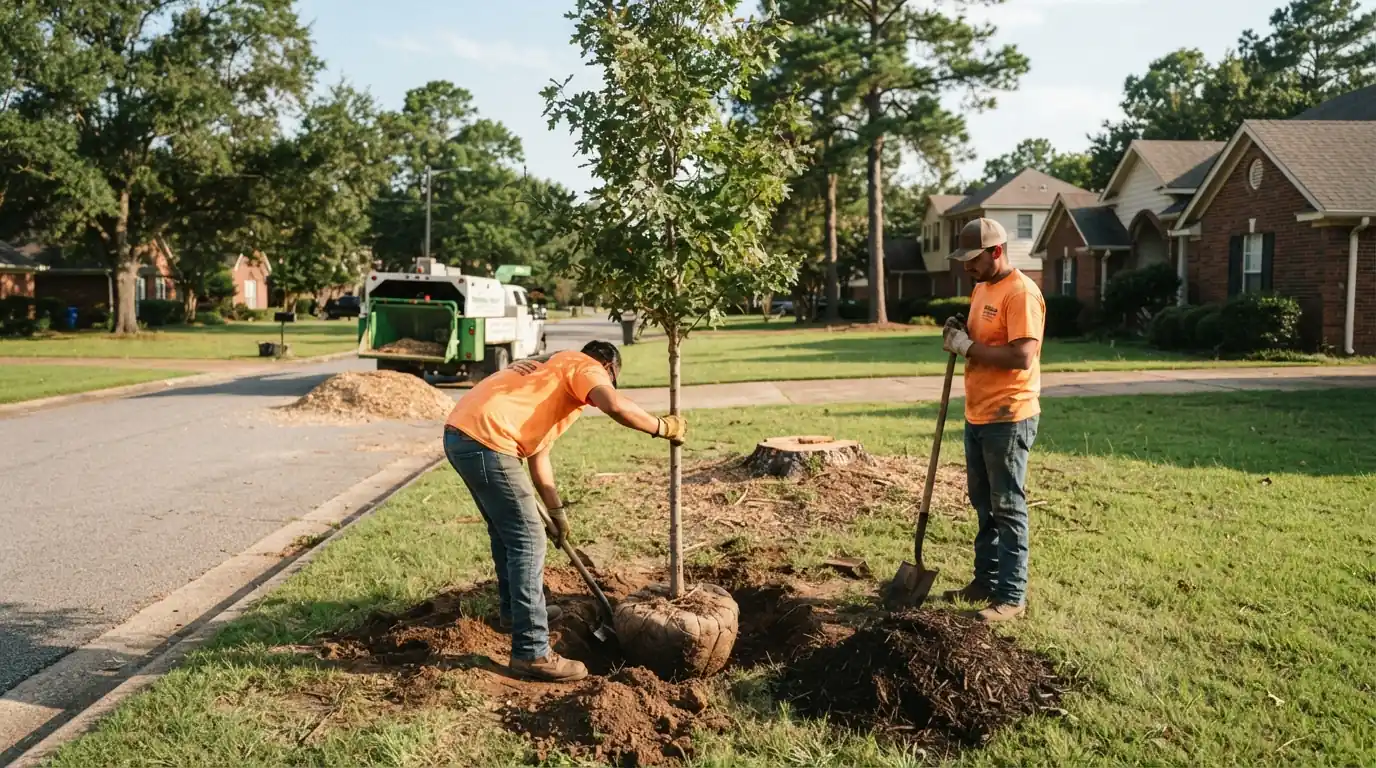
Planting on the exact spot of a removed tree fights old roots and a settling grind hole. We usually move the new tree a few feet off the old center, or grind deeper and bring in soil if the spot matters. It is also a chance to choose a species that suits the space better than the one that came out, especially after a storm removal. A pine that came down on the house might be better replaced with an oak set farther away, or a smaller tree that will never reach the roof at all.
Staking and first-year care
Most new trees do not need stakes; the ones that do are staked loosely and the ties removed within a year so the trunk strengthens. We mulch in a wide ring, keep it off the bark, and give you a watering plan for the first two summers, when new trees are most likely to fail. A new tree lost in its first August is almost always a watering problem, so the plan spells out how much and how often in plain terms you can actually keep up with.
How this job runs around Little Rock
How trees are spaced affects how they stand up to ice. After the December 2000 ice storms, a Forest Service assessment of Arkansas pine stands found crowded, unthinned young stands took the most damage, while older thinned stands had the most undamaged survivors. The lesson carries over to a yard: trees planted with room to grow full, balanced crowns, rather than crammed together, hold up better when the next ice storm reaches Little Rock.
Step by step
How a planting visit goes
- 1
Call and talk through the spot
What you want from the tree and where it could go.
- 2
Pick species and site
Matched to mature size, sun and soil.
- 3
Dig wide and shallow
Root flare set at grade.
- 4
Backfill and mulch
Native soil, mulch ring off the trunk.
- 5
Watering plan
What to do the first two summers.
Straight answers
Questions we get about this
Late fall through early spring, so roots settle before summer heat.
Far enough for its mature spread to clear the roof. Large shade trees need real distance.
Yes, ideally a few feet off the old center, or after deeper grinding.
Deep watering weekly in dry spells through the first two summers.
Only if they cannot stand on their own, and ties come off within a year.
Anything that grows tall. Small ornamental trees are the safe choice there.
We can plant trees you buy or talk through sourcing one.
Related work
Other jobs we handle near this one
Tree Risk Assessment
Leaning or Cracked Trees and more.
Tree Risk AssessmentTree Protection During Construction
Root Zone Fencing and more.
More on tree protection during constructionTree Transplanting
Moving Young Trees and more.
Tree Transplanting
Plant the next tree in the right spot
Call any hour and tell us what you want the tree to do for the yard. We will help pick the spot and plant it right.