Tree care guide from Little Rock, phones answered 24/7
Signs a tree is dying in Arkansas, and when to worry
Trees give warning before they fail, but most of the signs are easy to miss from the kitchen window. Here is what to look for, top to bottom, and which signs mean a stressed tree versus one that is already on its way out.
By Merle Shackelford, Tree Care Guides Editor · Updated October 2026
Short answer
The clearest signs a tree is dying are dead branches spreading through the crown, bark falling off in patches, mushrooms or shelf fungi at the base, a new lean with lifted soil, and leaves that come out late and sparse. In Arkansas, a pine turning red-brown from the top down is usually already dead, most often from Ips engraver beetles after drought.
Start at the top: the crown
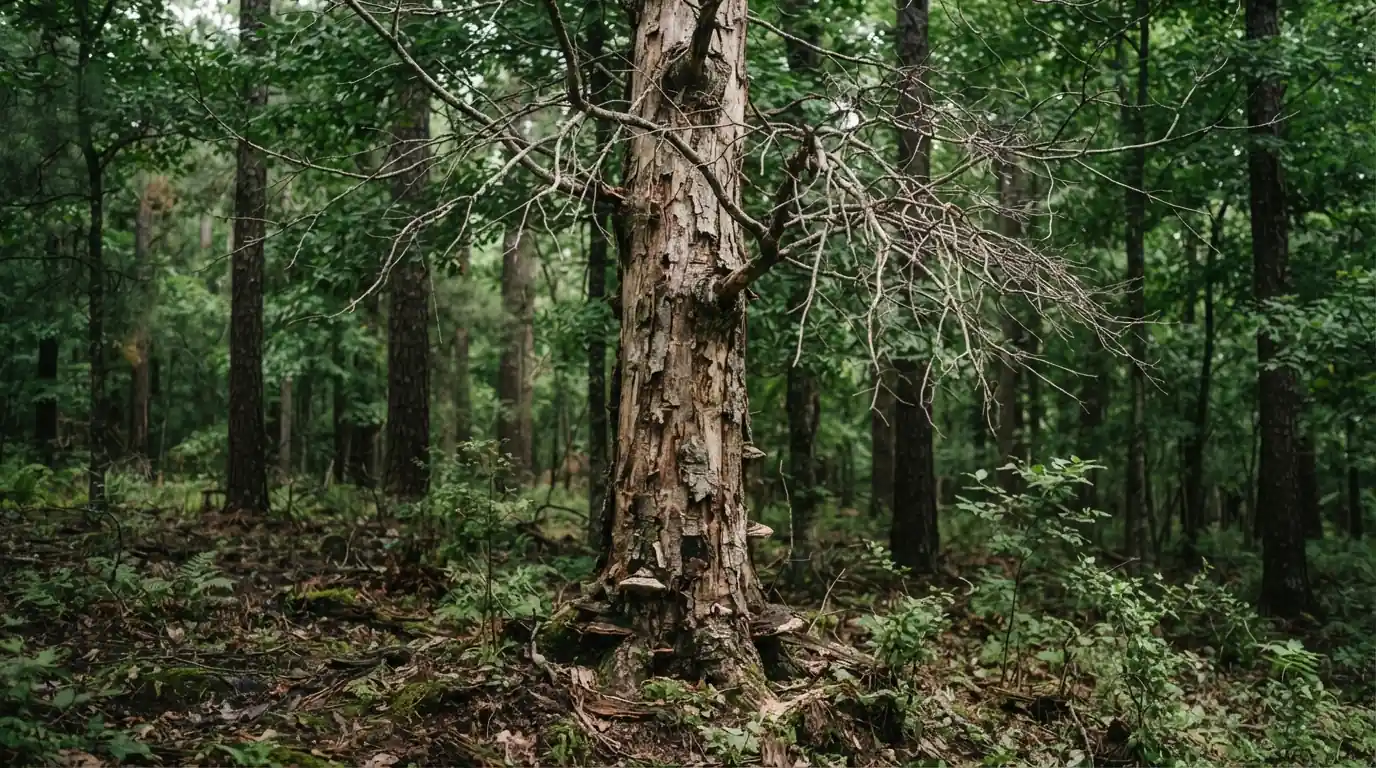
A healthy crown is full for its species. Watch for dead branches that do not leaf out in spring, dieback at branch tips, leaves that are small, pale or drop early, and a crown that looks thinner each year. One dead limb is normal; dead wood spreading through the canopy is not.
Scratch a twig with your thumbnail. Green under the bark means that twig is alive; brown and dry means it is not. Check several branches around the tree.
The trunk and bark
Bark falling off in sheets usually means the wood underneath is dead. Vertical cracks, cavities, oozing sap and soft wood you can push a screwdriver into all point to decay. Woodpeckers working hard on one tree often mean insects under the bark.
Shelf-like fungi growing from the trunk or base are the fruit of rot inside. By the time they show, the decay has usually been working for years.
At the base and roots
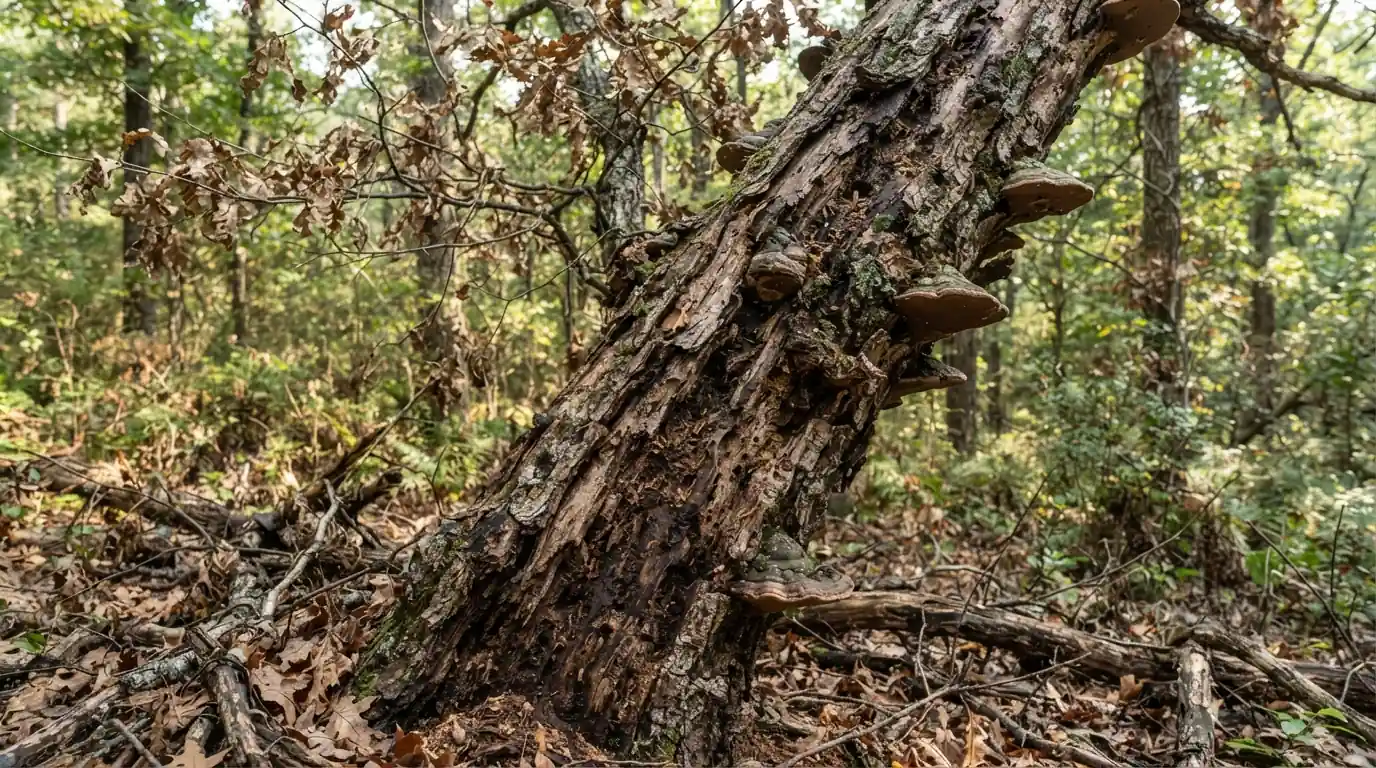
A lean the tree has always had is usually fine. A new lean, with soil cracked or lifted on the far side, means the roots are failing. Mushrooms in a ring around the base, roots cut by trenching or a new driveway, and soil piled against the trunk can all start decline that shows up in the crown a year or two later.
Construction damage is sneaky: the tree looks fine the first season and starts dying the next.
Questions about a tree in Little Rock? The crew line is answered around the clock.
Call (501) 439-8373Pines: read the browning pattern
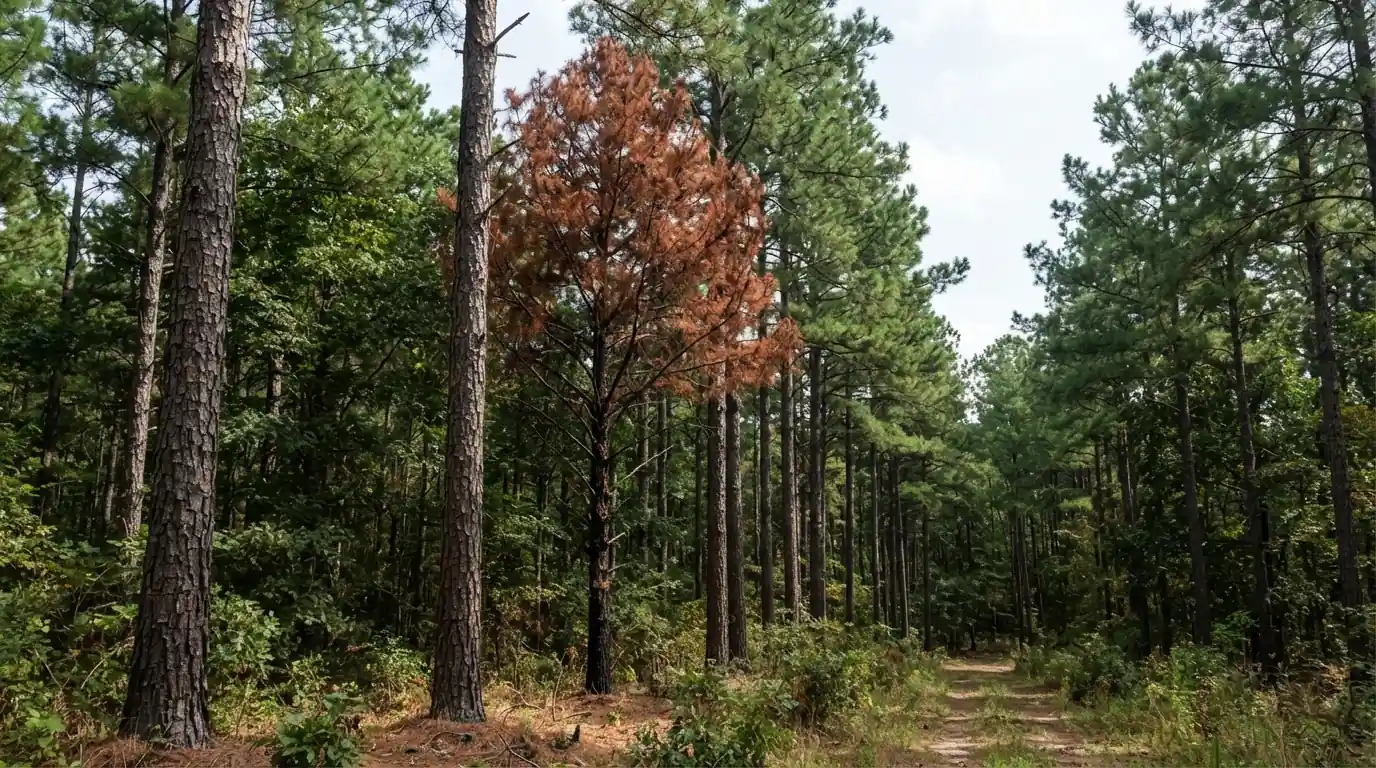
Arkansas pines tell you what is wrong by how they brown. A pine that turns yellow, then red-brown, starting at the top, often with small blobs of resin on the bark, is almost always dead from Ips engraver beetles, which move in after drought. State forestry guidance says southern pine beetle has not had an outbreak here since the mid-1990s.
Browning that starts at the bottom of the crown and moves up, with green tips, is more likely brown spot needle blight, which was confirmed across many southern Arkansas counties in 2025. Those trees often recover. Some needle drop every fall is normal.
After storm damage
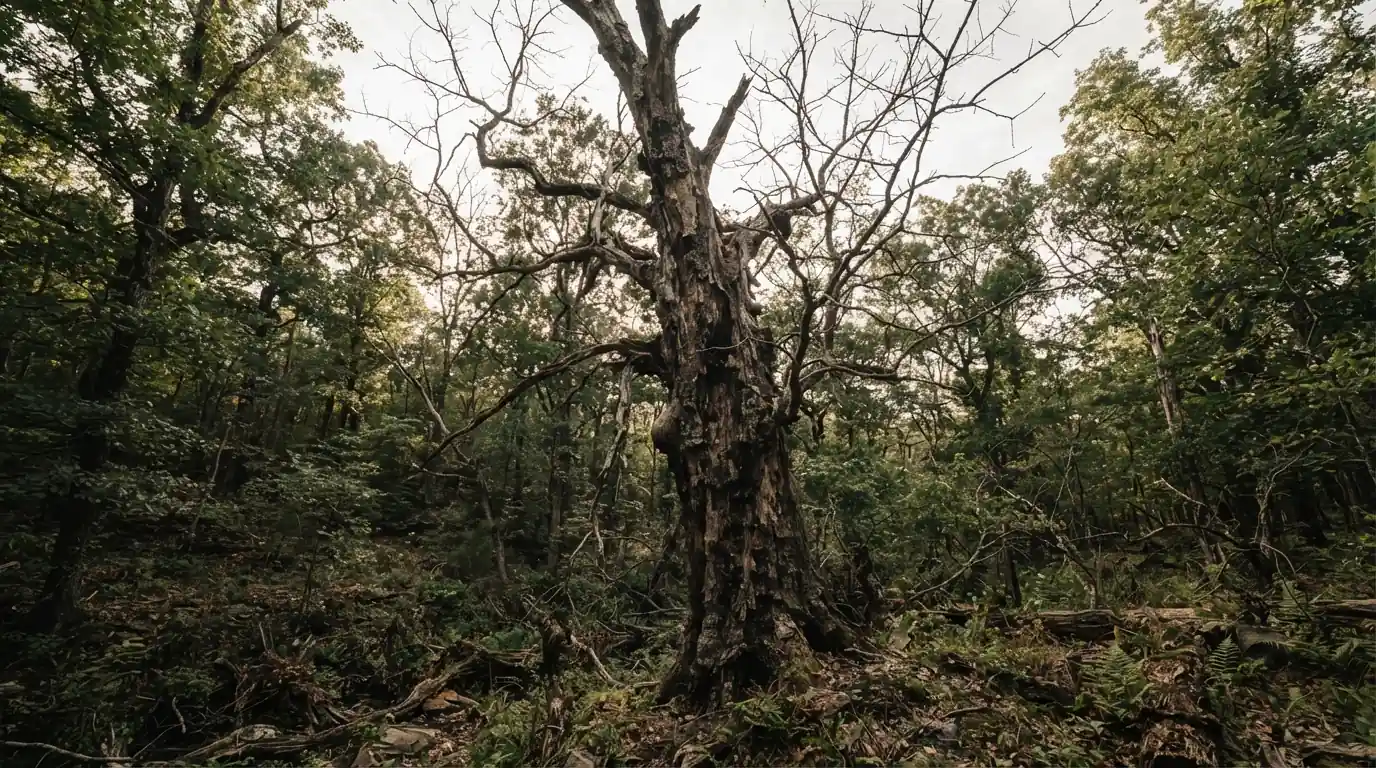
A tree that lost limbs in a storm is not automatically dying. University of Arkansas extension guidance says most mature hardwoods that lose 25 to 75 percent of the crown survive with slower growth, while trees past 75 percent generally do not. Severely damaged trees can decline for several years before dying, so watch them.
Clean up broken limbs with proper cuts back to a branch or trunk. Jagged stubs let decay in.
When to call someone out
Call soon if a tree with any of these signs stands where it could hit the house, the driveway, a play area or a line. Dead trees get more brittle and more dangerous to take down the longer they stand, especially pines.
If the tree is in the open with nothing to hit, you have time to watch it through a season. A risk walk-through gives you a plain answer either way.
Related services
Services this guide touches on
Tree Risk Assessment
Leaning or Cracked Trees and more.
Tree Risk Assessment in Little RockBeetle-Killed Pine Removal
Red-Crown Ips Beetle Pines and more.
Beetle-Killed Pine Removal in Little RockTree Removal
Dead Tree Removal and more.
Tree Removal
Straight answers
Questions readers ask
Scratch a twig. Green under the bark means alive; brown and dry means dead.
Sometimes, if the cause is stress rather than decay. A tree with rot at the base usually cannot.
Usually root or butt rot. It needs a closer look, especially near a house.
Most often Ips engraver beetles after drought. By the time the crown is red, the tree is dead.
Not necessarily. Pines shed older needles every autumn.
Most hardwoods that lose up to three quarters of the crown survive, per UAEX guidance.
Not safely for long. It gets more brittle every season.
Worried about a tree?
Call any hour. A crew lead walks it with you and tells you honestly whether it needs work, watching or removal.