Answered 24/7 across Little Rock and the Texarkana area
Eastern red cedar clearing around Little Rock and Texarkana
Red cedars start as seedlings along fence rows and spread across a pasture a few at a time, until one day the grass is gone and the field is a thicket. They are far cheaper to clear while they are small.
- Pasture and fence-row cedars
- Cut, mulched or hauled
- Answered 24/7
Short answer
Eastern red cedar clearing around Little Rock and Texarkana means cutting cedars below the lowest branch so they do not resprout, then mulching, piling or hauling the wood. Cedars grow across all of Arkansas to about 60 feet and spread from seed into pastures and fence rows, so small trees are cleared before they become a thicket.
Updated October 2026
Why cedars take over
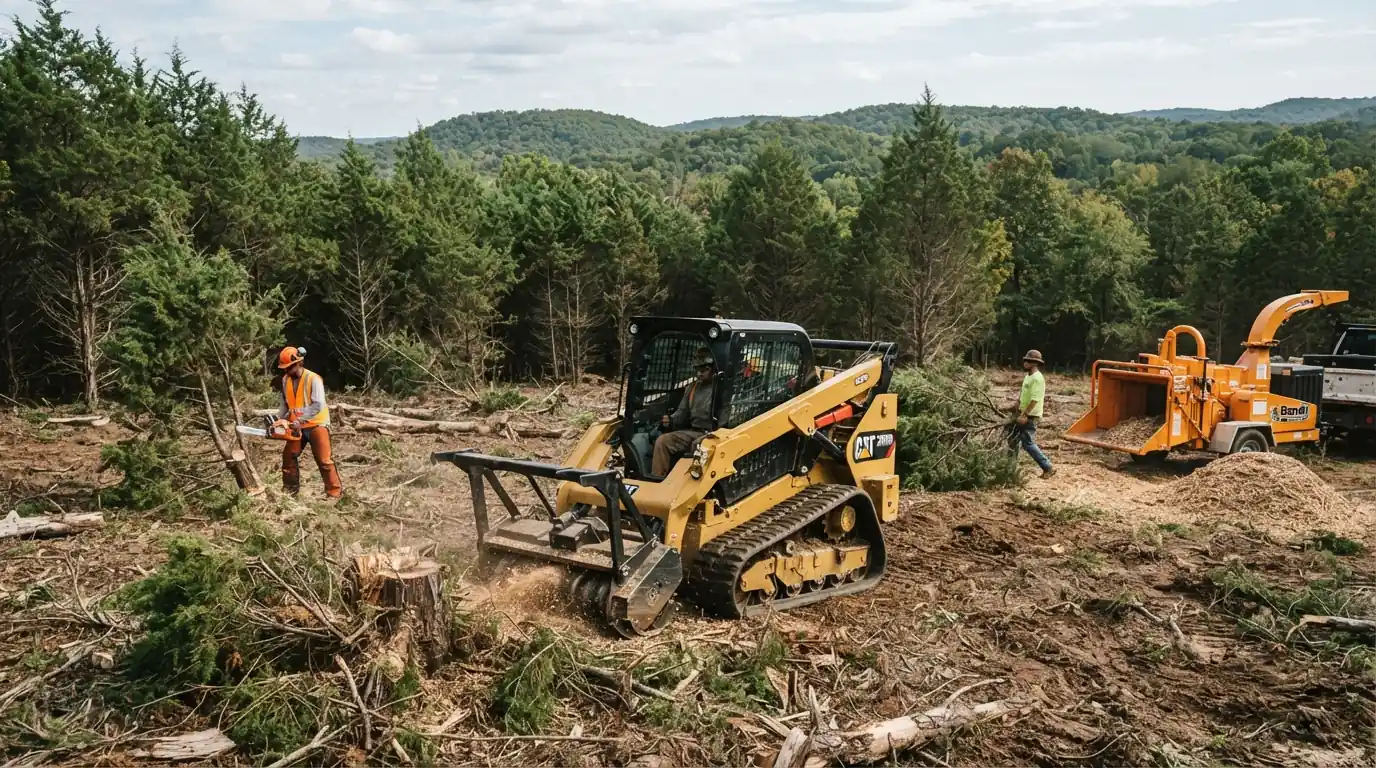
Birds eat the berries from female cedars and drop the seed along fences and field edges. Seedlings grow slowly at first, then shade out grass as they widen. A pasture with a few scattered cedars can be closed in within a couple of decades.
Cedars cut below the lowest green branch do not sprout back, which makes cutting effective. The work is deciding what happens to the wood and whether to take the bigger trees near the house as well.
Compare
What to do with the cedar wood
| Factor | Cut and mulch | Cut and pile | Cut and haul |
|---|---|---|---|
| Ground left | Clean mulch surface | Brush piles on site | Clean, bare ground |
| Best for | Pastures and trails | Large rural acreage | Yards and small lots |
| Cost | Moderate | Lowest | Highest |
| Grazing and mowing | Ready soon after | Around the piles | Ready right away |
| Wood kept | No | Can be | Posts cut if you want |
What moves the price
What decides the price of cedar clearing
Acreage
A few trees versus a whole field.
Tree size
Small cedars go quickly; big ones take rigging.
Wood handling
Mulched, piled or hauled.
Fence rows
Cedars grown into wire take care.
Ground conditions
Wet ground limits equipment.
Trees kept
Working around shade or windbreak trees.
Cedars in pastures
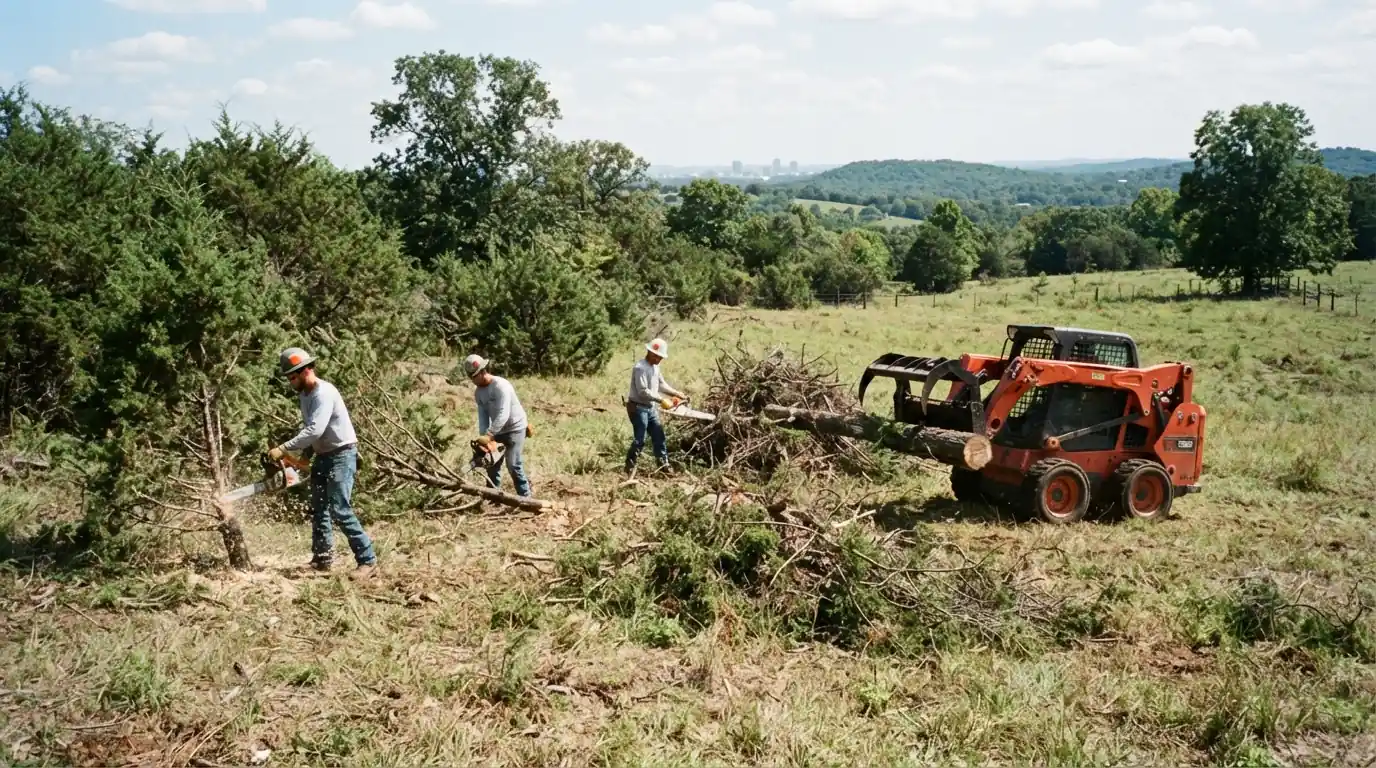
Scattered pasture cedars are cut flush at the ground below the lowest branch, then mulched in place or piled and hauled, depending on how you use the field. Mulching leaves a clean surface for grazing and mowing; piling is cheaper on large acreage. We work in the dry months when the ground can carry equipment without rutting the pasture, and we flag any cedars you want kept for shade or windbreak. Big cedars in the open are cut in sections and the trunks bucked into posts or piled, since they are too heavy to mulch whole.
Cedar-choked fence rows
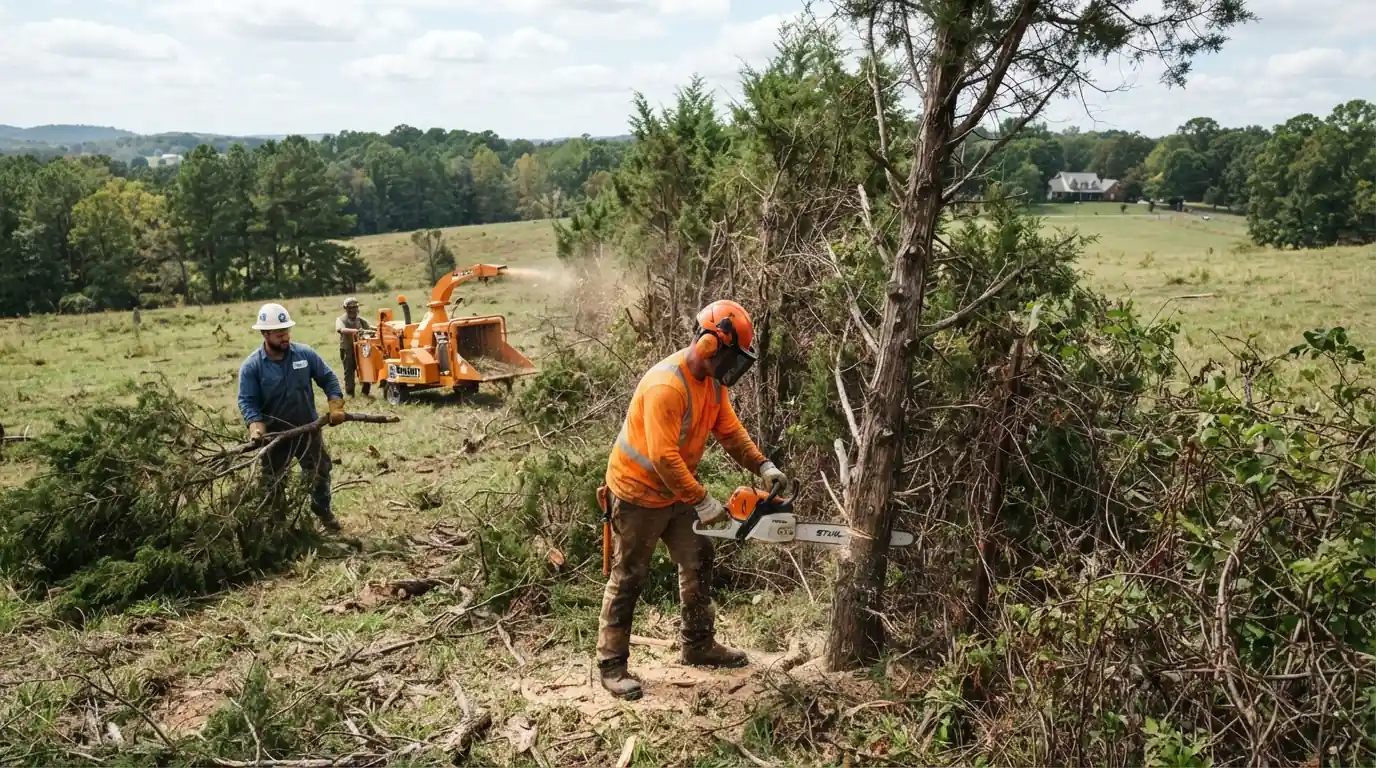
Old fence rows are where cedars start, and they often grow through the wire. We cut them out along the line, free the fence where we can, and leave a clear strip wide enough to repair or replace the fence. Where cedars have grown into the wire, the fence usually needs replacing anyway, and we tell you before we start so you can plan it. Clearing both sides of the line at once is cheaper than coming back for the neighbor's side later, if they agree to it.
Cedars close to the house
Big red cedars near houses shed pollen heavily in late winter, drop needles in gutters and hold a lot of fuel close to the walls. Taking one down near a house is an ordinary rigged removal, lowering sections away from the roof. The fragrant wood is often kept for posts or projects, and we cut it to lengths you can use. The stump is ground below grade afterward so the spot can be planted or turned back to lawn.
How this job runs around Little Rock
University of Arkansas extension notes that eastern red cedars range across all of Arkansas, grow to about 60 feet, and spread from seed into pastures and fence rows, while the male trees shed heavy pollen in February and March. On the rural properties around the Texarkana side and the edges of the Little Rock metro, that is exactly the pattern we see: fence lines thick with cedar and fields slowly closing in.
Equipment on tree jobs
The saw, chipper, grinder and rigging brands common across tree work
Step by step
How a cedar clearing job runs
- 1
Call about the cedars
Acreage, fence rows, and what you use the land for.
- 2
Walk and flag
Mark the cedars that stay.
- 3
Cut below the lowest branch
Flush cuts so they do not resprout.
- 4
Mulch, pile or haul
Wood handled the way you choose.
- 5
Check the fence lines
Strips left clear for fence repair.
Straight answers
Questions we get about this
Not when cut below the lowest green branch.
Mulching leaves the ground clean; piling or hauling suits large acreage.
Dry months, when the ground can carry equipment.
Sometimes. Cedars grown through the wire usually mean the fence needs replacing.
They shade out grass and spread steadily if left alone.
Yes. It is cut to lengths for posts or projects on request.
Yes, from our De Kalb, TX office.
Related work
Other jobs we handle near this one
Forestry Mulching
Underbrush and Privet Mulching and more.
See how forestry mulching worksBrush & Debris Hauling
Brush Pile Removal and more.
See how brush & debris hauling worksDriveway & Access Road Clearing
Overgrown Rural Driveways and more.
Need driveway & access road clearing?
Take the field back from the cedars
Call any hour with the acreage and where the cedars are. We will walk it and price the clearing.