Answered 24/7 across Little Rock and the Texarkana area
Beetle-killed and dying pine removal in Little Rock
A pine that turns rust-red from the top down in a dry summer is usually already dead. It will not green back up, and every month it stands, the wood dries and the top gets more likely to snap.
- Dead pine removal
- Lift used when too brittle to climb
- Answered 24/7
Short answer
Dead pine removal in Little Rock typically runs about $506 to $690 for an ordinary tree, going by published 2026 local figures, more for tall pines near the house. In Arkansas, a pine going red-brown and dying is almost always Ips engraver beetle after drought. Once the crown turns, the tree cannot be saved and should come down before it becomes brittle.
Updated October 2026
Step by step
How a dead pine removal runs
- 1
Call when you see browning
Tell us whether the browning started at the top or the bottom.
- 2
Check the tree and its neighbors
Beetle or blight, and which pines are at risk.
- 3
Choose climb or lift
Brittle trees come down from a bucket truck.
- 4
Take it down from the top
Sections lowered or dropped to a clear landing.
- 5
Remove the infested wood
Chipped or hauled so beetles do not re-emerge nearby.
Warning signs
Signs a pine is dying
Crown fading from the top
Needles going yellow, then red-brown, starting at the top.
Pitch tubes on the bark
Small blobs of resin where beetles bored in.
Boring dust in bark crevices
Reddish sawdust at the base or along the trunk.
Bark flaking off
Woodpeckers stripping bark to reach beetle larvae.
Needles dropping in summer
Heavy needle drop outside normal autumn shed.
Neighboring pines browning
Several stressed pines fading at once after drought.
Why a dying pine should not wait
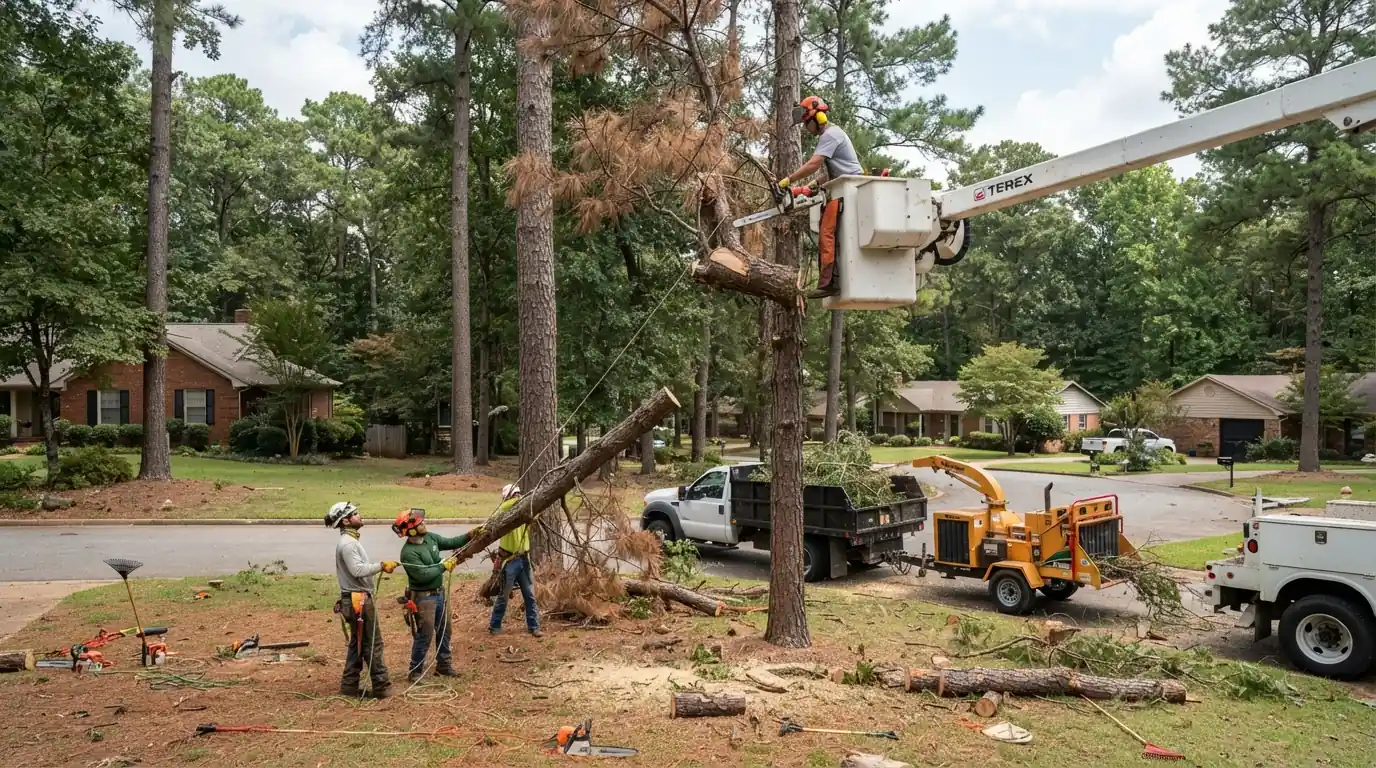
Pine wood dries quickly once the tree dies. Within a season the top can break off under wind or a climber's weight, and the whole tree becomes harder and more dangerous to take down.
Removing it promptly also takes beetle-infested wood out of the yard before the next generation of beetles emerges and moves into nearby stressed pines.
Red-crown Ips beetle pines
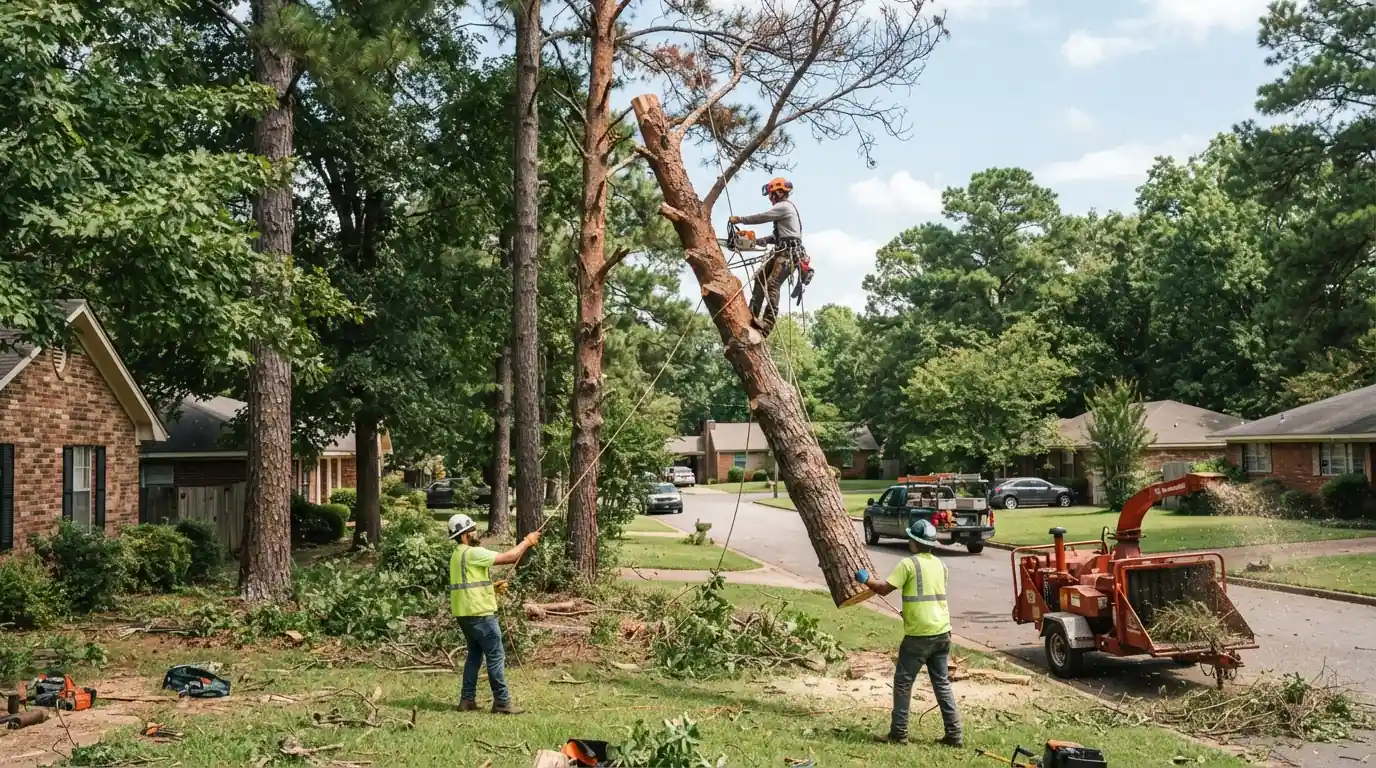
Ips engraver beetles attack pines already stressed by drought, root damage or construction. Signs are small pitch tubes or boring dust on the bark and a crown that fades from green to yellow to red-brown, often from the top. By the time the crown is red, the beetles have usually left. We check neighboring pines for fresh attacks, since stressed trees nearby are next, and remove or chip infested wood so it does not feed another round of attacks in the yard.
Local market guidance: $506 to $690 for a typical removal; large trees over 60 feet or hard-access trees run about $1,000 to $1,200 (planning range from published 2026 figures, not our quote; every job is priced on site).
Needle-blight pines
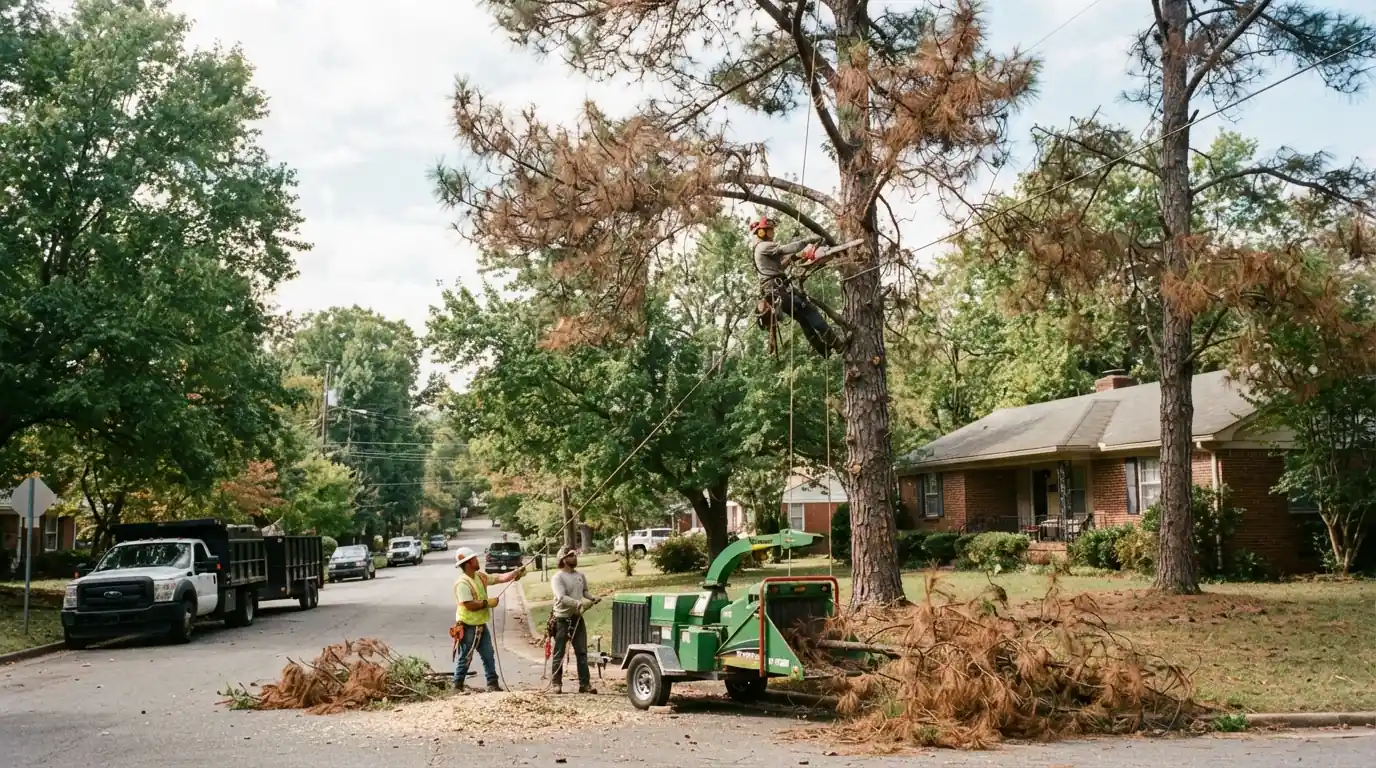
Not every browning pine is dead. Brown spot needle blight browns loblolly needles from the bottom of the crown upward, and a pine with blight may still have healthy buds. We look at the pattern: browning from the bottom up with green at the tips points to blight, while browning from the top down with pitch tubes points to beetles. Blight trees are often kept and watched through a season, since the disease rarely kills a healthy tree outright; beetle trees come out.
Pines dead from drought
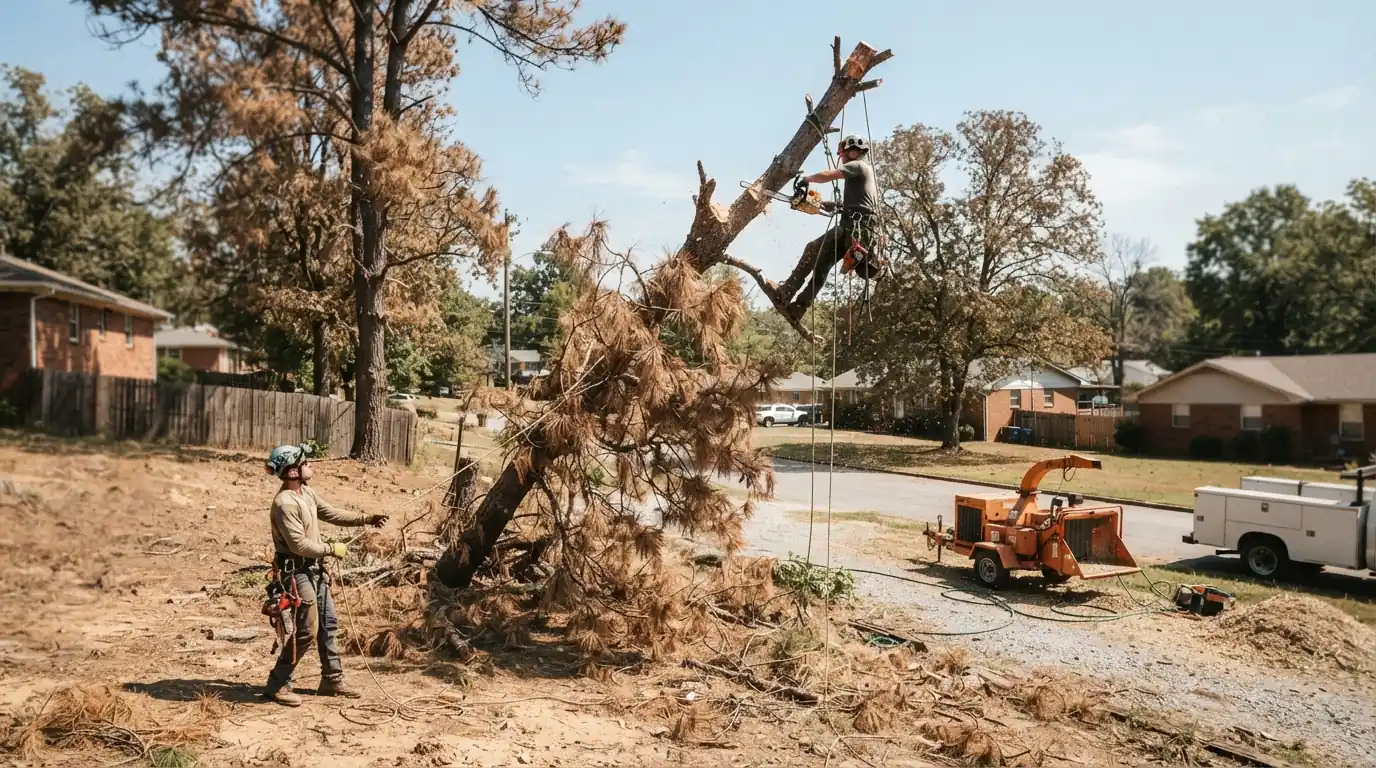
Some pines die from a long dry spell or root damage without a clear beetle attack. The result is the same: a dead, drying tree that needs to come down. Dead pines near houses, driveways and play areas get prioritized. Pines that are only thin, not dead, may recover with deep watering through the next dry spell and time, and we will tell you which is which. Scratching a twig tip is a quick check: green under the bark means the branch is still alive.
How this job runs around Little Rock
Arkansas Forestry Division guidance is blunt: when a pine turns red-brown and dies here, the culprit is almost always the Ips engraver beetle following drought, not southern pine beetle, which has not had a state outbreak since the mid-1990s. The 2025 forest health report adds a second browning cause, brown spot needle blight, confirmed across many counties in the southern half of Arkansas. Telling the two apart is the first thing we do on a browning pine call.
Compare
Beetles or needle blight
| Factor | Beetle-killed pine | Needle-blight pine |
|---|---|---|
| Where browning starts | Top of the crown, moving down | Bottom of the crown, moving up |
| Bark signs | Pitch tubes and boring dust | None |
| Buds and tips | Dead | Often still green |
| Outcome | Tree dies | Often recovers |
| What to do | Remove promptly | Watch and water in drought |
What moves the price
What decides the price of a dead pine removal
Local market guidance: $506 to $690 for a typical removal; large trees over 60 feet or hard-access trees run about $1,000 to $1,200 (planning range from published 2026 figures, not our quote; every job is priced on site).
Height
Tall pines mean more sections from the top down.
How long it has been dead
Brittle wood needs a lift instead of a climb.
What is underneath
Roofs and fences mean every piece is lowered.
Truck access
A lift needs a firm path close to the tree.
Number of pines
Several dead pines in one visit cost less each.
Haul-off
Pine rounds are heavy and make poor firewood.
Straight answers
Questions we get about this
If the whole crown is red-brown from the top down, no. Browning from the bottom with green tips may be needle blight and can recover.
Almost never in Arkansas lately. Ips engraver beetles after drought cause most pine deaths here.
They attack stressed pines. Removing infested wood and keeping other pines watered in drought lowers the risk.
Not long safely. Within a season the top can snap in wind.
Preventive sprays exist for high-value trees, but once a pine is dying removal is the answer.
About $506 to $690 for an ordinary tree by published 2026 local figures. Tall pines near houses cost more.
Pine burns poorly and infested wood should not be stacked near other pines, so most of it is hauled.
Related work
Other jobs we handle near this one
Ash Tree Removal
Ash Trees Killed by Emerald Ash Borer and more.
More on ash tree removalTree Removal
Dead Tree Removal and more.
Tree RemovalBradford Pear Removal
Split and Storm-Broken Pears and more.
Need bradford pear removal?
Get the dead pine down before it gets brittle
Call any hour and tell us how the browning started. We will check it and its neighbors.