Answered 24/7 across Little Rock and the Texarkana area
Tree protection during construction in Little Rock
Most trees that die after a construction project are not killed by the saw. They die a few years later from roots cut by trenches, crushed by trucks or buried under new grade, and by then nobody connects the decline to the work.
- Root zones fenced
- Pruning ahead of the work
- Answered 24/7
Short answer
Tree protection during construction in Little Rock means fencing off the root zone of trees worth keeping before work starts, keeping trucks, materials and trenches out of that zone, pruning low limbs that equipment would hit, and planning utility runs around the roots. Before any digging, Arkansas asks that Arkansas One Call be contacted at 811.
Updated October 2026
How construction damages trees
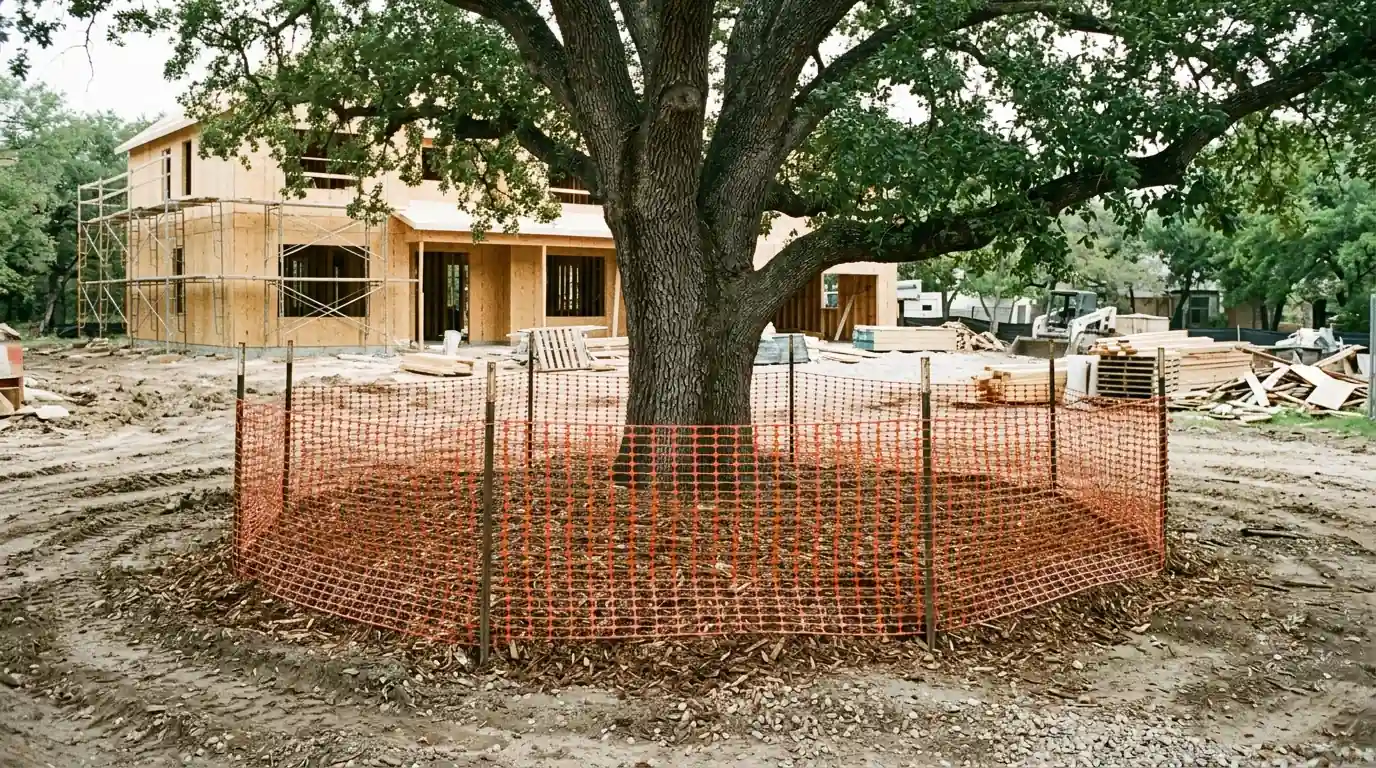
A tree's roots spread far beyond the drip line, mostly in the top foot or so of soil. Heavy equipment compacts that soil, trenches cut the roots, and fill dirt smothers them. Any of those can kill a tree slowly.
Protection is mostly about keeping things away from the roots: a fence, a plan for where trucks drive and materials sit, and utility routes chosen with the trees in mind.
What moves the price
What decides the price of tree protection
Number of trees
Each tree gets its own zone.
Fence length
Longer runs for larger trees.
Pruning needed
Limbs in the way of equipment.
Mulch
Spread inside the root zones.
Site visits
Checks during the project if wanted.
Plan size
Bigger builds need more planning.
Scope
What tree protection includes
- Site walk to choose trees to keep
- Protection zones marked and fenced
- Mulch spread inside the zones
- Low limbs pruned ahead of equipment
- Utility routes planned around roots
- 811 locate requested before digging
- Mid-project check if wanted
Root zone fencing
Before work starts, we mark and fence a protection zone around each tree you want to keep, as wide as the site allows. Inside the fence there is no parking, no stockpiling of materials, no washing out of concrete or paint, and no grade change. A layer of mulch inside the zone protects the soil and holds moisture. The fence stays up until the heavy work is done, and we check it partway through if you want.
Trenching and grade changes near trees
Utility trenches and new grade are the biggest threats to roots. Where a line has to pass near a tree, routing it around the root zone or boring under it instead of open trenching saves a great many roots. Adding even a few inches of fill over roots can starve them of air. We mark the trees and roots that matter before digging, and the 811 locate request comes first.
Pre-construction pruning
Low limbs that would be hit by trucks, excavators or a new roofline are pruned back properly before work begins, rather than being snapped off by equipment. Clean cuts close; torn limbs invite decay. We also remove dead wood over the work area so nothing falls on crews during the project. If a roofline or addition will sit under a big limb, we plan the clearance with your builder so the limb is shortened once, properly, instead of hacked back mid-project.
How this job runs around Little Rock
Little Rock and the towns around it have seen steady building, from new subdivisions to additions and pools on older lots, and the good trees on those lots are worth protecting. Before any digging near a tree, Arkansas asks that Arkansas One Call be contacted at 811 so buried lines are marked, which also tells us where trenches will run in relation to the roots.
Warning signs
Signs construction is hurting a tree
Trucks parked under the tree
Soil compaction over the roots.
Trenches near the trunk
Roots cut on one side.
New fill around the base
Roots buried and starved of air.
Thinning crown a year later
Early sign of root damage.
Dead limbs on one side
Matches roots lost on that side.
Torn or snapped low limbs
Equipment damage that invites decay.
Step by step
How tree protection is set up
- 1
Call before work starts
The earlier, the more trees can be saved.
- 2
Walk the site
Decide which trees stay and how much room they get.
- 3
Fence and mulch
Root zones protected before equipment arrives.
- 4
Prune ahead of the work
Low limbs cut cleanly.
- 5
Check partway through
Fences and trees checked if you want.
Straight answers
Questions we get about this
Usually well beyond the drip line, mostly in the top foot of soil.
Root damage shows up slowly as decline over several years.
Better to route around the root zone or bore under it.
Yes. Even a few inches can starve roots of air.
Before work starts, ideally while the plan can still change.
Arkansas asks that Arkansas One Call be contacted at 811 before digging.
Yes. We can assess the trees and suggest what can be done.
Related work
Other jobs we handle near this one
Tree Transplanting
Moving Young Trees and more.
More on tree transplantingTree Planting
Shade Tree Planting and more.
Need tree planting?Vine & Ivy Removal from Trees
English Ivy on Trunks and more.
Need vine & ivy removal from trees?
Building near a tree worth keeping?
Call any hour before the work starts. We will plan the protection with you.