Tree care guide from Little Rock, phones answered 24/7
A neighbor's tree fell on your property: who usually pays
After a storm, one of the first questions we hear is whose tree it was and who has to pay. The answer usually depends less on whose yard it grew in and more on what it hit and whether anyone knew it was dying.
By Merle Shackelford, Tree Care Guides Editor · Updated October 2026
Short answer
As a general rule, when a healthy tree falls in a storm, the owner of the damaged property files with their own homeowners insurance, even if the tree grew next door. The tree's owner may be responsible if the tree was clearly dead or dying and they had been told about it. Insurance usually covers removal only when the tree hit a structure or blocks access. This is general information, not legal or insurance advice; your policy and your agent have the final word.
Why it is usually your own policy
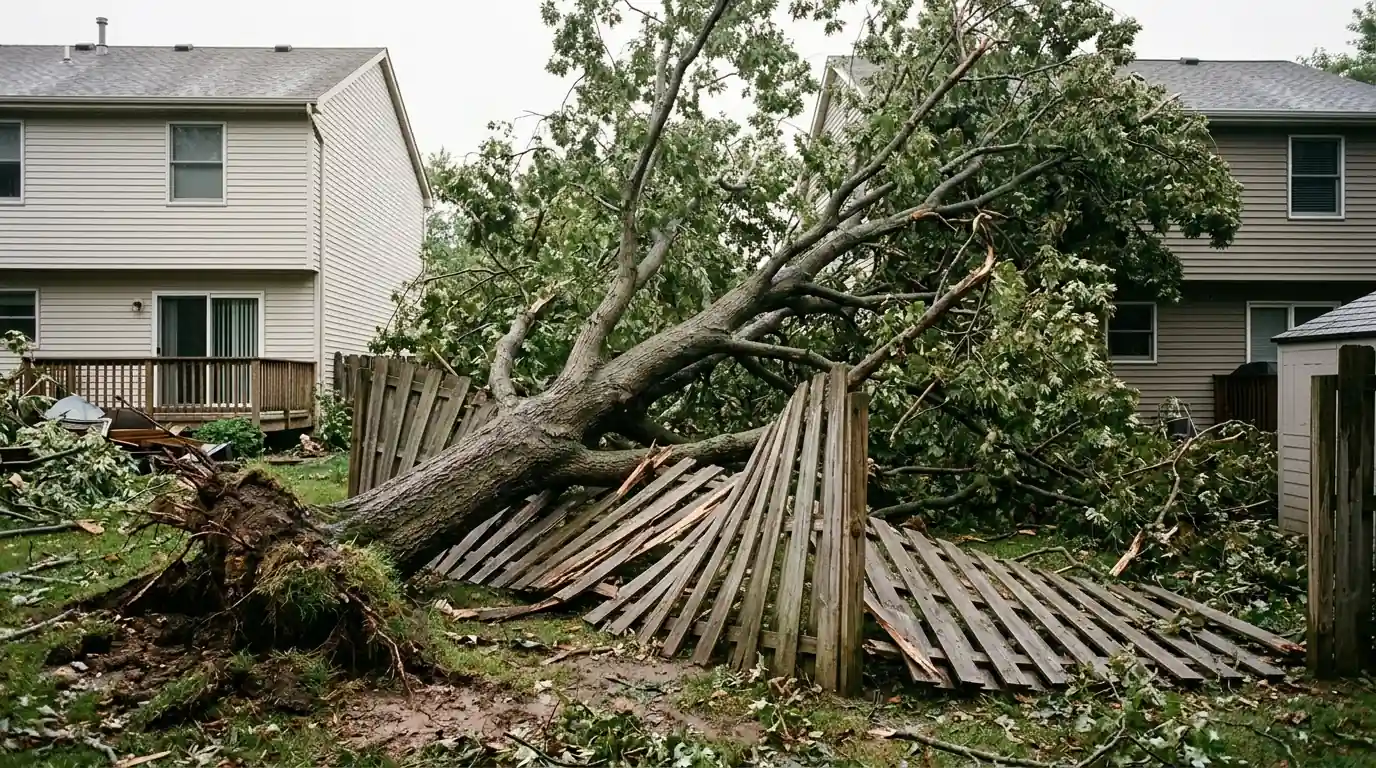
Homeowners policies generally treat a storm-felled tree as a covered event for the property it damages. So if a neighbor's healthy tree comes down on your roof in a storm, you file with your insurer, and your neighbor's policy is not involved. It feels backwards, but it is how most policies work, and it also means you are not waiting on someone else's claim to get your roof covered.
When the tree's owner may be responsible
The picture changes if the tree was obviously dead, dying or hazardous and its owner knew or should have known. That is negligence, and in that case the damaged party's insurer may seek repayment from the owner's insurer. A written request to the neighbor to deal with a dead tree, sent before it fell, is the kind of evidence that matters.
What insurance usually covers, and what it does not
When a tree damages a house, garage, shed or fence, most policies cover the repair and some of the cost to remove the tree from the structure, subject to the deductible and limits. A tree that falls in the yard without hitting anything is usually not covered, and the cleanup falls to whoever's yard it landed in. Damage to cars is normally a matter for the auto policy's comprehensive coverage, not homeowners.
Questions about a tree in Little Rock? The crew line is answered around the clock.
Call (501) 439-8373What to do first
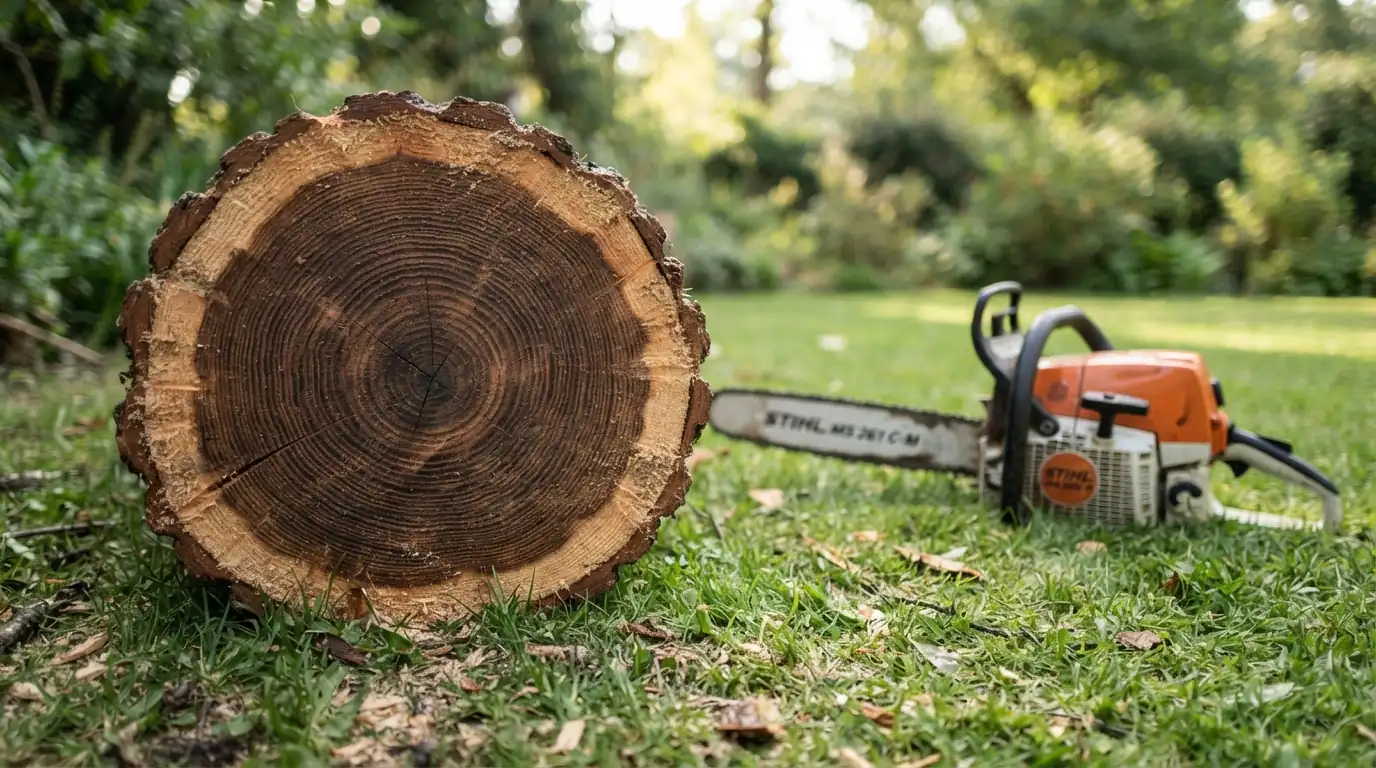
Stay clear of any tree touching power lines and report it to the utility. Take photos of the tree, the stump or root plate, and the damage before anything is moved. Call your insurer to open a claim, then call a tree crew to make the structure safe. We document what we remove, which helps the adjuster.
If a neighbor's tree looks dangerous now
If a tree next door is dead, leaning or dropping limbs over your house, tell your neighbor in writing and keep a copy. Many people will gladly deal with it once they know. In most places you may also trim branches that overhang your property, back to the property line, as long as you do not harm the tree or go onto their land; check local rules before doing anything bigger.
Get help that fits your situation
Insurance policies and local law vary, and this guide is general. For a specific claim or dispute, your insurance agent, your policy documents and, if needed, an attorney are the right sources. We can help with the tree itself, from making the structure safe to a written description of what we found.
Related services
Services this guide touches on
Emergency Tree Removal
Tree on the House and more.
See how emergency tree removal worksStorm Damage Cleanup
Hanging Broken Limbs and more.
Storm Damage Cleanup in Little RockTree Risk Assessment
Leaning or Cracked Trees and more.
Tree Risk Assessment in Little Rock
Straight answers
Questions readers ask
Usually your own homeowners policy, if it was a healthy tree knocked down by a storm.
Generally when the tree was clearly dead or dying and they knew or had been told.
Usually not, unless it hit a structure or blocks access.
Normally the comprehensive coverage on your auto policy.
Yes. Photograph the tree, the stump or roots and the damage first.
In most places, back to the property line without harming the tree; check local rules.
No. It is general information. Your policy, agent or attorney have the final word.
A tree on your house tonight?
Call any hour. We will make it safe and document the work for your claim.