Tree care guide from Little Rock, phones answered 24/7
When and how to prune crape myrtles in Arkansas
Crape myrtles are the most pruned and most badly pruned trees in central Arkansas. Getting the timing and the cuts right takes less work than the yearly chop, and the tree looks better for it.
By Merle Shackelford, Tree Care Guides Editor · Updated October 2026
Short answer
Prune crape myrtles in Arkansas in late winter, before new growth starts, by removing suckers, crossing stems, old seed heads and thin inside growth, and cutting to a branch collar or side branch. Do not cut every branch back to the same height; that topping, often called crape murder, causes swollen knuckles and weak shoots that flop under the flowers.
Timing
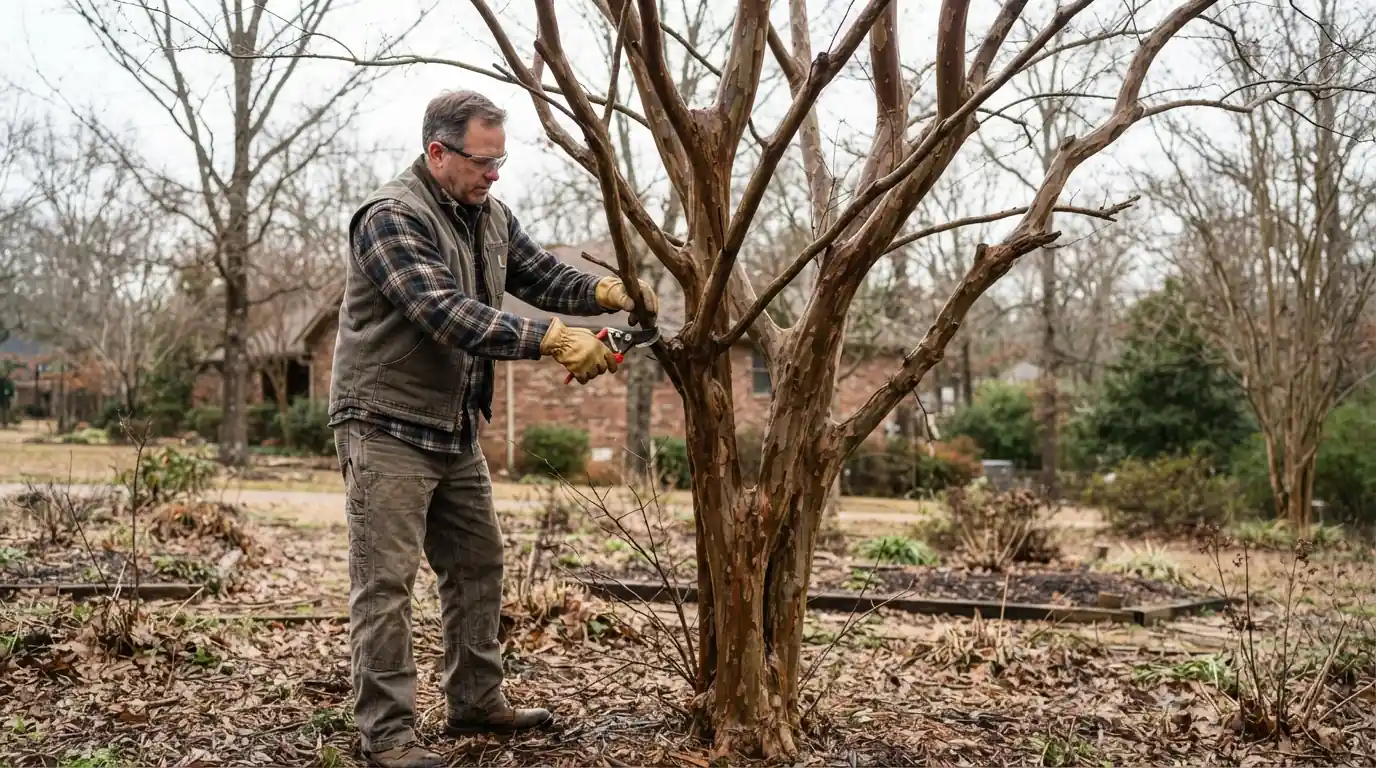
Late winter, while the tree is dormant and before buds break, is the time for any real shaping. Cuts close quickly once growth starts, and you can see the branch structure clearly with the leaves off. Light cleanup of seed heads and suckers can happen any time.
Heavy pruning in late summer pushes tender growth that the first cold snap can damage.
Crape myrtles bloom on new growth
The reason people chop crape myrtles back is the belief that it makes them bloom. It does not need to: crape myrtles flower on the current season's growth whether they are cut back or not. What hard cutting does is produce long thin shoots that bend to the ground under the weight of the blooms.
What to cut
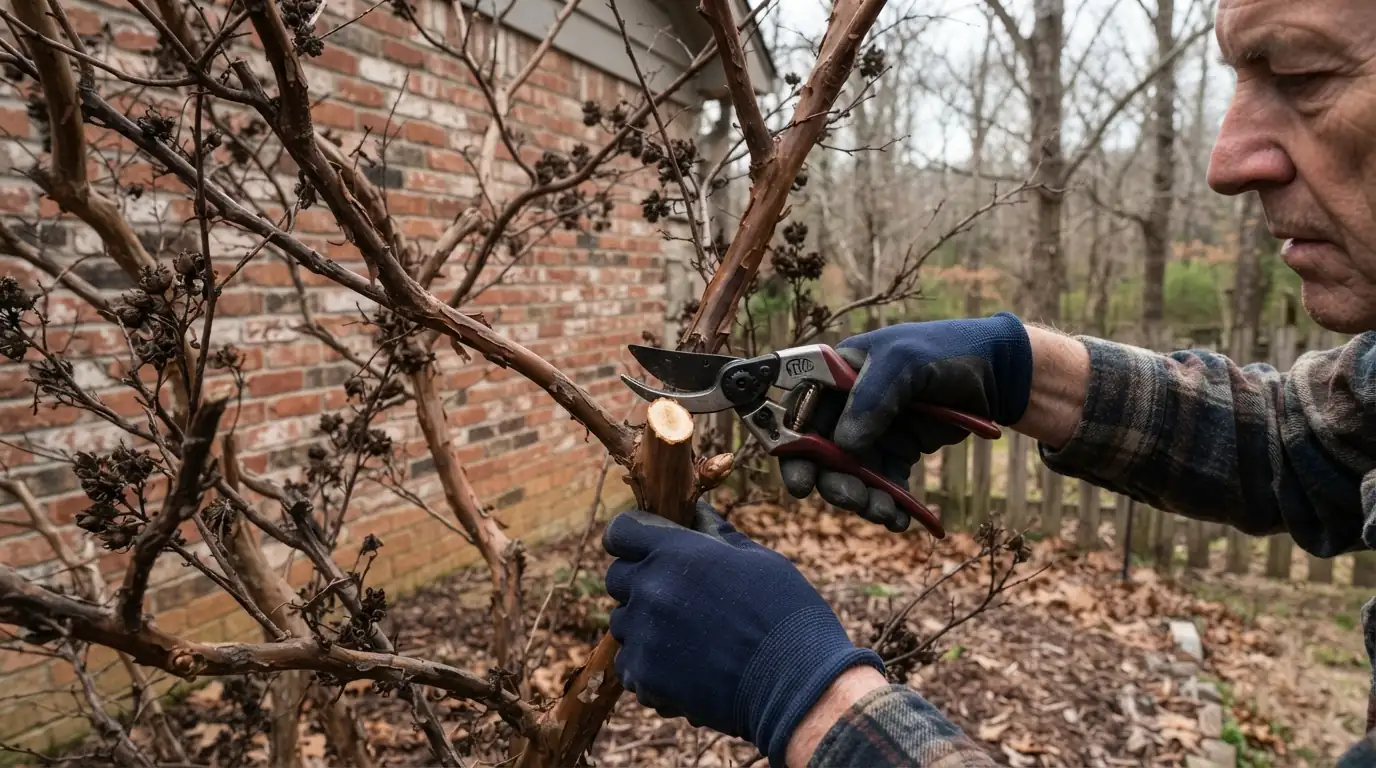
Start at the ground: remove suckers at the root flare and any trunks beyond the three, five or seven strongest ones that lean outward in different directions. Then remove crossing and rubbing branches, thin twiggy growth inside the canopy, and last year's seed heads back to a strong bud.
Finally, raise the canopy by removing side branches along the lower trunks. That shows off the smooth, mottled bark and keeps limbs off walks, cars and roof edges.
Questions about a tree in Little Rock? The crew line is answered around the clock.
Call (501) 439-8373Fixing a crape that was topped
A tree cut back to the same stubs for years has fist-sized knobs with brooms of thin shoots. Over two or three seasons, keep three to five of the best shoots on each knob and remove the rest; they grow into real branches and the knobs stop growing. The faster reset is cutting below the knobs and giving up one summer of flowers.
The Little Rock code rule
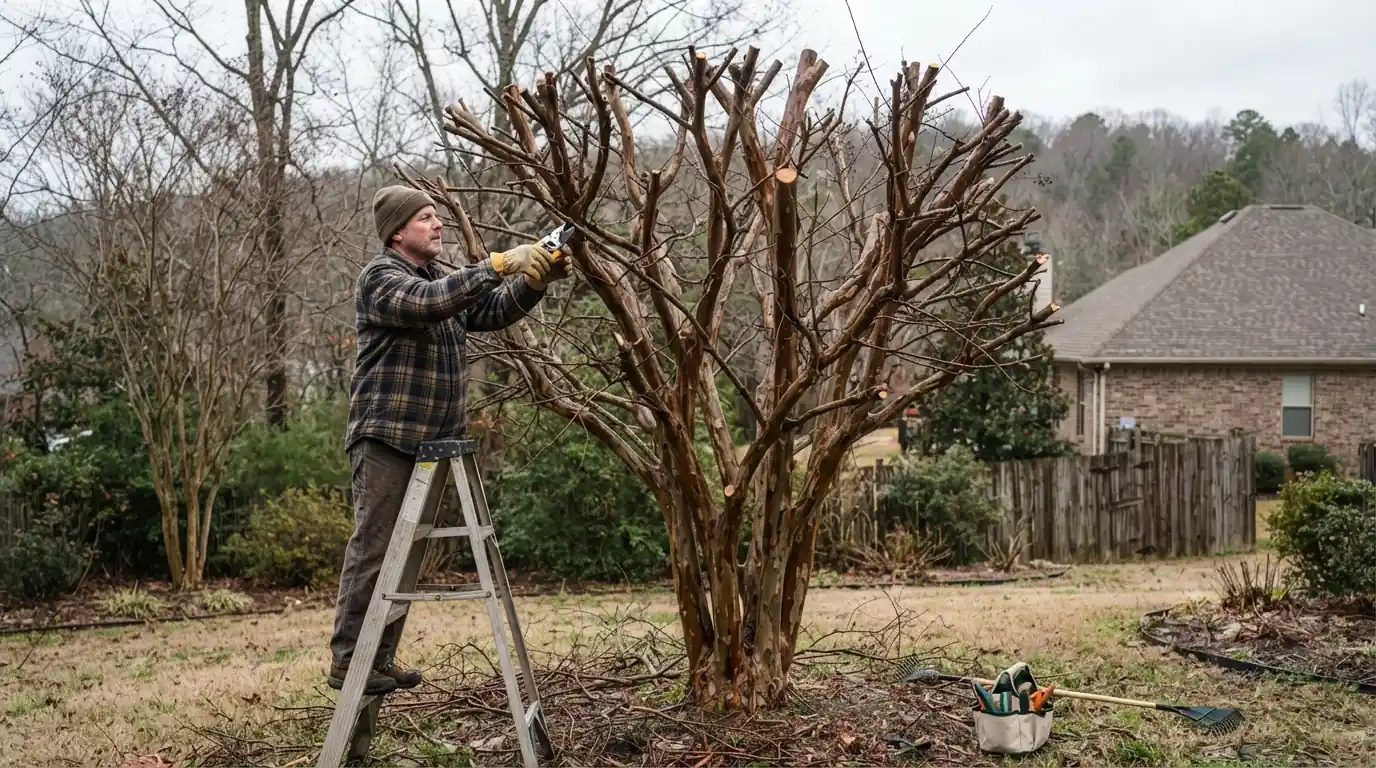
Little Rock's landscaping and tree protection code, Chapter 15, says crape myrtles are not to be trimmed lower than six feet above grade to be counted as required landscaping. On a commercial lot or parking area that relies on crape myrtles for its landscaping, topping them below that line can put the property out of step with the code. Thinning keeps them above it.
Problems worth noticing
A black coating on the bark is usually sooty mold growing on honeydew from sap-feeding insects such as bark scale; the insect is what needs treating. White powdery leaves in humid weather point to powdery mildew. Neither is fixed by pruning harder, but good thinning helps air move through the canopy.
Related services
Services this guide touches on
Crape Myrtle Pruning
Removing Old Seed Heads and Suckers and more.
Need crape myrtle pruning?Hedge & Shrub Trimming
Overgrown Privacy Hedges and more.
Hedge & Shrub TrimmingTree Trimming & Pruning
Canopy Raising and more.
Tree Trimming & Pruning
Straight answers
Questions readers ask
Late winter, before new growth starts.
Yes. They bloom on new growth either way.
Because cutting every branch back to the same stubs each year causes knuckles and weak shoots.
Usually three, five or seven strong trunks leaning outward.
The city code says they are not to be trimmed below six feet to count as required landscaping.
Usually sooty mold on honeydew from insects like bark scale.
Yes, over two or three seasons of selecting shoots on each knob.
Get your crape myrtles on the winter list
Call any hour with how many trees and how tall. We will shape them properly in late winter.