Tree care guide from Little Rock, phones answered 24/7
When to trim trees in Arkansas, month by month
The best time to prune most Arkansas trees is late winter, while they are dormant. But a hanging limb over the house does not care what month it is, and some trees have their own timing.
By Merle Shackelford, Tree Care Guides Editor · Updated October 2026
Short answer
For most shade trees in Arkansas, late winter (roughly January to early March) is the best time for structural pruning, because the trees are dormant and their branch structure is easy to see. Spring-flowering trees are best pruned right after they bloom, pines in the cool months, and crape myrtles in late winter without topping. Dead, broken or hanging limbs should be removed whenever they appear.
Late winter: the main pruning season
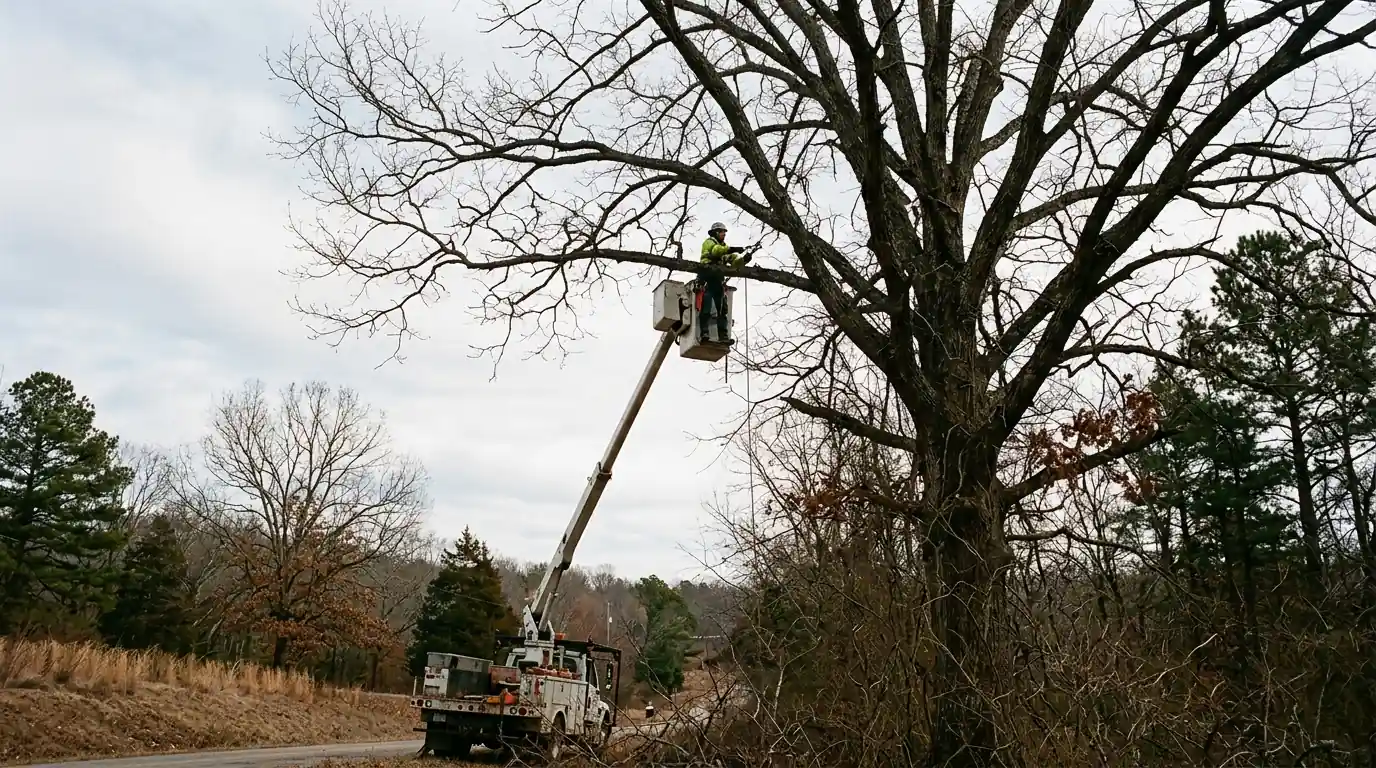
From January into early March, most deciduous trees are dormant. Leaves are off, so the branch structure is easy to read, and cuts made now close quickly once growth starts in spring. This is the time for structural work on oaks, maples, pecans and other shade trees, for crown reduction, and for training young trees.
It is also the best time to prune crape myrtles, done properly by removing crossing and crowded stems rather than cutting every branch back to the same stubs.
Spring: bloom first, then prune
Dogwoods, redbuds, azaleas and other spring-flowering trees and shrubs set their flower buds the year before. Prune them right after they finish blooming, or you cut off this year's flowers. Spring is otherwise a light season for pruning: trees are pushing new growth and are a little more vulnerable to wounds while the leaves expand.
Summer: light work and hazards
Summer is fine for removing dead wood, raising low limbs and clearing branches off roofs, and it is the season when hazards show up most clearly because dead branches stand out against the leaves. Heavy pruning in summer heat stresses trees, so we keep it light.
Pines are the exception to watch. Fresh cuts and wounded pines in hot weather can draw bark beetles, so larger pine work is better scheduled for the cooler months.
Questions about a tree in Little Rock? The crew line is answered around the clock.
Call (501) 439-8373Fall: clean up before winter
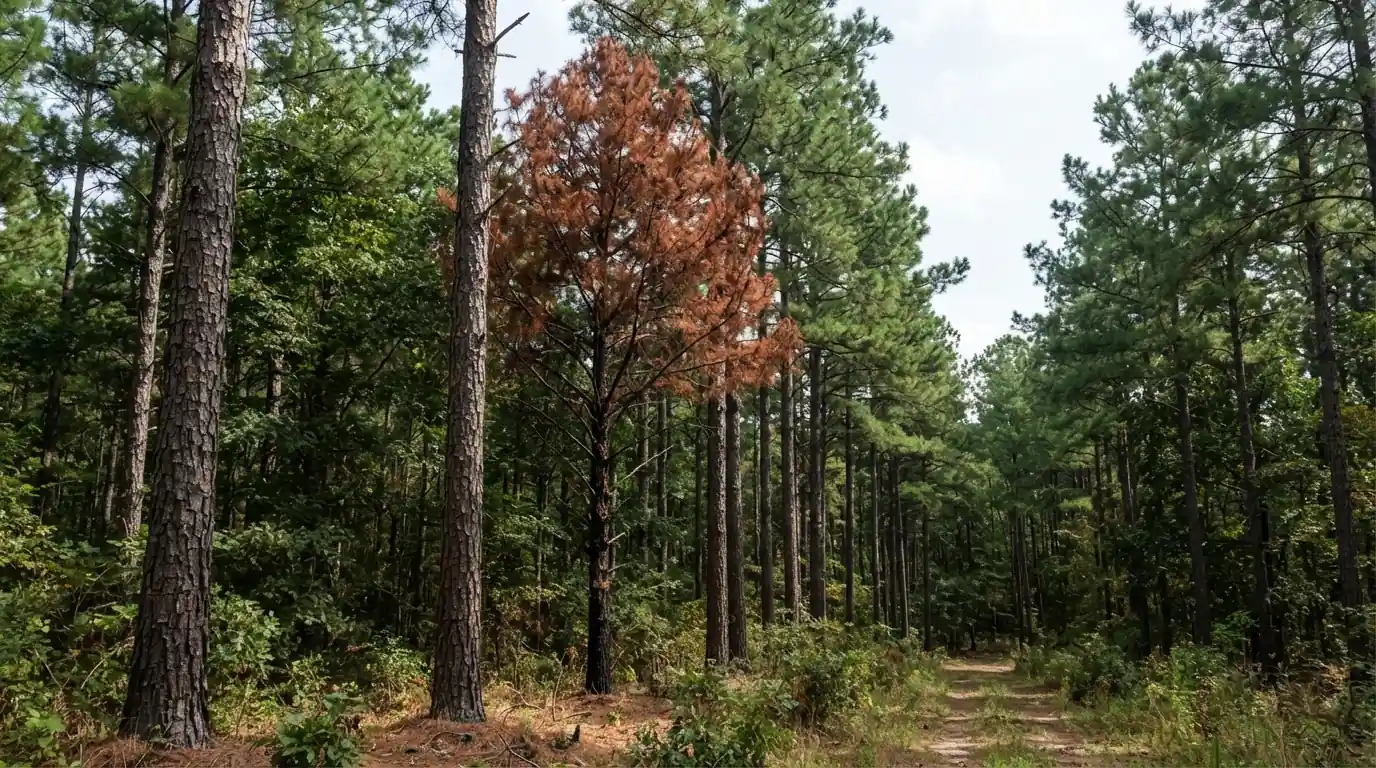
Fall is a good time to deal with weak, dead and overextended limbs before ice storms. Arkansas has a history of damaging ice, and limbs that are already compromised are the first to fail under it. Major structural cuts are usually better left for late winter, when the tree is fully dormant.
Any time: hazards and storm damage
Cracked limbs, hangers left after a storm, dead branches over roofs and drives, and trees leaning after high winds should be handled when you see them, not when the calendar says. Extension guidance after storms is to have damaged trees assessed before deciding what to keep, since many hardwoods survive surprising amounts of crown loss.
A quick calendar by tree
Oaks, maples, pecans and other shade trees: late winter for structure, any time for hazards. Pines: cool months for anything beyond deadwood. Crape myrtles: late winter, no topping. Dogwoods and redbuds: right after bloom. Magnolias: after flowering, lightly. Fruit trees: late winter. Hedges: after the spring flush and again in midsummer if needed.
Related services
Services this guide touches on
Tree Trimming & Pruning
Canopy Raising and more.
Tree Trimming & Pruning in Little RockOak Tree Trimming
Heavy Oak Limbs Over the Roof and more.
Need oak tree trimming?Pine Tree Trimming
Raising Pine Limbs and more.
Pine Tree Trimming
Straight answers
Questions readers ask
Late winter, roughly January to early March, for most shade trees.
Yes, lightly: deadwood, clearance and hazards. Save heavy cuts for winter.
In the cool months, to avoid drawing bark beetles to fresh cuts.
Right after it finishes flowering.
Late winter, by thinning, not topping.
No. Dead and hanging limbs should come down whenever you see them.
For hazard limbs before winter ice, yes; major structural cuts are better in late winter.
Book trimming for the right season
Call any hour. We will tell you what can wait for winter and what should not.