Tree care guide from Little Rock, phones answered 24/7
Why pines turn brown in Arkansas, and what to do about it
A browning pine in the yard is the most common worried call we get in late summer. Sometimes it is nothing; sometimes the tree is already dead. The pattern of the browning usually tells you which.
By Merle Shackelford, Tree Care Guides Editor · Updated October 2026
Short answer
In Arkansas, a pine turning red-brown from the top down and dying is almost always an Ips engraver beetle attack following drought, according to the state Forestry Division. Browning from the bottom of the crown upward with green tips is more likely brown spot needle blight, confirmed across southern Arkansas in 2025. Some needle drop every fall is normal.
First, rule out normal needle drop
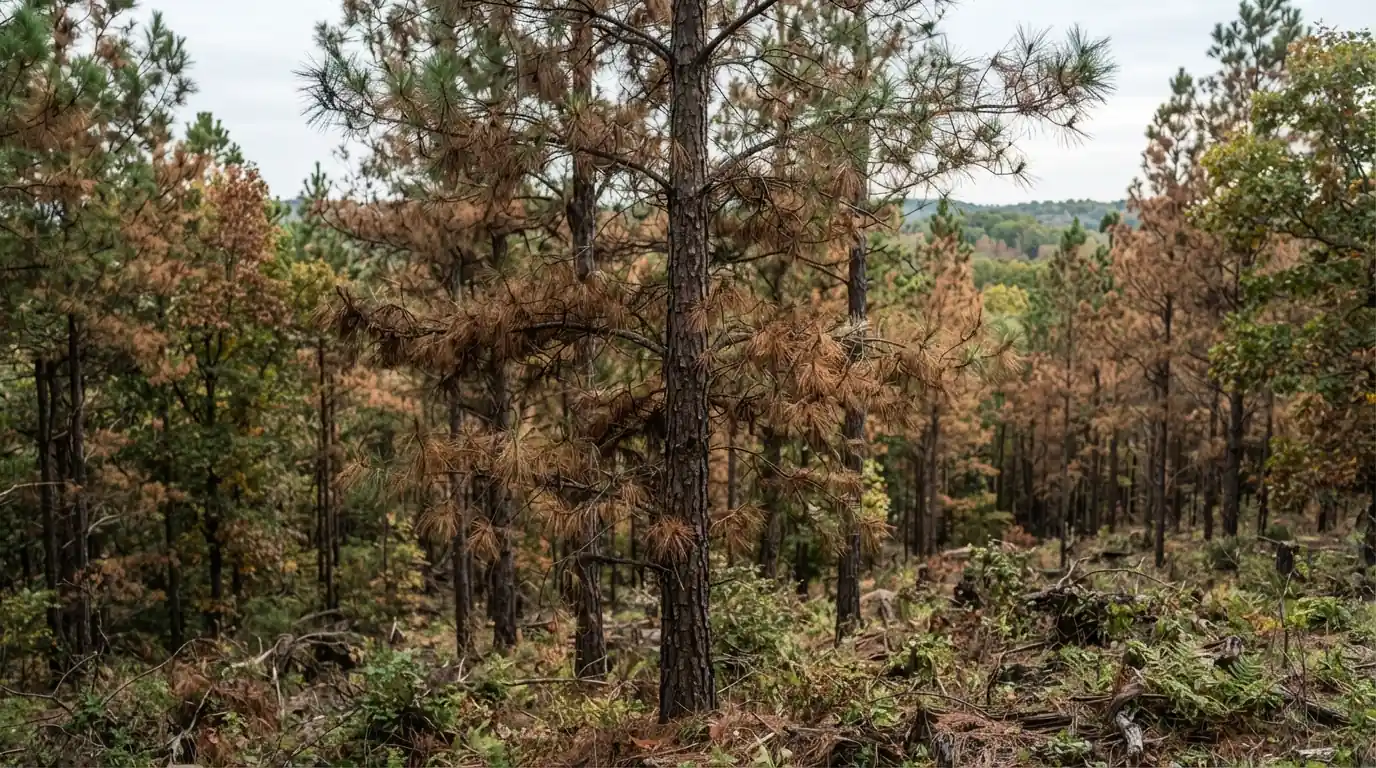
Pines keep their needles for two or three years and shed the oldest ones each autumn. Inner needles yellowing and dropping in fall while the branch tips stay green is normal. A tree that browns from the outside in, or all at once, is not.
Ips engraver beetles
Arkansas Forestry Division guidance says a pine turning red-brown and dying in the state is almost always Ips engraver beetle, which attacks pines already weakened by drought, root damage, lightning or construction. Signs are small blobs of resin, called pitch tubes, or reddish boring dust on the bark, and a crown that fades from green to yellow to red-brown, often starting at the top.
The same guidance notes southern pine beetle has not caused an outbreak in Arkansas since the mid-1990s. By the time the crown is red, the beetles have usually moved on, but stressed pines nearby may be next.
Brown spot needle blight
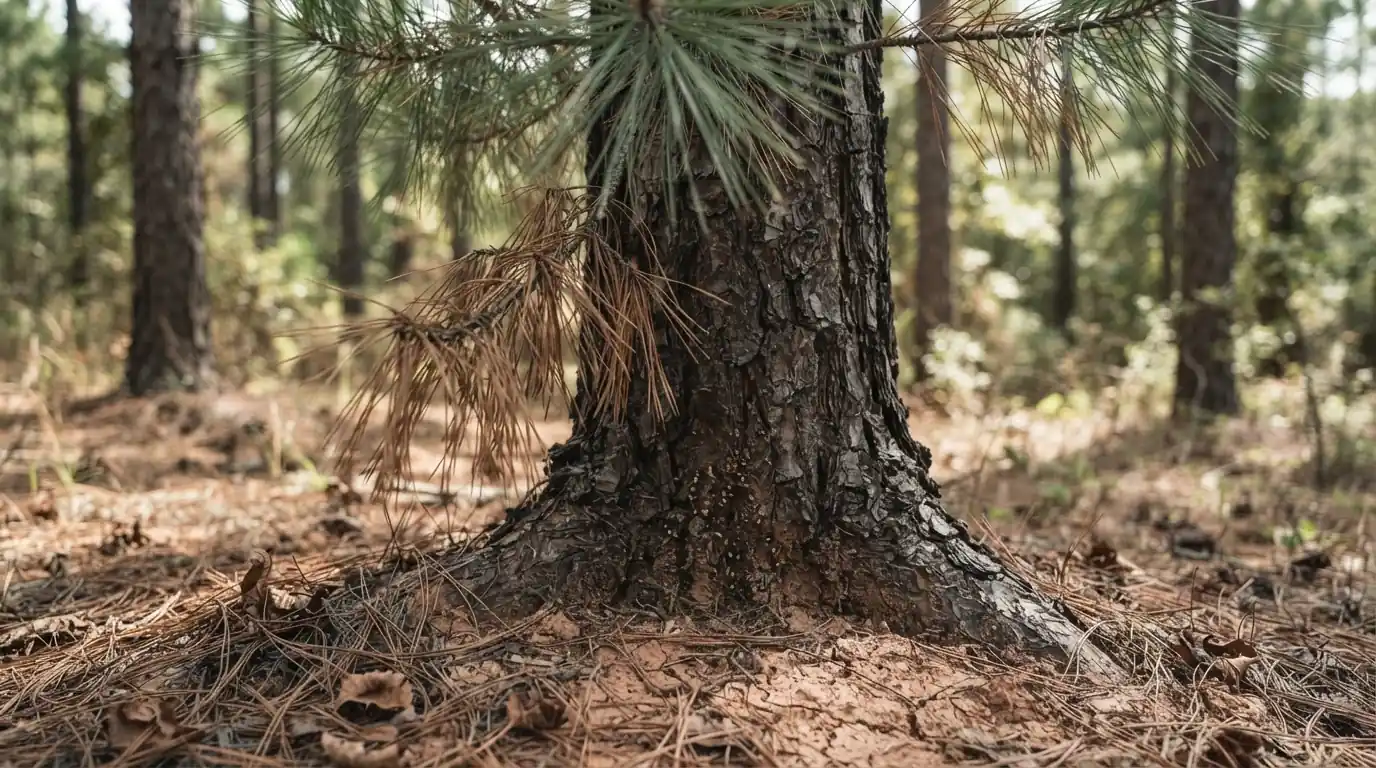
The 2025 Arkansas forest health report confirmed brown spot needle blight across many counties in the southern half of the state, browning loblolly pines from the base of the crown upward. Forestry staff fielded calls on it all year.
A blighted pine often still has green needles at the branch tips and healthy buds. Many recover, so these trees are usually watched rather than removed.
Questions about a tree in Little Rock? The crew line is answered around the clock.
Call (501) 439-8373Drought and root damage
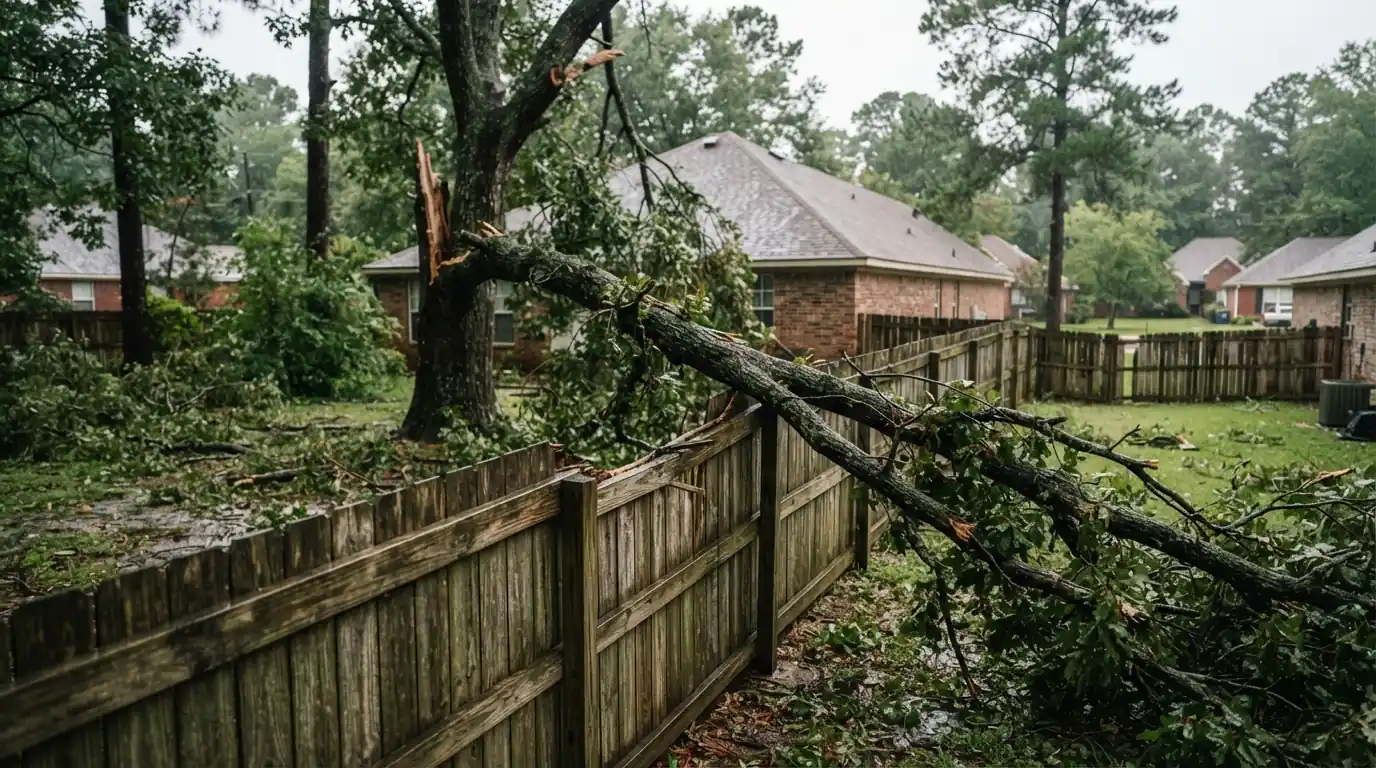
Long dry spells, trenching, new driveways and soil piled over roots all stress pines. Sometimes the tree simply dies without an obvious insect attack; more often, the stress invites beetles. Deep watering during drought is the best protection for pines you want to keep.
What to do with a dead pine
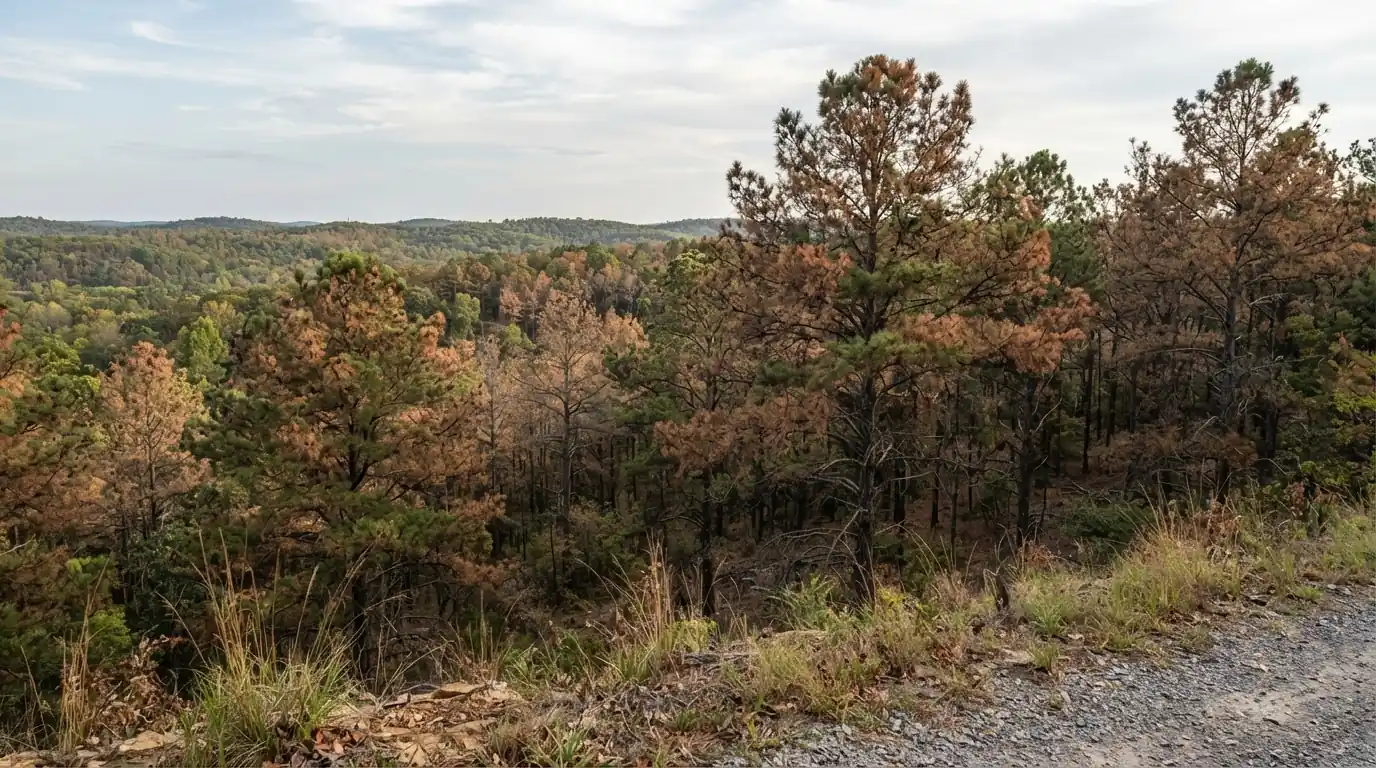
A dead pine dries out quickly and gets brittle within a season, which makes it more dangerous and often more expensive to take down, because a climber can no longer trust the top. Near a house, drive or play area, it should come down promptly, often from a bucket truck.
Removing or chipping the infested wood keeps the next generation of beetles from emerging next to your other pines.
Why this matters on both sides of the state
Arkansas is more than half forest, and loblolly pine dominates the plains across southwest Arkansas and the Texarkana side of the state line. Around Little Rock, pines stand in plenty of yards and newer subdivisions cut from woods. A dry summer shows up in all of them.
Related services
Services this guide touches on
Beetle-Killed Pine Removal
Red-Crown Ips Beetle Pines and more.
See how beetle-killed pine removal worksTree Risk Assessment
Leaning or Cracked Trees and more.
Tree Risk Assessment in Little RockBucket Truck Tree Work
Tall Pine Topping-Down Removal and more.
More on bucket truck tree work
Straight answers
Questions readers ask
Most often Ips engraver beetles after drought. A crown that is red-brown top to bottom is dead.
Almost never lately. State guidance says there has been no outbreak since the mid-1990s.
If it is needle blight browning from the bottom with green tips, often yes. If beetles killed it, no.
Yes. Pines shed their oldest needles every fall.
They attack stressed pines. Water in drought and remove infested wood.
Soon, before it gets brittle, especially near the house.
Infested pine should not be stacked near other pines, and pine burns poorly.
Browning pine in the yard?
Call any hour and tell us whether the browning started at the top or the bottom. We will check it and its neighbors.